Beef Season 2: Unpacking the Multigenerational Showdown and Its Philosophical Finale

The Unraveling of Generational Feuds in Beef Season 2
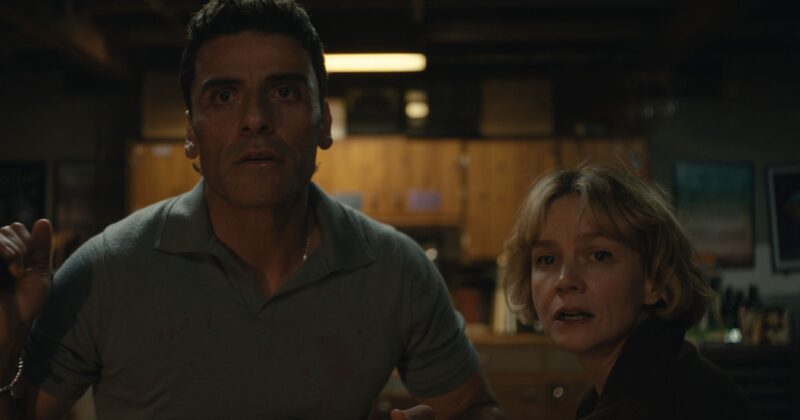
The latest chapter of Netflix’s acclaimed anthology series ‘Beef’ delivers a striking evolution from its debut season, pivoting from an intimate duel between individuals to a high-stakes power play among four distinct generational figures. This season, the generational gap takes center stage with Millennials Josh (Oscar Isaac) and Lindsay (Carey Mulligan) pitted against Gen Z upstarts Austin (Charles Melton) and Ashley (Cailee Spaeny), all under the shadow of entrenched authority figures from the Silent Generation and Boomers. The intricately woven narrative highlights not only clashing personalities but also how generational anxieties, ambitions, and values collide in ever-escalating ways.
The Catalyst: Filmed Secrets and Rising Tensions
What starts as a chaotic quarrel between country club bosses Josh and Lindsay quickly escalates when Austin and Ashley—employees, observers, and opportunists—capture every explosive moment on camera. Their decision to use this footage as leverage sets off a dizzying chain of manipulation and blackmail. The young couple’s thirst for advancement collides with the older couple’s desperation to maintain reputation and control.
Though at first it seems like a generational skirmish between Millennials and Gen Z, events spiral as Chairwoman Park (Youn Yuh-jung), from the Silent Generation, enters the arena. Utilizing Josh’s financial misdeeds to mask her own illegal maneuverings, Park deepens the narrative into a web of cross-generational corruption. Meanwhile, Dr. Kim (Song Kang-ho), her Boomer husband, becomes a tragic figure whose career-ending tremor turns fatal, adding fuel to the mounting fire and spotlighting the often-hidden vulnerabilities of supposedly powerful authority figures.
The Bhuvachakra: Symbolism and the Philosophy of Samsara
The season’s unforgettable final moments transport viewers to a somber Korean cemetery, where Chairwoman Park stands at the center of a massive circular imprint etched into the earth. As the camera pans out, the outline of the bhuvachakra—the Buddhist wheel of life—becomes clear. The segments, populated by reflective vignettes of all major characters, illustrate the cyclical suffering driven by ignorance, attachment, and aversion. Overseeing it all is the figure of Yama, the lord of death, clasping the circle and reinforcing the inevitability of the cycle.
This is no arbitrary visual: the symbol crystalizes Beef’s core message. Each generational faction—Millennials, Gen Z, Boomers, and the Silent Generation—finds themselves endlessly repeating patterns of rivalry, regret, and longing. The battle does not result in a clear victor, but rather suggests that liberation comes only when individuals choose, like Josh, to disrupt these cycles through selfless action or radical acceptance.
Breaking the Cycle: Character Arcs and Fates
One of the most striking twists is Josh’s unexpected act of responsibility. Rather than shifting blame to Austin and Ashley to save himself, he opts to shoulder the consequences alone. This choice, while landing him in prison, yields emotional freedom and gears both him and Lindsay towards personal reinvention. Lindsay rebuilds her future, remarrying and finding fulfillment—milestones impossible while stuck in the toxic loop with her former partner.
In contrast, Austin and Ashley fall victim to the same repeating patterns they once sought to upend. Their mutual insecurities and refusal to confront uncomfortable truths entrap them in new but equally corrosive roles at the country club. This reversal not only signals the tragedy of unresolved generational discord but also critiques the notion that simply swapping out one power structure for another yields progress.
Chairwoman Park: Regret at the Heart of Power
The emotional core of the finale lies with Chairwoman Park, whose visit to her first husband’s grave deepens the philosophical undertones. Park’s longstanding belief that all actions are self-serving cracks as viewers witness her silent agony and unresolved remorse. Her placement at the center of the bhuvachakra, surrounded by the poisonous triumvirate of ignorance, attachment, and aversion, visually cements her as both the architect and captive of her own suffering.
Through her introspective moment, Beef broadens its meditation on generational divisions, vividly illustrating how legacies of regret and longing can linger, crossing lines of age and societal expectation alike.
The Legacy of Beef Season 2
Beef’s sophomore run challenges viewers with more than just scandalous plot twists. By weaving together modern workplace power plays with ancient philosophical symbolism, it prompts reflection on the futility of generational conflict, the depths of personal unhappiness, and the rare opportunities for grace. In a medium crowded with surface-level drama, Beef’s narrative sophistication and willingness to probe existential terrain make it stand out as a must-watch for anyone fascinated by the human condition.