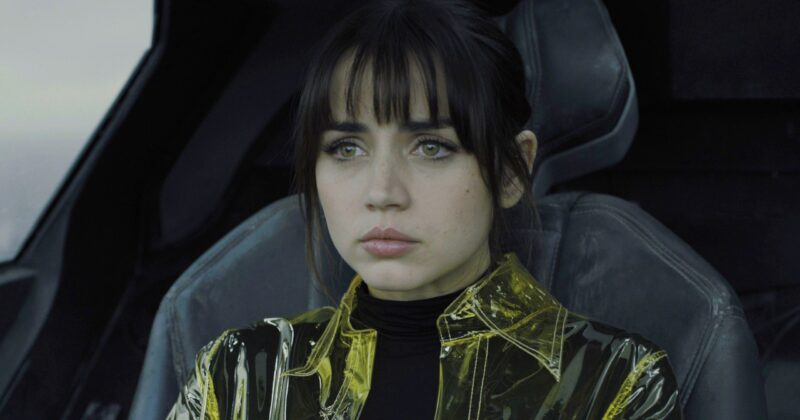
The Evolution of Cyberpunk: Why Blade Runner 2099 Arrives at the Right Time
Few works have influenced science fiction quite like Philip K. Dick’s Do Androids Dream of Electric Sheep?, the novel that spawned Blade Runner and continues to ripple through popular culture. Dick’s vision wasn’t just an exploration of androids—it was a philosophical deep-dive into empathy, identity, and the fine line between human and machine. When Ridley Scott’s Blade Runner turned that narrative into a visually rich, dystopian classic, it reframed those themes through a new, neon-drenched lens. Sequels and adaptations have since kept the cyberpunk ethos alive, always evolving alongside the technology they question.
Blade Runner 2099: Technology Catches Up to Vision
The landscape of technological advancement today mirrors the once-futuristic worlds imagined by Dick and brought to life in Blade Runner. Artificial intelligence is now inseparable from daily routines—found in creative industries, communications, and even healthcare. Conceptual breakthroughs like organic 3D printing, neural interfaces, and synthetic biology are emerging as active research fields, not just speculation. The rise of AI-driven art, eerily humanlike voice simulators, and advanced robotic prototypes have pushed the boundaries of what feels possible, making the fictional replicants eerily plausible.
Blade Runner 2099 doesn’t arrive as a distant warning, but as a pointed reflection of society’s current debates about AI ethics, bioengineering, and digital personhood. For the first time, viewers can’t help but compare screen fiction to the present headlines about data privacy, algorithmic control, and the blurred ethics of automation. The show’s resonance comes not from distant speculation, but because it extrapolates from the reality unfolding right now.
Cyberpunk as a Mirror: Relevance in the Age of Rapid Tech
Cyberpunk has always been a tapestry of anxiety about unchecked innovation. Blade Runner’s iconic cityscapes—soaked in rain and neon—are shorthand for the collision between technology, corporate power, and the erosion of human autonomy. Now, as generative AI and advanced robotics push into mainstream conversations, the genre’s essential questions—‘What makes us human?’, ‘Who controls our future?’, ‘What’s the price of progress?’—are more immediate than ever.
Recent hits like Black Mirror have captured attention by warping near-future scenarios, not by inventing alien technologies, but by tweaking apps and systems just outside today’s comfort zone. Classic anthology series like The Twilight Zone demonstrated that science fiction is most effective when it channels contemporary fears. Blade Runner 2099 rides the same wavelength, but with the massive legacy of the franchise—each new episode could feel less like prophecy, and more like a reflection in a high-tech mirror.
Expanded Horizons: What Makes Blade Runner 2099 Stand Out?
The new miniseries format means more room for in-depth world-building and character development than any previous Blade Runner film. This narrative space will allow moral ambiguities to linger, society’s fractures to surface, and a complex post-revolution world to be more fully realized. Rather than escalating toward rebellion, Blade Runner 2099 focuses on a society already changed by it, delving into the repercussions on both replicants and humans.
In a pivotal shift, the story centers on Olwen (portrayed by Michelle Yeoh), a female replicant approaching the end of her life. While Deckard and K were defined by their duty as Blade Runners patrolling the boundaries of morality, Olwen’s journey recasts the debate. This new protagonist brings into focus the nature of mortality for artificial beings, posing fresh questions about legacy, memory, and the tangible cost of personhood in a world where technology and humanity continually intertwine. This new perspective avoids rehashing old stories, instead offering a deeper examination of what it means to approach your end—not merely as a human, but as a creation whose entire existence blurs that line.
Technical Insight: Why the Tech Behind the Fiction Matters
Blade Runner 2099 isn’t just leveraging nostalgia—it’s drawing from the most current technological frontiers. Bioengineered characters, AI-driven moral dilemmas, and questions about the authenticity of memory align with breakthroughs in synthetic biology, machine learning, and even quantum computing. For viewers and tech enthusiasts alike, the series doubles as both a masterclass in speculative fiction and a subtle primer on the science pushing us toward uncharted territory.
As tech headlines continue to blur with science fiction, this new chapter in the Blade Runner universe challenges audiences not to simply fantasize about the future, but to reckon with the present as it evolves around us—pixel by pixel, algorithm by algorithm, memory by memory.