A Radically New Bucky Barnes Emerges
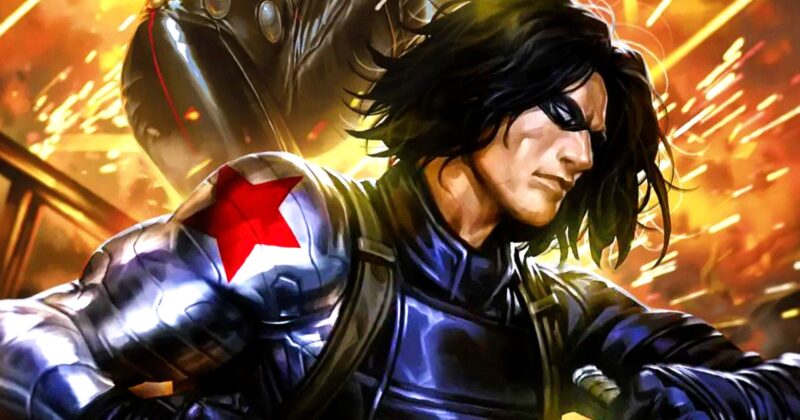
The Marvel Universe rarely takes a breather when it comes to redefining its iconic characters. This time, Bucky Barnes receives a bold reimagining, stepping far away from his Winter Soldier roots in Marvel’s latest Captain America saga. Fans accustomed to the cold efficiency of the Winter Soldier will find themselves facing a Bucky whose entire identity and outlook have drastically shifted — with seismic narrative consequences.
From Boy Sidekick to Tragic Veteran
Historically, Bucky Barnes’ journey through Marvel has mimicked the industry’s own evolution. Once the brave, youthful partner to Steve Rogers during the Golden Age of Comics, Bucky’s fate was one of sacrifice and silence after his World War II demise. This loss, echoing through decades, laid the foundation for the mythic reputation that Captain America and Bucky would eventually share, often likened to their DC counterparts Batman and Robin. But the comics of recent years redefined Bucky as the tortured Winter Soldier, imbuing him with a complex legacy of guilt, loss, and redemption.
The Ultimate Multiverse Twist: Grand Skull Rises
The new take flips expectations yet again. In Marvel’s reborn Ultimate Universe, Bucky transforms not into a Soviet brainwashed weapon, but into the Grand Skull, a lieutenant haunted by his failures and by the passing time. Here, he isn’t frozen in trauma or made to serve foreign masters. Instead, aged and relying on the Infinity Formula and a hulking mech suit for survival, Bucky becomes a symbol of old soldiers unable to let go of the past. Notably, this version sees Bucky’s body weakened by age, even as technology desperately tries to keep up — a departure from the lasting youth of Steve’s Super Soldier Serum.
The revelation hits hard: In a gut-wrenching issue, Steve Rogers is forced to accept that saving his friend is no longer an option. Facing Bucky — now the enemy, physically decayed and lost to ideology — Captain America offers mercy the only way he can. The moment, striking for its raw finality, sees Steve embrace Bucky before ending his suffering, underlining the deep tragedy at the heart of their bond.
Bucky’s Legacy: Always the Martyr
This reshaping of Bucky underlines a pattern woven throughout Marvel’s multiverse. Whether as a self-sacrificing comrade, a villain corrupted by circumstance, or an assassin haunted by his actions, Bucky Barnes is repeatedly cast in the role of the tragic figure who pays the cost for another’s heroism. Earth-6160 is just the latest, but not the only, universe where Bucky’s journey ends in heartbreak. In alternate realities, such as the What If? universe and the House of M timeline, Bucky’s destiny is just as grim — from villainous transformations to a fatal final mission.
What remains constant is the sorrowful symmetry between Bucky and Steve: for one to embody hope, the other must know despair. Bucky’s arc mirrors Spider-Man’s infamous ‘Parker Luck’, except Bucky’s suffering hits later, after a lifetime of choices and wartime scars. It’s a narrative thread that resonates deeply with readers who see their own battles reflected in Marvel’s complex, ever-evolving world.
The Technical Edge: Bucky’s Mech Suit and the Infinity Formula
From a tech perspective, this new Bucky spotlights intriguing elements: the gritty realism of aging heroes, the limitations of the Infinity Formula versus the Super Soldier Serum, and a striking, battle-worn mech suit that sustains what remains of his body. These choices offer a grounded twist amid the chaos of the Marvel multiverse, reinforcing that no technology — not even the wonders of science fiction — can completely halt the march of time or the weight of regret.
Deeper Multiverse Implications
Marvel continues to push its multiverse storytelling into bold territory, using characters like Bucky to explore themes of legacy, identity, and loss. Every redesign, every narrative swerve, offers fresh surface for analysis and fan debate — not just about what makes great superheroes, but about what it costs to remain human in worlds so often defined by superhuman ideals.