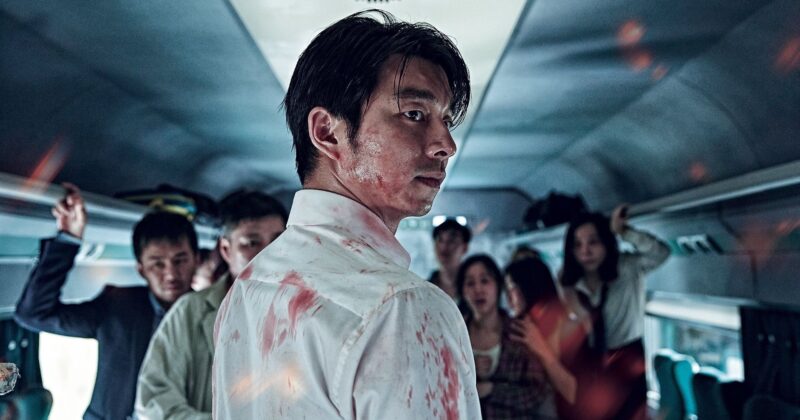
Colony: The Next Evolution in Zombie Cinema From the Director of Train to Busan

The Enduring Impact of Train to Busan on Zombie Cinema
Since its groundbreaking release, Train to Busan has been hailed as a transformative work within the zombie subgenre, elevating it through its intense emotional depth and claustrophobic setting. By focusing on a diverse group of passengers trapped on a speeding train amidst a sudden zombie outbreak, director Yeon Sang-ho delivered a fresh perspective that combined high-stakes survival with poignant human drama. This film not only reinvigorated global interest in zombie narratives but also set a high benchmark for both critics and audiences alike.
With critical acclaim cemented by a 95% critic score and an 85% audience rating on Rotten Tomatoes, Train to Busan remains a cornerstone against which new zombie films are measured. Its success inspired a prequel and a direct sequel, but the latter did not quite recapture the same magic, partially due to external factors like the global pandemic and the challenges inherent in sequels following such a beloved original.
Introducing Colony: A Smart, Claustrophobic Thriller
Stepping back into this chilling world of the undead, Yeon Sang-ho returns with Colony, a film that promises to reinvigorate the genre with a new approach. Unlike Train to Busan’s train-bound setting, Colony confines its characters within a sealed biotechnology conference building, creating a tense, closed environment where survival hinges on more than just brute force. The containment of the infected inside the building by authorities adds a layer of isolation and helplessness, pressing the survivors to outsmart their rapidly evolving foes.
What sets Colony apart is its intriguing narrative focus on biological mutation and scientific analysis. The protagonist, Kwon Se-jeong, a biotechnology professor, must leverage her expertise to decipher the behavior of the infected and find a way to survive. This scientific layer adds a fresh complexity to the zombie genre, bordering on a techno-thriller that delves into the nature of infection and evolution in real-time.
Blending Legacy With Innovation
Colony appears to capture the spirit of Train to Busan, marrying heart-pounding suspense with compelling character arcs and emotional resonance. While Peninsular, the previous sequel, struggled to find footing amid the shadow of the pandemic and its direct continuation of the first film’s storyline, Colony takes a different path. By establishing itself as a spiritual successor rather than a direct sequel, it opens up narrative possibilities, allowing audiences to experience a fresh story with the thematic impact and tension that defined Train to Busan.
The return of Yeon Sang-ho as director guarantees a thoughtful vision, blending practical suspense with profound human moments. His previous works are well-versed in balancing horror with empathetic character storytelling, a formula that has earned him a dedicated fanbase and critical respect. With Colony, expectations are high for a film that not only advances the zombie genre but also pushes cinematic boundaries in tension-building and narrative structure.
Anticipating Colony’s Release and Its Cultural Moment
Set to captivate audiences with its August release, Colony arrives at a time when viewers are eager for fresh takes on apocalypse narratives. Its focus on rapid viral mutation and confined survival aligns intriguingly with contemporary global themes of pandemics and containment, making it both timely and thought-provoking. This grounded yet thrilling approach promises to re-engage horror fans and cinephiles alike, providing both intellectual stimulation and adrenaline-fueled entertainment.
Colony’s fusion of science-driven horror and relentless suspense ensures it stands as more than just another entry in the zombie genre. It’s poised to become a vital part of the ongoing evolution of Korean horror cinema and a beacon for international audiences craving depth, innovation, and masterful storytelling in their horror films.