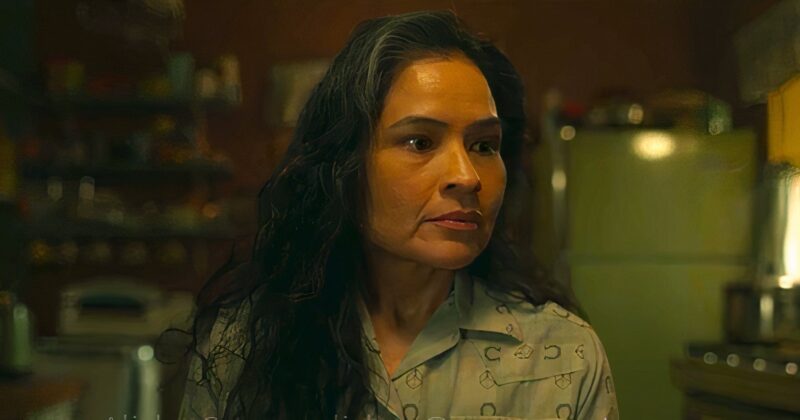
Dark Winds: The Real Reason Emma Leaphorn Never Wanted Joe to Retire – Insights from Deanna Allison

Emma Leaphorn’s Reluctance to Joe’s Retirement: Beyond Duty and Grief
Within the ever-tightening spiral of tension and trauma of Dark Winds, one theme stands out powerfully: Emma Leaphorn’s quiet but unwavering resistance to her husband Joe’s retirement. This isn’t just the stuff of marital disagreement—instead, it digs deep into the emotional bedrock of the series. Emma, played by Deanna Allison, is far more than the supportive wife of a Navajo police lieutenant. Her motivations are shaped by decades of shared pain, community needs, and the ever-complicated process of navigating tradition in a world speeding toward change.
The Marriage at the Heart of Dark Winds
Emma and Joe Leaphorn’s relationship is the foundation on which much of the show’s tension is built. Joe’s dedication to his role as a Navajo Tribal Police officer isn’t merely a career—it’s his anchor. Since the devastating loss of their son, Joe Jr., Joe threw himself further into his work, searching for justice and closure. Emma, herself a respected nurse and healer, recognizes this. She’s an emotional and spiritual guidepost—someone who has always understood that for Joe, police work is therapeutic, maybe even essential for him to bear his grief.
Deanna Allison has spoken candidly about this dynamic, noting that Emma has never asked Joe to hang up his badge. Throughout every season, Emma is unwavering in her support. She knows the importance of tribal officers and caregivers within the Navajo Nation—a community comparable in size to the state of West Virginia. For Emma, retirement isn’t an endpoint; it’s scarcely even a concept. In her eyes, there’s always work to be done, whether in service to the community or to one’s family.
The Trauma That Fractured Trust
The steady rhythm of their marriage and mutual respect was rattled by tragedy and choices made in grief. When Joe fixated on holding BJ Vines responsible for their son’s death—crossing moral lines and ultimately dragging Emma into lies with the authorities—her trust was deeply shaken. Yet, through all this, her commitment to Joe’s wellbeing, alongside her own, never wavered. Emma’s journey isn’t about seeing her husband step back, but about ensuring he finds real fulfillment and peace—something that, for her, comes not from retirement but from purpose and growth.
Emma’s Move to Los Angeles: Self-Discovery and Independence
Season 4 brings a major shift: Emma’s decision to move to Los Angeles. This isn’t just a plot device—it’s a leap into self-discovery, especially for a character who’s often defined herself by service and sacrifice. In LA, Emma finds a new current; she discovers potential within herself outside her role on the reservation. This move, according to Allison, reveals sides of Emma—college-educated, ambitious, open to the acceleration of modern life—that the reservation simply couldn’t.
The future of Emma and Joe’s relationship is left intentionally open. While their reunion is weighted with emotion, Emma’s path is now her own. She must manage her own survival and happiness, balancing heart and independence in a way that reflects real-world dilemmas faced by women—especially those navigating the expectations of close-knit communities.
Adapting Tradition: Dark Winds and the Evolution of Emma Leaphorn
The adaptation of Tony Hillerman’s novels into a television format has allowed for richer exploration of Emma’s arc. Unlike her more static representation in print, on-screen Emma is given room to confront modern realities—career, loss, cultural evolution—with resilience and nuance. Allison herself notes a keen interest in the Ghost Way storyline, where Emma’s LA experience brings a transformative note, tapping into broader changes both for her character and for how the series portrays Native women’s autonomy.
These deeply human stories—loss, ambition, reinvention—resonate not only with fans of the genre, but with anyone who’s faced a crossroad between past and future. Dark Winds continues to push the genre forward by centering voices and stories that are rarely given such authentic space in prestige television.