Dolly: A New Chapter in Slasher Horror
The resurgence of classic slashers has given horror fans a buffet of grisly delights, and ‘Dolly’ is positioning itself at the bloodier end of the spectrum. Directed by the Emmy-nominated Rod Blackhurst, whose previous work includes Netflix’s Amanda Knox and the spine-chilling Night Swim, this new feature attempts to walk the razor-thin line between nostalgia and modern horror brutality.
Back to Essentials: A Throwback with a Contemporary Kick
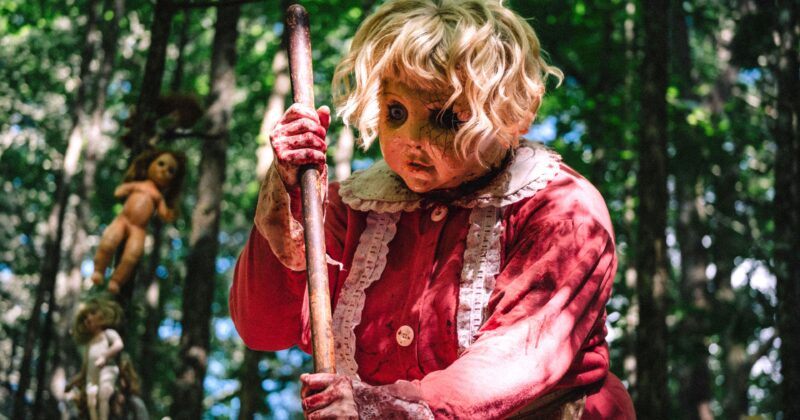
Many recent slashers find themselves torn between meta commentaries (think Scream) and relentless violence (Terrifier). ‘Dolly’ dives squarely into the latter. The tale follows Macy and Chase, a couple heading for a secluded Tennessee camping trip that promises much more than scenic views. Macy is wrestling with doubts about stepping into a maternal role, while Chase nervously prepares a proposal she already senses is coming. Their plans are violently interrupted by the film’s namesake, a hulking figure in a porcelain doll mask, with a twisted mission to create her own family at any cost.
Grindhouse Visuals Meet Modern Techniques
Blackhurst tips his hat to grindhouse classics with a film shot on 16mm, evoking not only the grain and mood of the Robert Rodriguez/Quentin Tarantino Grindhouse era but also the viscera of Rob Zombie’s infamous outputs. From old-school iris transitions to in-camera digital tweaks, the film’s first half is visually dynamic, keeping genre aficionados engaged. However, as the story progresses, the ambitious style loses some coherence, mirroring the film’s struggle to expand a brief short into a full-length ordeal.
Slasher Archetypes and Character Depth
One of ‘Dolly’‘s stronger hands is casting. Fabianne Therese (John Dies at the End, Starry Eyes) delivers a standout performance, capturing both raw terror and fierce resolve. Her depiction is a worthy addition to the lineage of iconic final girls like Laurie Strode and Sidney Prescott. In a compelling twist, Max the Impaler—a champion from wrestling’s NWA circles—debuts as Dolly. Their portrayal infuses the killer with both menace and a glimmer of pathos, especially in the quieter moments where maternal longing bleeds through their brutality.
The film teases at a layered backstory; Dolly’s desperate craving for motherhood creates a disturbing mirroring of Macy’s own anxieties. Unfortunately, attempts at segmenting the film into thematic chapters tend to undercut the narrative flow. The story’s structure shifts so rapidly it becomes difficult for any emotional thread to land with full impact.
Practical Effects, Creative Kills—But Where’s the Fun?
For many horror purists, practical effects are king. ‘Dolly’ delivers here: the kill sequences are as savage as they are inventive. The splatter is tangible, and the makeup effects are sure to satisfy those who crave analog gore rather than CGI excess. That said, the movie’s tone oscillates between grim seriousness and moments that beg for dark humor—often missing opportunities for the outrageous fun that elevates its genre relatives.
Flawed but Unforgettable?
While ‘Dolly’ falls short of maximizing its potential, especially in pacing and tonal consistency, it undeniably packs a punch in raw horror moments. Those looking for slick storytelling may find it wanting, but fans hungry for visceral violence and practical artistry will find plenty to dissect. With the door left open for a sequel, the hope lingers that future entries could layer more substance atop its savage style.
Cast & Creative Team
- Director: Rod Blackhurst
- Writers: Rod Blackhurst, Brandon Weavil
- Producers: Betty Tong, Bryce McGuire, Esteban Sánchez, Isaiah Smallman, Joseph C. Grano, Noah Lang, Rod Blackhurst, Ross O’Connor
- Cast: Fabianne Therese (Macy), Seann William Scott (Chase), Max the Impaler (Dolly)
- Executive Producer: Steven Schneider
Runtime: 84 minutes | Genre: Horror