Frankenstein vs The Bride: Breaking Down the Major Differences in the Monster’s Latest Cinematic Lives

The Evolution of a Horror Icon: Frankenstein and The Bride Compared
Frankenstein’s Monster is more than just a fixture of Gothic literature—it’s an enduring symbol across media, from radio to blockbuster cinema. The myth has inspired over 450 films, and its ability to adapt to changing audiences keeps it as relevant today as ever. Two of the latest entries in this mythology—Guillermo Del Toro’s Frankenstein and Maggie Gyllenhaal’s The Bride!—launched mere months apart, sparking immediate comparisons within the pop culture sphere. Yet, beneath their shared roots, these films diverge dramatically in their vision, narrative focus, and the themes they explore.
The Bride!: A Reinvention, Not a Classic Adaptation
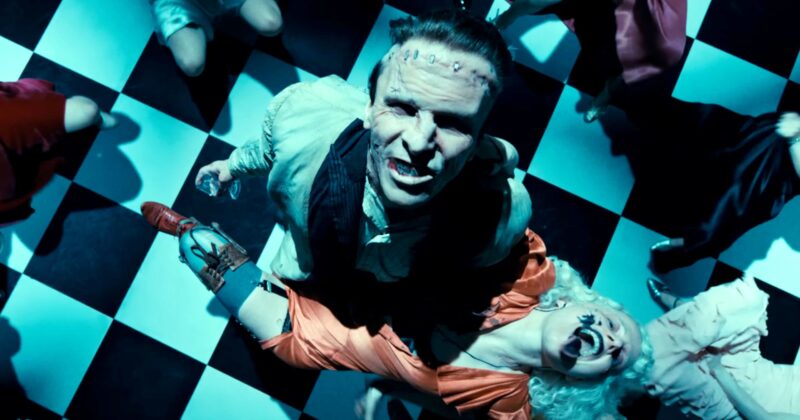
While The Bride! utilizes the character of the Creature (now named Frank, played by Christian Bale), its narrative doesn’t trace directly back to Mary Shelley’s 1818 original novel. Instead, the movie draws most heavily from the 1935 film «The Bride of Frankenstein». This distinction is essential; Shelley’s Frankenstein never met this version of the Bride or the cinematic language James Whale crafted in his sequels. Where Whale expanded, altered, and even glamorized the story, Gyllenhaal’s approach is bolder still—offering a feminist, 1930s Chicago-centric reimagining that turns the myth on its head.
No Victor Frankenstein in The Bride!
Guillermo Del Toro’s recent adaptation of Frankenstein is notable for its robust depiction of Dr. Victor Frankenstein—a charismatic, driven creator and the narrative’s bitter heart. Oscar Isaac’s portrayal ensures the doctor is at the center, entangled in philosophical and literal pursuits with The Creature, played by Jacob Elordi. By contrast, The Bride! leaps beyond Frankenstein’s time—Dr. Frankenstein is absent entirely. Instead, Frank, the former Creature, assumes a lead role, and the science of resurrection belongs to Dr. Cornelia Euphronious, facilitating a dramatic role swap as the classic creation steps into creator-like agency.
A New Protagonist: The Bride Takes Center Stage
Who leads a Frankenstein story? It’s a long-standing debate. Shelley’s novel is voiced by Victor, but his creation—frequently more sympathetic and morally complicated—might just as easily claim co-protagonist status. Del Toro’s adaptation keeps both perspectives alive. Gyllenhaal’s The Bride!, however, is the Bride’s narrative, pure and simple. Jessie Buckley’s Ida returns from the dead as the titular Bride, guided by Frank. This marks a dramatic shift: we’re no longer anchored by the existential questions of a mad scientist and his monster, but instead swept along on the Bride’s quest for identity and autonomy.
Faithful Versus Radical Adaptation
Most films in the Frankenstein canon take liberties, sometimes straying far from Shelley’s thematic intent. Del Toro negotiates a careful balance, retaining much of the original’s gloomy morality while introducing new elements: an older, more experienced Victor, altered connections among key players, and a reimagined ending which leans into hope and redemption. The Bride! thrives on transgression—it isn’t set in the Gothic era but rather in the bustling modernity of 1930s Chicago. Characters like Dr. Euphronious and even a spectral Mary Shelley, who narrates scenes almost as a ghostly conscience, are entirely new inventions. Notably, the original cinematic Bride mutely recoils from the Creature; Gyllenhaal gives her a voice—and a mission.
Contrasting Settings: Arctic Wilds vs. Urban Noir
Shelley’s text—and many of its adaptations—inhabit a Europe caught between civilization and wild isolation, with settings spanning the Alpine glaciers and decaying castles of Germany and Switzerland. Del Toro places his version within the tumult of the Crimean War, echoing his talent for blending fairy tales with history (as seen in ‘Pinocchio’).
The Bride!, though, opts for something entirely different: 1930s Chicago, with all the urban grit that comes with it. We’re far from sailing ships and Gothic laboratories; this world is full of detectives and noir sensibilities, movie theaters instead of laboratories, and shifting alliances far from Shelley’s original vision.
Themes that Resonate: From Monstrosity to Modern Feminism
Shelley’s legacy is bound to questions of ambition, alienation, and the sometimes tragic tie between creator and creation. Del Toro sustains these key themes, adding a dose of hope. In contrast, the 1935 film revealed society’s cruel rejection of ‘the other.’ The Bride’s mute horror became an icon of misunderstood monstrosity.
With The Bride!, Gyllenhaal takes this idea further. Ida/The Bride is not merely the subject of someone else’s experiment, but an independent agent, pushing back against the roles assigned to her—both alive and revived. It’s a narrative heart that sits firmly in contemporary discussions of autonomy and identity, making the story more than just a story of monsters—it’s about what makes us human, and who gets to decide.
Frank: Mortal, Not Mythic
One of the more striking changes in The Bride! is the nature of Frank himself. Unlike the nearly immortal, tragic figure of the original, this Frank wrestles with human limitation and mortality, grounding the story’s mythic ambitions into a raw exploration of what it means to live within society—and outside it.