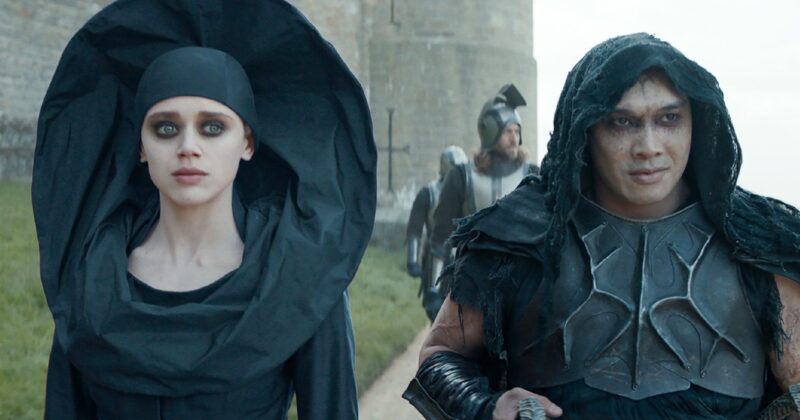
HBO Set to Expand High Fantasy Horizons with Baldur’s Gate 3 Sequel Series

HBO’s Bold Move into High Fantasy Television
High fantasy is undergoing a significant resurgence across streaming platforms, with HBO positioning itself at the forefront due to its proven track record and ambitious projects. Following the monumental success of Game of Thrones, HBO has demonstrated an unparalleled commitment to crafting immersive, large-scale fantasy worlds that captivate millions. Now, the network is set to elevate the genre by adapting the critically acclaimed video game Baldur’s Gate 3 into a sequel TV series, tackling a narrative continuation rather than a direct retelling.
This approach comes as a breath of fresh air in a landscape where many adaptations solely focus on source material retellings. The creative helm is entrusted to Craig Mazin, known for masterminding the celebrated The Last of Us adaptation. Mazin’s deep-rooted passion for tabletop role-playing games—he has been a dedicated Dungeon Master for over 15 years—imbues the project with an authenticity that fans of Dungeons & Dragons and the Forgotten Realms world will undoubtedly appreciate.
Challenges and Opportunities in Expanding Baldur’s Gate
One of the most intriguing challenges faced by the series arises from the game’s branching endings influenced by player choices. Unlike linear narratives, Baldur’s Gate 3 offers multiple conclusions, all canonically valid depending on player agency. This complexity presents a conundrum for Mazin: selecting one ending as the definitive continuation risks alienating segments of the fanbase invested in other outcomes, while crafting an entirely new narrative pathway offers creative freedom but requires delicate balance to maintain lore fidelity.
Fortunately, this adaptive freedom empowers the showrunners to explore narrative avenues that transcend fixed game events. Without the constraint of future game plot requirements, the show can cultivate unique characters, forge new storylines, and delve into underexplored facets of the Forgotten Realms. The setting itself is a vast canvas ripe for inventive storytelling, featuring a treasure trove of creatures, factions, and magic systems familiar to D&D enthusiasts yet fresh to the broader audience.
Creative Collaborations and Industry Expertise
Mazin’s collaborative approach is bolstered by bringing in Chris Perkins as a consultant, a creative force renowned for his tenure as Head of Story at Wizards of the Coast. Perkins’ involvement guarantees a narrative closely aligned with the mechanics and spirit of Dungeons & Dragons, ensuring adherence to the underlying game rules while expanding the mythos in compelling ways.
Moreover, the series promises a mix of new faces alongside beloved characters from the game, though casting remains flexible. There is curiosity about whether original voice actors like Samantha Beart (Karlach) and Neil Newbon (Astarion) will reprise their roles. Given Mazin’s precedent of incorporating original game talent in The Last of Us adaptation, there is cautious optimism that familiar voices could enhance continuity and fan connection.
The High Fantasy Boom Across Streaming Platforms
The timing of HBO’s Baldur’s Gate 3 series coincides with an unprecedented surge in high fantasy TV production. Prime Video is developing ambitious projects such as Fourth Wing, God of War, and The Dark Tower, while Netflix expands its fantasy portfolio with titles like The Witcher, The Forbidden Realms, and Magic: The Gathering. Apple TV+ is also staking a strong claim by adapting Brandon Sanderson’s The Stormlight Archive, with the author himself having unprecedented creative oversight.
While competition is fierce, HBO’s established reputation for high production values and narrative complexity gives it a distinct advantage. Its willingness to invest deeply in world-building, coupled with Mazin’s proven skill in adaptations that honor their source material, bodes well for Baldur’s Gate 3 emerging as a flagship series for both fantasy aficionados and newcomers alike.
Technical and Narrative Depth in Adaptation
From a technical standpoint, the transition from video game to television presents significant opportunities to leverage cinematic storytelling tools unavailable in the interactive medium. HBO can utilize sophisticated set design, costuming, visual effects, and musical scoring to bring the Forgotten Realms to life in unprecedented detail. It can also explore character development and thematic arcs more extensively, providing new layers of emotional resonance beyond gameplay mechanics.
Balancing the core tenets of D&D gameplay—such as chance, choice, and consequence—with the demands of episodic drama will require careful scripting and pacing. Story beats must engage viewers irrespective of game familiarity while rewarding dedicated fans with nuanced references and lore expansions. Mazin’s involvement and collaboration with D&D veterans like Perkins is crucial in navigating these challenges by crafting stories that marry role-playing sensibilities with narrative coherence.
Looking Ahead to the Future of Baldur’s Gate and Fantasy Television
In summary, the HBO Baldur’s Gate 3 sequel series promises to be an ambitious and creatively rich expansion of one of the most beloved RPG universes. It exemplifies a growing trend of multi-platform storytelling, where video games and television interconnect to build expansive worlds. This project has the potential not only to satisfy the passionate community around Baldur’s Gate but also to entice a broader audience to the wonders of high fantasy.
As the industry continues to push the boundaries of adaptation, projects like this underscore the importance of creative freedom matched with respect for source material. With its expertly assembled team and the vast narrative playground of the Forgotten Realms, HBO is poised to deliver a new classic in fantasy entertainment, setting a high bar for future adaptations in the genre.