How ‘Monarch: Legacy of Monsters’ Revolutionizes the Monsterverse With Mind-Bending Sci-Fi Twists

The Monsterverse Takes a Quantum Leap on Apple TV
Apple TV’s sci-fi library has become a standout destination for genre fans, but its latest move has left the entire Monsterverse shaken. With ‘Monarch: Legacy of Monsters’ expanding its narrative in Season 2, what began as a traditional kaiju saga now flirts with the cutting edge of speculative fiction, merging universe-shaking twists with genuine emotional resonance. If you thought Godzilla and Kong were the only titans rewriting the rules, Season 2 proves there are even bigger upheavals afoot.
The Monsterverse: A Foundation Built on Sci-Fi Innovation
The Monsterverse premiered with massive spectacle in 2014’s Godzilla, featuring a cast that crossed over with some of the biggest superhero universes. The franchise steadily evolved, weaving in Kong, a menagerie of Titans, and crossovers that delighted fans worldwide. Each film and series layered new sci-fi concepts—advanced weapons, mysterious organizations, and baffling natural phenomena like wormholes and time dilation. Yet, until recently, most of this lore stayed within cinematic boundaries.
‘Monarch: Legacy of Monsters’ shifts the paradigm. It’s not just about the monsters anymore—it’s about time itself. The show’s ability to make the fantastical feel plausible has always been built on a love for classic science fiction, and now, with the latest episodes, it’s clear the series is ready to push the boundaries beyond recognition.
The Axis Mundi: Where Time Stands Still
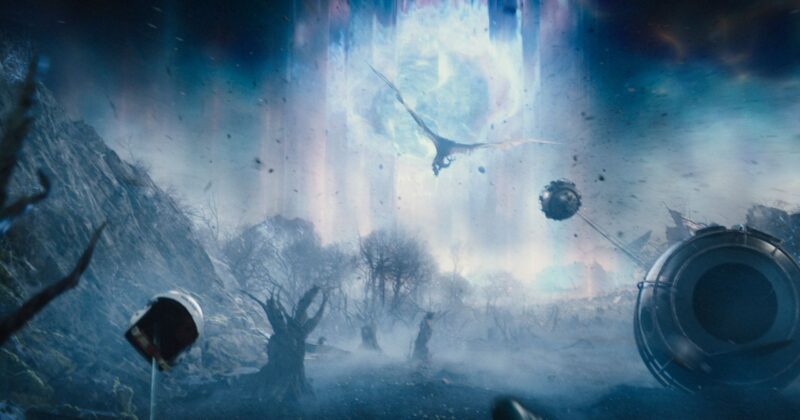
Season 1 introduced viewers to the Axis Mundi, a nexus bridging the surface world and the enigmatic Hollow Earth. Fans quickly noticed something remarkable—time behaves differently in this interdimensional space. When Keiko Miura emerges unaged after 56 years, the implications for continuity and character arcs ripple through the show. The Monsterverse has now become an arena where time is as unpredictable as the Titans themselves.
Season 2’s Bold Leap: The Monsterverse Rewritten
The genre-defining moment arrives in Season 2, Episode 6. Here, Lee Shaw and Dr. Suzuki develop an innovative Titan communication device, designed to summon Godzilla to battle a new threat, Titan X. But their experiment goes awry when quantum phenomena come into play—resulting in younger and older versions of Lee Shaw communicating across time via radio. This surreal development pushes the Monsterverse toward the territory of true speculative science fiction, opening unexpected possibilities for future narratives.
With the risk of quantum distortions now a reality within the universe, the groundwork has been laid for time travel, paradoxes, and potentially rewriting the histories of well-loved (or long-lost) characters. The suggestion that characters like Bill Randa could return, whether in altered or revived forms, fuels endless theories and speculation across fan forums and social media.
Franchise Impacts: Endless Possibilities for Future Stories
This time travel element is more than a narrative trick. It positions the Monsterverse alongside other iconic sci-fi franchises that have embraced time as a mutable dimension, such as Star Trek and Doctor Who. For fans eagerly awaiting the next silver screen installment, rumored to be centered on Godzilla and Kong, the door is now open to the kind of storytelling unthinkable when the original Godzilla first stomped into cinemas.
Monarch: Legacy of Monsters doesn’t just expand the Monsterverse; it fundamentally changes the playing field. The true thrill of this series now lies in its unpredictability—either on Apple TV’s episodic tapestry or in future films, the Monsterverse’s timeline is now as awe-inspiring and perilous as any of its towering creatures.