The Legacy of Openers: Setting the Tone in Cyberpunk TV
Opening lines in sci-fi series aren’t just the first taste of a show—often, they fuel speculation, set expectations, and instantly declare what kind of journey the viewer is about to embark on. When Altered Carbon debuted on Netflix, it delivered an opener that instantly resonated with long-time fans of the cyberpunk genre: ‘The first thing you’ll learn is that nothing is what it seems. The second thing you’ll learn is that I’m the best at what I do.’ These words, beyond serving as a narrative hook, embody the unsettling brilliance of a world where identity, death, and truth itself have lost all familiar markers.
Altered Carbon: Rewriting Rules of Reality
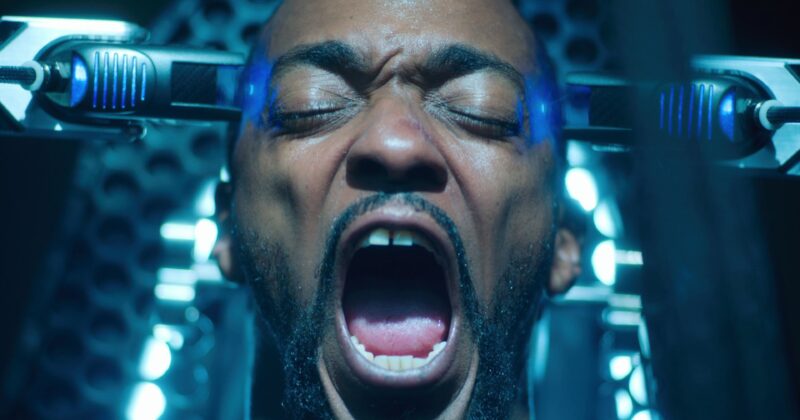
The opening line of Altered Carbon is more than dramatic flair; it’s a thesis for a universe where the boundary between body and mind dissolves. Here, human consciousness is stored in ‘stacks,’ transplanted into new bodies—or ‘sleeves’—with unnerving ease. Takeshi Kovacs, the central figure, warns us that appearances are illusory—a sentiment that grows truer with each episode as viewers see characters change bodies, making faces irrelevant and memories the only constants. This narrative device doesn’t just push the genre’s limits; it transforms what viewers expect from TV sci-fi, making the detective-noir plot a meditation on existence itself.
Homage to Classics: Echoes of The Matrix and the Cyberpunk Canon
For connoisseurs of cyberpunk, Altered Carbon’s conceptual anchor calls back to genre titans like The Matrix, where reality is questioned at every turn. Yet, in Altered Carbon, the declaration is not philosophical so much as a grim physical reality. The corruption, corporate intrigue, and existential crises hinge on the world’s rules: bodies die, stacks survive, and the soul is data—hackable, transferable, and ultimately, exploitable.
Neuromancer on Apple TV: The Future of Sci-Fi Openings
Now, a fresh challenger emerges: Apple TV+’s upcoming adaptation of Neuromancer. Based on William Gibson‘s era-defining novel, the series promises to wield what is arguably the most iconic sentence in science fiction: ‘The sky above the port was the color of television, tuned to a dead channel.’ This is more than vivid imagery—it’s a cultural touchstone. Gibson didn’t only create the blueprint for cyberpunk; he locked its philosophy into a single, unforgettable moment.
From Print to Stream: Translating Gibson’s Vision
When Neuromancer was first published, a ‘dead channel’ meant shimmering black-and-white static—a universal sight for anyone raised on tube TVs. Today, that static has faded from living rooms, replaced by blank blues or blacks on flat screens. Despite technological shifts, the feeling persists: emptiness, digital noise, a city drowned in artificial light. As Apple TV+ brings Neuromancer to the screen, the challenge isn’t just period accuracy—it’s in capturing that disconnection, that pervasive sense of post-human isolation. Visually and emotionally, the show must bridge the generation gap between analog nostalgia and the digital overload of 2026.
As city skylines around the world grow foggier with pollution and the glow of endless billboards, it’s no exaggeration to say our skies do look like television tuned to nowhere. The metaphor lands harder than ever, especially in today’s world—technology omnipresent, urban sprawl suffocating, screens the new landscape. Neuromancer’s prophetic opening is primed for a new audience to discover how much its world eerily mirrors our own.
What to Expect: Casting and Creative Forces
Leading the show is Callum Turner as Henry Case, a washed-up super-hacker, and Briana Middleton as Molly, his razor-clawed partner in crime—two figures destined to redefine the on-screen dynamic of hackers and mercenaries. With Graham Roland at the helm as showrunner, the project has already attracted attention for fidelity to Gibson’s vision and its promise of atmosphere-drenched visuals that capture the neon noir essence of the novel. Rumors suggest that Apple TV+ is sparing no effort in set design, effects, and authenticity, aiming to deliver a cyberpunk future that feels as tactile and immersive as Altered Carbon’s digitized dystopia.
Cultural Impact: Cyberpunk’s Opening Salvos and the Genre’s Evolution
Why do these lines matter so much? In cyberpunk, first impressions do more than just attract curiosity—they anchor sprawling, complex universes to something intimate and human. Altered Carbon’s opener was a masterclass in world-building; Neuromancer’s is a linguistic spark that has ignited imaginations for decades. As the genre continues to rebound in mainstream culture, these moments become not just invitations, but promises—a guarantee that what follows will challenge views on consciousness, society, and the blurry line between man and machine.
Long after streaming platforms shift and viewing habits change, some words remain etched in the mind. With Neuromancer set to bring a new generation into the chrome-lit, rain-soaked heart of cyberpunk, the stage is set for a new contender in TV history—a first line that reflects both the promise and the peril of our increasingly digitized existence.