How The Haunting of Hill House Redefined TV Horror With a Mind-Bending Twist
The Art of the Perfect Twist: The Haunting of Hill House
Few horror series ignite such a combination of dread and awe as The Haunting of Hill House. On its debut, it wasn’t just a return to haunted house storytelling but a lesson in how to deliver the kind of narrative twist that lingers long after the credits roll. Creating a shocking twist that feels both unexpected and inevitably perfect is a rare feat, even more so in a genre built around familiar tropes. But here, those boundaries are not just blurred—they’re obliterated with a confidence that seems almost effortless.
The Bent-Neck Lady: A Ghost Story Turned Inward
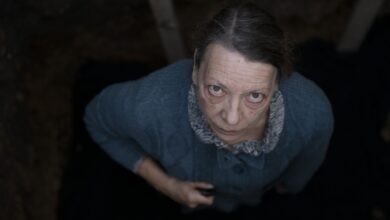
Classic ghost stories tend to draw from the same well: spirits bound to the tragedies of their demise, cryptically stalking the living. The Haunting of Hill House introduces the Bent-Neck Lady as just another spectral figure, tethered to the house’s tragic legacy. However, the narrative point of view shifts subtly: only Nell is ever haunted by this apparition, and that singular connection casts a growing shadow over the series.
The big reveal—that Nell herself is the Bent-Neck Lady, haunted not by an external entity but by her own fate—breaks time itself open. This narrative choice redefines the familiar, turning a ghost into an echo of trauma and creating a loop of fear and inevitability. It’s storytelling that leaves just enough space for interpretation, a hallmark of horror that invites viewers to theorize rather than spoon-feed an explanation.
Time, Trauma, and the Unknown
By refusing to neatly explain the mechanics of its time-bending twist, The Haunting of Hill House becomes a contemporary horror classic. It touches on literary horror’s greatest strengths: the fear of the unknown, the uncertain boundary between past and present, and the deeply personal nature of hauntings. The show’s embrace of ambiguity channels a tradition that owes as much to H.P. Lovecraft’s cosmic fear as to modern psychology.
As the series unfolds, the ghostly phenomena are not limited to external entities. They become metaphors for grief and unresolved trauma—manifestations that are as individual as they are spectral. This dual perspective—ghosts as both literal and metaphorical specters—elevates the series above its many inspirations.
From Shirley Jackson to Contemporary Prestige Horror
Drawing its fundamental inspiration from Shirley Jackson’s acclaimed novel, The Haunting of Hill House never settles for a straightforward adaptation. Showrunner Mike Flanagan weaves together not just Jackson’s vision, but narrative threads from works like Stephen King’s The Shining and even Shakespeare’s Hamlet. The result is a psychological horror tapestry that balances existential dread with a deep examination of family and memory.
This adaptation doesn’t just borrow from horror canon—it expands it. The interplay between literary references and original narrative choices draws in fans of both classic and modern horror, reinforcing why the series is often cited as a watershed moment for the genre.
The Legacy of The Haunting of Hill House
Since its debut, The Haunting of Hill House has inspired both critical praise and a devoted fanbase, solidifying its place as one of the definitive modern horror experiences. While its creator has gone on to helm other standout projects, this series remains the gold standard for what horror on television can achieve—blending fear, emotional resonance, and narrative innovation.
Whether you’re revisiting the series for its chill-inducing atmosphere or exploring its intricate layers of grief and family legacy, the story’s mastery of the twist—and its willingness to embrace the mystery at the heart of all great horror—cements its place at the top of the streaming horror pantheon.