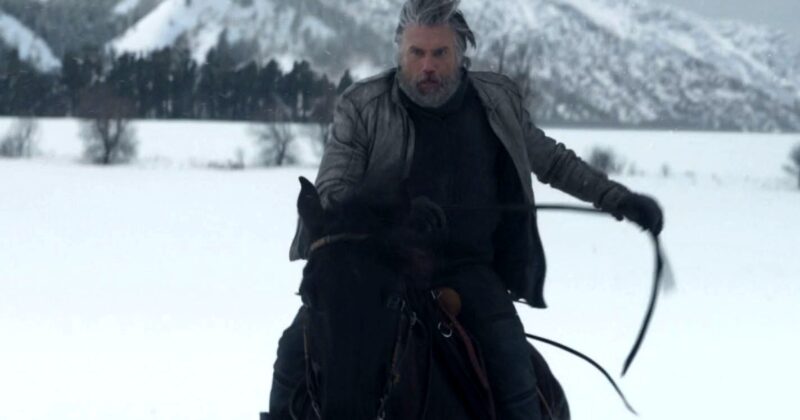
Star Trek Faces a Crossroads: Lessons from Yellowstone
Star Trek stands at a defining moment, echoing the challenges that have rippled across the TV landscape in recent years. While the iconic franchise’s streaming future on Paramount+ is shrouded in uncertainty, its TV cousin Yellowstone has blazed a fresh trail that could hold the key to resolving Star Trek's core dilemma: the split between streaming exclusivity and traditional television reach.
Yellowstone's Success: A Blueprint for Major Franchises
Fueled by the creative force of Taylor Sheridan, Yellowstone didn't just captivate audiences on Paramount Network; it expanded with spinoffs that dominate both streaming and linear TV. From Landman to the return of characters like Beth Dutton and Rip Wheeler in The Dutton Ranch, the Yellowstone universe has proven that a franchise can thrive across multiple formats without losing its identity. Notably, CBS’s Marshals brought the procedural format to the network, successfully integrating Yellowstone storytelling with tried-and-true TV formulas.
What Star Trek Fans Want: More Episodes, Deeper Stories
The complaint echoing across Star Trek fandom is clear: there aren't enough episodes to satisfy the appetite of longtime viewers. Those who grew up with the sprawling 26-episode seasons of The Next Generation or Deep Space Nine have found the recent 10-episode runs on Paramount+ lacking in both depth and variety. Nostalgia isn't the only force at play—there's a genuine thirst for the layered, episodic storytelling that made Star Trek a touchstone for cerebral, story-driven sci-fi.
Splitting the Franchise: A Best-of-Both-Worlds Solution
Drawing from the Yellowstone model, Star Trek could reboot its TV strategy by offering two parallel series: one designed for streaming on Paramount+, and another as a network TV staple. Imagine a Star Trek flagship on CBS, delivering 22–26 episodes per season with classic episodic adventures, high-stakes exploration, and self-contained plots. Meanwhile, a cutting-edge streaming series could push boundaries with serialized arcs, slick visuals, and experimental storytelling—the perfect playground for risk-taking and innovation.
This approach isn't some unprecedented gamble. CBS and Paramount+ already share intellectual property across platforms, allowing characters and storylines to overlap. Yellowstone’s Marshals and The Dutton Ranch prove this kind of synergy isn’t just viable—it’s a powerhouse for audience engagement and franchise growth.
Breaking Down Barriers: Expanding the Star Trek Fanbase
For years, Star Trek has existed behind a paywall, limiting exposure and accessibility. A return to broadcast television would make the universe of Starfleet accessible to new and returning fans alike. There’s an added bonus: network TV still reaches millions who don’t subscribe to streaming apps, providing an open door to the wonders of warp drive and Federation diplomacy. This move could reinvigorate Star Trek’s ability to connect generations of viewers the way it did during its heyday.
A Universe of Possibilities: Crossovers and Shared Storytelling
Following Yellowstone’s playbook opens exciting creative avenues. Multiple series could exist within the same timeline, occasionally crossing over—influencing storylines, sharing cast members, or even launching limited-event series when big moments call for it. This kind of interlocking universe is tailor-made for fans who thrive on narrative depth and continuity, bringing the expansive vision of Gene Roddenberry into the era of multiplatform entertainment.
Preserving Variety and Innovation in Star Trek’s Next Phase
One of the unsung successes of recent Star Trek iterations has been their willingness to diversify: serialization, animation, and greater representation have ushered in a new era. Still, fans crave a balance between nostalgia and novelty. By allowing simultaneous network and streaming series—each with its own tone and structure—Star Trek can satisfy classic sensibilities while continuing to pioneer new frontiers in sci-fi storytelling.
Star Trek is ready for its next big leap—not into the unknown, but into a realm where tradition and innovation coexist, and every generation of fans can find a home among the stars.