Inside Andy Serkis’s Animated Adaptation of Orwell’s Animal Farm: Balancing Dark Themes with Family-Friendly Storytelling

A New Take on a Timeless Classic
Andy Serkis, renowned for his transformative work in motion capture and storytelling, takes on a bold challenge with his upcoming animated adaptation of George Orwell’s Animal Farm. This story, standing strong for over eight decades, carries a heavy, dystopian weight that has resonated across generations. Serkis’s version embraces its legacy but reimagines it as a family film tailored to modern audiences, particularly Gen Alpha children, without diluting its core messages.
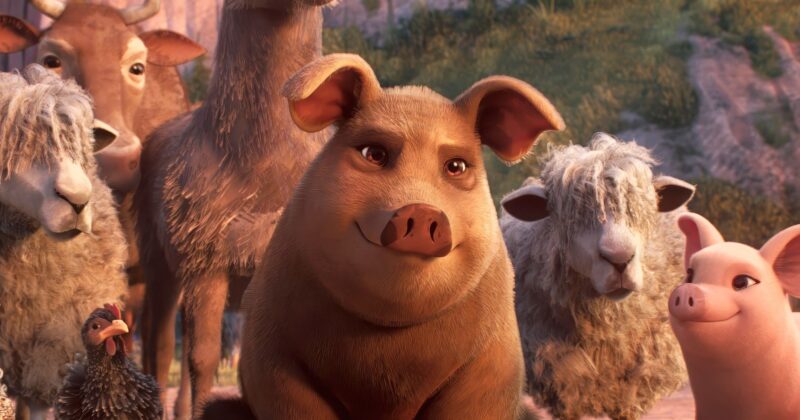
The story remains faithful to Orwell’s vision of the dangers of authoritarianism, power corruption, and manipulation—but with a fresh narrative twist. This rendition introduces a new protagonist, Lucky, a young piglet voiced by Gaten Matarazzo of Stranger Things fame. Lucky serves as the audience’s lens into the farm’s uprising, providing a more hopeful perspective while still confronting the brutal political machinations between the pig leaders Napoleon and Snowball.
Adapting a Dark Classic for Younger Viewers
Serkis openly discusses the challenge of reshaping Orwell’s harsh allegory into a film accessible to tweens and children. “It isn’t just about making it lighter,” he explains, “but finding a way to keep its intellectual and political depth without overwhelming younger viewers with overt violence or grim despair.” The adaptation therefore leans on the concept of a ‘fairytale’ imbued with shadows—acknowledging the darker themes while packaging them in a tone that encourages family dialogue rather than distress.
This approach addresses the complex reasons history repeats itself, tackling issues like fake news, broken leadership, and manipulative language. Even with its hand extended toward kids, the film does not shy away from illustrating how propaganda and authoritarian control take root. This nuanced layering of political commentary beneath a palatable surface is a hallmark of Serkis’s vision.
From Social Media Echo Chambers to Classic Political Allegory
Interestingly, the project’s origins stem from conversations starting as early as 2012, when social media began drastically shaping how information flows and influences younger generations. Serkis highlights this digital cultural context as part of why a contemporary retelling is not only relevant but necessary. The film subtly integrates modern concerns like misinformation and divided communities, translated through the allegorical farm setting.
Securing rights from the Orwell estate was a pivotal step that shaped the direction, allowing Serkis to preserve the film’s political essence without it becoming a dreary, overly didactic political lecture. This balance was essential to attracting collaborators and voice talent who would understand and respect the story’s complexity while engaging a broad audience.
Stellar Voice Cast Brings the Farm to Life
The voice cast assembled for this adaptation is nothing short of star-studded, contributing to the film’s appeal and accessibility. Seth Rogen lends his voice to Napoleon, delivering a sharp performance reflecting the cunning and ruthlessness of Orwell’s iconic figure. Laverne Cox inhabits Snowball, bringing charisma and nuance to the rival pig leader. Woody Harrelson voices Boxer, the steadfast workhorse, with warmth and gravitas.
Other notable voices include Glenn Close as Freida Pilkington, Steve Buscemi as Mr. Whymper, and Jim Parsons as Carl, alongside the flock of sheep, adding layers of humor and personality. Kathleen Turner embodies Benjamin, the cynical donkey, while Iman Vellani voices new characters Puff and Tammy, enriching the farm’s world.
Serkis himself lends his vocal talents to multiple roles, portraying the human owner Mr. Jones, the visionary pig Old Major, and Randolph the rooster, further embedding his creative imprint on the film.
Why This Adaptation Matters Today
Animal Farm continues to be chillingly relevant, especially in an age dominated by rapid technological change, digital media influence, and global political instability. Serkis’s adaptation invites younger audiences to engage with these ideas meaningfully. It facilitates conversations across generations—parents, children, and grandparents can explore why authoritarianism resurfaces and how power can be wielded or misused.
This new version stands as an example of how classic literature can be reinterpreted with technological advancements in CG animation, offering immersive storytelling with compelling visuals and a voice cast that breathes new life into legendary characters. With a 96-minute runtime, the film strikes a balance between entertainment and thoughtful reflection, designed to spark curiosity rather than overwhelm.
As it makes its way into theaters, this adaptation holds promise as a vital cultural touchstone, blending the timeless with the timely, and bringing Orwell’s dark fable into a new era with empathy and insight.