How a College Short Film Sparked an Unconventional Collaboration
Every so often, the world of independent cinema surprises us with stories that could only unfold in this unique ecosystem—stories built on dares, unlikely connections, and instinctive trust. This very dynamic lies at the heart of ‘See You When I See You’, a compelling dramedy directed by Jay Duplass and adapted from Adam Cayton-Holland’s raw memoir, Tragedy Plus Time.
Cooper Raiff: From College Dare to Leading Role
Unlike traditional casting calls, the journey that brought Cooper Raiff into the lead role of Aaron is worthy of its own behind-the-scenes feature. Raiff, already recognized for his intimate filmmaking voice in Cha Cha Real Smooth, dared Duplass to watch a college film he’d uploaded to YouTube. The result? Not a two-minute pitch, but a 50-minute project, which became the unexpected spark for a creative partnership.
Duplass recounted that, thanks to Raiff’s unconventional challenge, he was immediately drawn in. Within minutes, he pulled his wife into the room, realizing there was an authentic storytelling quality resonant with the indie spirit that’s come to define new-wave dramedies. That genuine “home movie” atmosphere—raw, honest, and undeniably relatable—formed the DNA of Raiff’s screen presence, paving the way for his role as Aaron.
A Memoir Reimagined with a Modern Ensemble
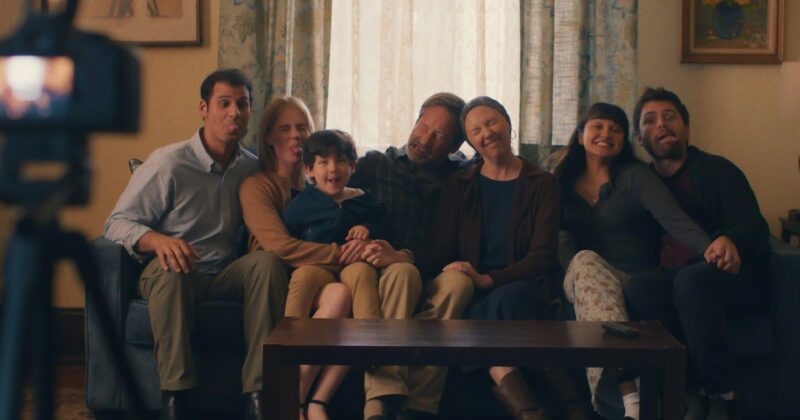
‘See You When I See You’ is steeped in the modern grief experience. At its core is Aaron, a young writer grappling with his sister Leah’s death and the ripples of PTSD that affect not just him, but his entire family. The film’s ensemble brings together an impressive lineup: Cooper Raiff as Aaron, Kaitlyn Dever as Leah, David Duchovny and Hope Davis as their parents, with Lucy Boynton and Kumail Nanjiani rounding out the cast. The production benefits from the narrative authenticity of Cayton-Holland—whose real-life struggles inspired the script—and industry names like Nanjiani and Emily V. Gordon, who previously brought their own story to life in The Big Sick.
The Visual Journey: Avoiding Cliché, Embracing Authenticity
What elevates this biographical drama is Duplass’ aversion to overused cinematic devices. Instead of flashbacks, so often a crutch for conveying trauma on screen, the film explores Aaron’s psyche in real time. Working closely with cinematographer Jim Frohna, Duplass crafts sequences that embody the immediacy of lived experience, pulling the audience deeply into Aaron’s headspace without the distancing effect of conventional flashbacks.
This ambition—to dissolve the line between past and present, memory and moment—mirrors trends in contemporary psychological storytelling, where messy, ongoing recovery is privileged over neat narrative arcs. It’s a creative risk that grounds ‘See You When I See You’ among current works pushing the boundaries of the biopic format.
An Audience Experience Rooted in Real Emotion
For Adam Cayton-Holland, seeing his life adapted for the screen was as surreal as it was cathartic. As he describes, every rewatch reveals new layers and motifs woven into the depiction of Aaron’s struggle. This evolving tapestry of scenes—sometimes darkly comic, sometimes heartbreakingly intimate—echoes the spirit of films that turn pain into connection. The audience doesn’t just observe grief; they’re asked to inhabit it, together with the characters.
The Creative Network Behind the Film’s Success
The making of ‘See You When I See You’ is also a testament to the power of creative networks in Hollywood. From Kumail Nanjiani and Emily Gordon’s mentorship to Jay Duplass being handed the reins, the process was marked by serendipity and mutual respect. In a landscape where so many film projects stall at the gate, this one materialized swiftly—an encouraging sign for those longing for nuanced, deeply human stories in modern cinema.
‘See You When I See You’ continues to collect rave reviews from critics, reflecting a hunger for authenticity and emotional honesty in film. With its blend of laugh-out-loud family humor, profound character work, and an unforgettable origin story rooted in genuine risk-taking, the film stands as a fresh entry in the lineage of indie dramedies that dare to feel real.