Jerry Maguire: Why This Tom Cruise Classic Remains a Time Capsule of Cinema

The Surreal Journey of Rewatching Jerry Maguire in 2026
Returning to Jerry Maguire decades after its original release is nothing short of stepping into a time portal. What instantly sets the tone is the film’s opening narration, where Tom Cruise’s Jerry reflects on a world with nearly six billion people—a reminder of how much has changed since. With global population now surpassing eight billion and American cultural dominance feeling less self-assured, the film’s framing resonates profoundly differently in today’s world of fragmented audiences and shifting values.
Back when it hit theaters, Jerry Maguire targeted a broad middle ground—one nearly impossible to locate in today’s landscape split by streaming platforms and hyper-niche content. Yet, inside its optimism and faith in shared ideals, there’s a warmth that makes it exceedingly rewatchable, even comforting, decades later.
Tom Cruise’s Jerry Maguire: A Performance at Full Throttle
This is a film utterly built around the star persona of Tom Cruise. He carries that slick, confident charm which has become his Hollywood hallmark, but here there’s a vulnerability layered underneath. The story launches when Jerry, a high-powered sports agent, is struck by a crisis of conscience after his insensitivity is called out by a client’s family. Fueled by a midnight epiphany, Jerry pens a ‘mission statement’—fewer clients, less money, more heart. The result? Professional freefall. He’s ousted from his job and deserted by clients except for Dorothy (Renée Zellweger), who is inspired enough to risk everything on him, and Rod Tidwell (Cuba Gooding Jr.), his last remaining client whose outspoken demands set the stage for an unlikely journey of personal transformation.
Cruise’s portrayal manages a delicate balance: the surface of relentless self-assurance masking a fundamental inability to connect deeply. Cameron Crowe’s script demands he display an almost meta-awareness, as if Jerry himself wishes he could live his own life on ‘movie star mode’, only for his façade to crack over a sequence of setbacks that force real emotional growth. The story blends sports drama with romantic comedy, revealing a main character learning to let his guard down both professionally and personally.
Dorothy Boyd: Heart, Idealism, and Grounded Reality
Renée Zellweger’s Dorothy emerges as the counterweight to Jerry’s arc. Far from a one-dimensional romantic prize, Dorothy is remarkably self-aware. She’s a realist who still chooses hope, making decisions with open eyes. Her primary function in the narrative isn’t to be won but to show what it looks like when someone fully formed and idealistic decides to act out of love—not naivety.
One of the film’s many strengths comes in how Crowe crafts all characters, even those with limited screentime, into fully realized people. That brief, tension-diffusing encounter between Dorothy and a flight attendant, softened by little Ray’s (Jonathan Lipnicki) charm, is a snapshot of a cinematic era with more faith in human decency—a quality nearly nostalgic to today’s audiences. It’s a world where tension gives way to cooperation, an approach that feels almost foreign now.
Cameron Crowe’s Signature: Relatable Characters, Lasting Impact
The movie’s ‘Hollywood polish’ is unmistakable, but Cameron Crowe excels at making familiar beats feel fresh and meaningful. Dorothy is not relegated to the sidelines—her desires and choices drive much of the film’s momentum. Instead of tension hinging on whether she’ll say yes, it’s about whether the flawed hero can rise to her level.
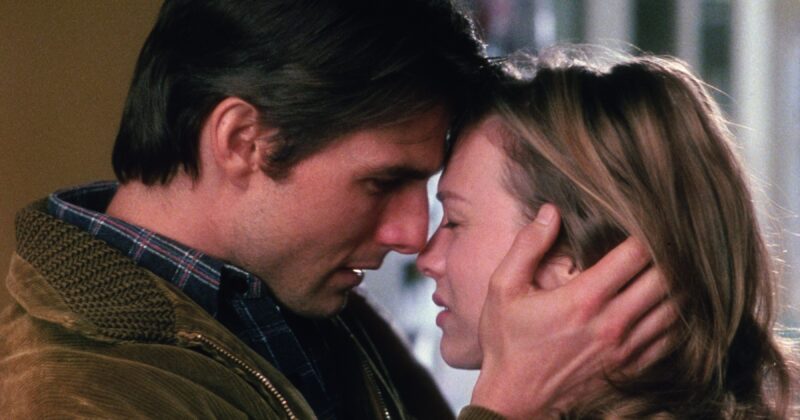
This chemistry between Cruise and Zellweger is as much comedic as it is romantic, delivering some of cinema’s most quoted moments—‘You complete me’ and ‘You had me at hello’—while most of their interactions fizz with uncertainty and awkwardness. Their relationship dances between genuine emotional stakes and moments of levity, avoiding cliché until Jerry is finally ready for the kind of connection he’s always feared.
Revisiting Jerry Maguire today isn’t just about nostalgia. It’s about witnessing a filmmaking era that combined relatable aspiration with big-screen glamour—a blend almost extinct in the age of streaming dominance and franchise saturation. As media and tech culture keep fragmenting what it means to share a cultural moment, this film invites us to remember the crazy idea that the most radical thing you can do in business, or in love, is simply to care.