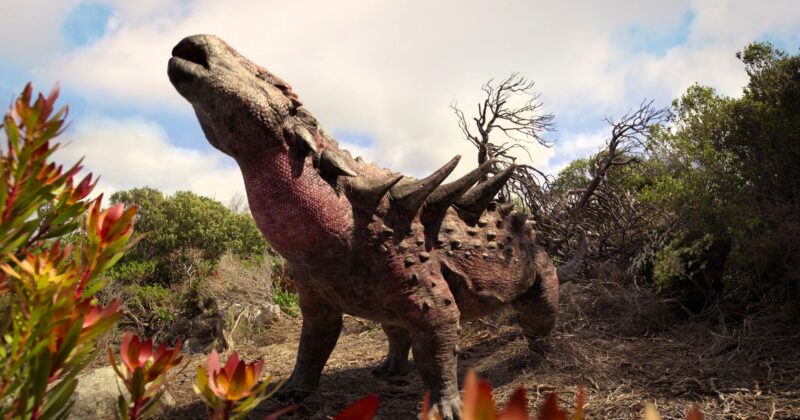
Netflix’s The Dinosaurs: Spectacular Visuals, Unforgivable Scientific Flaws and What Casual Fans Might Miss

Netflix’s The Dinosaurs: Where Fact Meets Fiction
Netflix’s highly publicized docuseries The Dinosaurs, featuring the unmistakable narration of Morgan Freeman, is a visual feast that soared to the top of streaming charts shortly after release. Touted as a must-watch by many, the series rides high on its stunning rendering of prehistoric life but faces enormous scrutiny for its treatment of the science behind the dinosaurs it depicts.
When Prehistoric Myths Outpace Scientific Progress
Despite dazzling animation and epic sound design, The Dinosaurs falls into old traps that modern paleontology has strived to dispel. For example, the series depicts nearly all dinosaurs as scaly and cold-blooded – a classic trope. Modern consensus is now clear: many dinosaur species, especially the infamous theropods, sported protofeathers or even full plumage, blurring the line between classic reptilians and their bird descendants. Netflix’s narrative clings to outmoded views, leaving out the nuances of mesothermy – a metabolic spectrum between cold and warm-blooded, known to define dinosaurs far better than the black-and-white logic of the past. Even the way evolution is presented in the series reinforces the myth of a ‘progress scale’, wherein each evolutionary step is an improvement. This ignores the fact that evolution is about suitability for survival, not linear advancement or inherent superiority.
Confusing the Science: Blurring Lines Between Fact and Speculation
In its quest for drama, Netflix’s series often fails to distinguish well-supported facts from creative guesswork. The show freely reconstructs dinosaur behaviors — like Pachycephalosaurus head-butting and ‘alpha male’ hierarchy — based on narrative convenience or popular culture rather than fossil record evidence. Visual speculation is inevitable in paleo-docs, but the problems start when audiences aren’t given the tools to separate evidence-based reconstructions from pure artistic license. For instance, no scientist has heard a real dinosaur’s roar, yet such vocalizations are rendered as if accurately restored. Mating dances, parenting rituals, and complex hunting strategies are depicted as certainties rather than the plausible hypotheses they are. Such details are engaging, but a lack of context may mislead viewers into taking fiction as fact.
Gaps in Education: Crucial Omissions Undermine Understanding
The remarkable visuals are let down further by oversimplifications and crucially missing information. The narrative glosses over pivotal concepts in evolutionary biology — like the true relationship between dinosaurs and reptiles, or the actual context around mass extinction events. Instead of exploring, say, the debated ‘longevity bottleneck’ theory or the precise evolutionary paths of different species (for example, the critical link between Plateosaurus and sauropods), The Dinosaurs moves on to the next spectacle. Even something as simple as consistently using scientific names or clarifying controversial behaviors is omitted, weakening the documentary’s value as an educational tool.
Who Is The Dinosaurs Really For?
Despite these flaws, The Dinosaurs succeeds as entertainment, especially for families and younger viewers making their first foray into the world of these ancient titans. The action-packed CG and Freeman’s narration make for irresistible family viewing, and for many viewers, the chance to gaze at a T-Rex stomping through a primordial forest is enough. Those who want a deeper, more accurate look at prehistoric life may prefer alternatives such as Apple TV’s Prehistoric Planet, widely praised for its balance of spectacle and up-to-date science.
For now, Netflix’s The Dinosaurs remains a stunning but flawed introduction for casual enthusiasts and anyone keen to relive dino-mania on the couch — just don’t mistake the spectacle for a documentary grounded in the latest science.