The Unmatched Allure of Perfect Blue on Streaming
Among the vast catalogue of streaming thrillers, Perfect Blue stands as a masterpiece that blurs the line between animation and psychological drama. Now available on HBO Max, this relentless film is essential viewing for fans of cinema that challenges perception and unravels the darkest corners of the human psyche. In less than 90 minutes, director Satoshi Kon crafts an experience that remains unforgettable decades after its release, often described as a foundational work fundamental to modern psychological horror and pop culture analysis.
A Nail-Biting Descent Into Identity and Fame
Perfect Blue follows Mima Kirigoe, a pop idol making the risky leap to an acting career. At first, her transition appears routine, but soon her world is fractured by intrusive fan obsession, the digital age’s first hints of social surveillance, and the suffocating pressures of the entertainment industry. The film’s narrative, ever shifting between performance and reality, relentlessly asks the viewer to question which moments are authentic—if any at all.
Satoshi Kon’s use of nonlinear storytelling and abrupt shifts in perspective traps the audience within Mima’s unraveling mind. Each cut between her life, her roles, and her inner turmoil blurs the threshold of reality, amplifying genuine psychological terror. The meticulously crafted animation offers more than aesthetic beauty; it visually represents the chaos of identity collapse under the weight of fame, expectation, and digital voyeurism.
Deep Psychological Horror: The Dark Side of Celebrity
This is not just a story about an idol’s career change—it’s a confrontation with the mechanisms of celebrity. Mima’s journey exposes how public figures are pushed, manipulated, and commodified. Her managers nudge her into scandalous roles and controversial photo shoots, each move meant to shed her ‘pure’ pop idol image in favor of a more jaded celebrity persona. Crucially, every such compromise edges her further from her own sense of self, demonstrating how the industry can erode personal agency with chilling precision.
Perfect Blue’s profound commentary on the parasocial relationships between idols and their fans is embodied by Me-Mania, a stalker whose obsession grows violent as Mima changes. His controlling devotion is more than a personal threat—he represents the collective possessiveness and intrusive scrutiny that often comes with digital fame, especially as the internet makes privacy almost impossible to maintain.
Blurring Reality: Paranoia in the Age of the Web
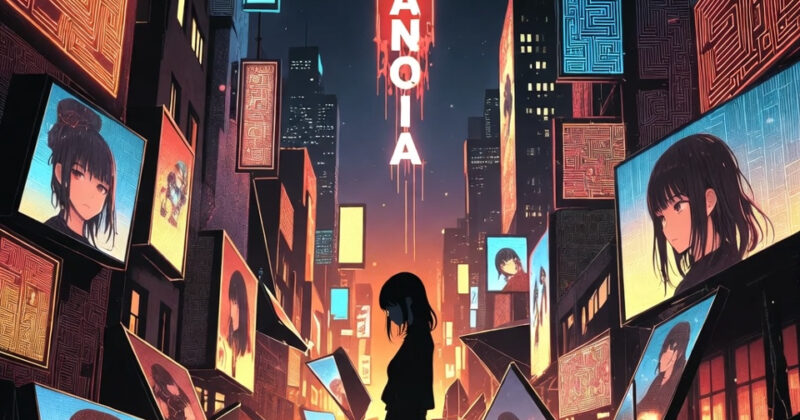
Ahead of its time, Perfect Blue explores the themes of online identity and surveillance through the mysterious website Mima’s Room—a blog that eerily documents Mima’s life, thoughts, and routines with disturbing accuracy. This virtual double creates a paranoid feedback loop, leading Mima to question both her memory and her own reality. Animated sequences—such as the iconic, disorienting bathtub scene—embody her collapsing psyche and the dissolution of boundaries between performance, personal truth, and digital persona.
Haunting hallucinations further destabilize Mima. She is confronted by apparitions of her former, more innocent self—a spectral idol who exists to judge and accuse, often smiling and unnaturally cheerful. This phantom is more than a psychological symptom; it’s the internalized pressure of public expectation, an ever-present and impossible standard she can never truly meet.
Legacy and Influence: A Must-See for Modern Audiences
With each twist, Perfect Blue generates tension and anxiety, shattering the distinction between violence, reality, and delusion. Its relentless pacing and sharp editing drop viewers into a spiral where every frame feels suspect. The film’s legacy can be seen in celebrated psychological films like Black Swan, which drew inspiration from its structure and thematic obsession with duality and ambition.
For those seeking the pinnacle of animated thrillers, Perfect Blue is a benchmark not just of anime, but of psychological storytelling in any medium. Its influence continues to shape how creators depict identity, anxiety, and the dark side of fame in the digital era.