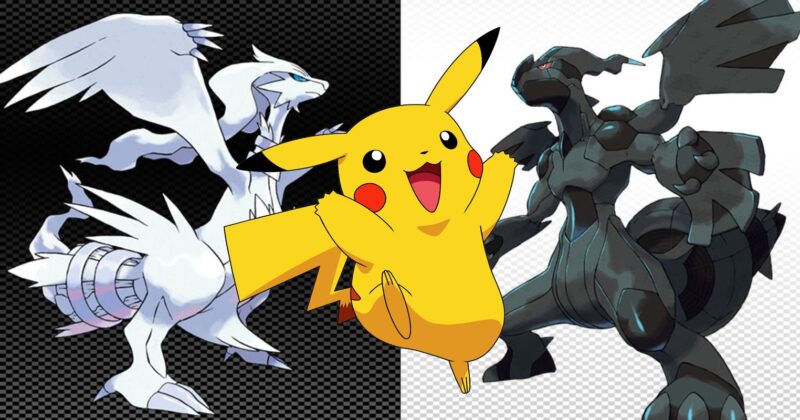
Pokémon Black & White: The Generation That Breaks the Mold
For years, the fifth generation of Pokémon — Black and White — stood as one of the franchise’s boldest risks and its most divisive moments. At launch, the dual release was met with critical accolades while fans voiced their discomfort with mechanics and creative choices that diverged sharply from tradition. Yet, what was once considered controversial has, over time, become a testament to the visionary ambition of these entries.
A Revolutionary Shift That Shook Longtime Fans
Black & White did something no previous Pokémon game dared attempt: it restricted players to a roster made up solely of entirely new Pokémon throughout the main story. This radical decision was a clear break from relying on established favorites. For many players, this felt less like evolution and more like losing the heart of what made Pokémon familiar. Fans long attached to icons such as Bulbasaur or Pikachu suddenly had to step out of their comfort zone in a region populated by never-before-seen species.
What critics often missed about this design choice is how it reignited the sense of surprise and exploration that defined the franchise’s beginning. Building a team suddenly required experimentation and adaptation, much like when players in the 90s first stepped into Kanto. In retrospect, this approach is now heralded as one of the defining strengths of Generation V, restoring wonder to the formula while giving every Pokémon a real chance to shine.
Creature Designs: From Criticism to Iconic Status
While Black & White introduced more new Pokémon than any previous generation, not all designs were universally adored at first. Some creatures, with their minimalist or unconventional aesthetics, were lampooned in forums and memes. Yet many of these same monsters — like Chandelure, Haxorus, and Zoroark — are now celebrated for their creativity and have become pillars in both competitive battling and the anime. Certainly, a handful of designs still spark debate, but the inventive spirit of the Unova Pokédex is now viewed as a highlight of the franchise’s willingness to experiment artistically.
Narrative Ambition: Pokémon’s Moral Dilemma
Generation V marked a turning point for storytelling in Pokémon. Gone were the days when the main narrative drifted behind the backdrop of badge collecting. Black & White brought to the forefront thought-provoking themes, with Team Plasma challenging not only the protagonist but the player themselves on the ethics of Pokémon training. Instead of clear-cut villains chasing world domination, the antagonists initiated philosophical debates about liberation and captivity.
No character embodies this shift more than N, whose enigmatic motivations straddle the line between opposition and friendship. Conversations with N felt less like the confrontations of old and more like introspective debates, inviting players to reconsider their role within the Pokémon world. These complex themes elevated the Unova saga, making it resonate long after the credits.
The Unova Region: A Cultural and Visual Departure
Another piece of Black & White’s legacy comes from its setting. Departing from the Japan-inspired roots of previous games, Unova took cues from the bustling energy and cosmopolitan sprawl of urban America, crafting a vivid world full of skyscrapers, urban parks, and regional diversity. The dynamic routes, cityscapes, and shifting seasons provided a sense of progression and immersion previously unseen in the series.
The unique design of Unova, both thematically and visually, played directly into the narrative’s focus on societal perspectives and cultural exchange. The region wasn’t simply a backdrop — it was integral to the generation’s worldbuilding and bold ambitions.
Technical Mastery and Game-Changing Features
Pokémon Black & White represented the technical apex of the franchise’s sprite era. While the underlying hardware remained unchanged, these releases animated battles like never before. For the first time, Pokémon sprites moved with fluidity, breathing life and personality into each encounter. This animation upgrade, subtle to some, fundamentally changed the battlefield, making every fight more engaging and memorable—especially in boss encounters against legendaries like Reshiram and Zekrom.
Beyond graphics, Black & White innovated with deeper mechanics and quality-of-life updates. Features such as the reusable TMs (Technical Machines) and streamlined experience gained from battling made training teams faster and more enjoyable. The implementation of triple and rotation battles — though not widely adopted in later generations — demonstrated creative risk-taking, offering strategic variety for competitive trainers.
Legacy: The Generation That Reshaped Pokémon’s Trajectory
Today, the influence of Pokémon Black & White can be seen throughout the franchise’s ongoing evolution. The focus on immersive worldbuilding, richer storytelling, and fearless creativity established new standards. Elements introduced in this era have been built upon in recent games, and fan demand for remakes and sequels remains intense, with the Unova region frequently topping lists for desired returns.
Far from a misstep, Black & White are now widely regarded as masterpieces whose bold ideas and clever risks continue to inspire game designers, players, and the broader culture of Pokémon. Their journey from polarizing outsiders to beloved classics is one of the most astonishing turnarounds in gaming history — a testament to the value of daring to be different in the face of overwhelming tradition.