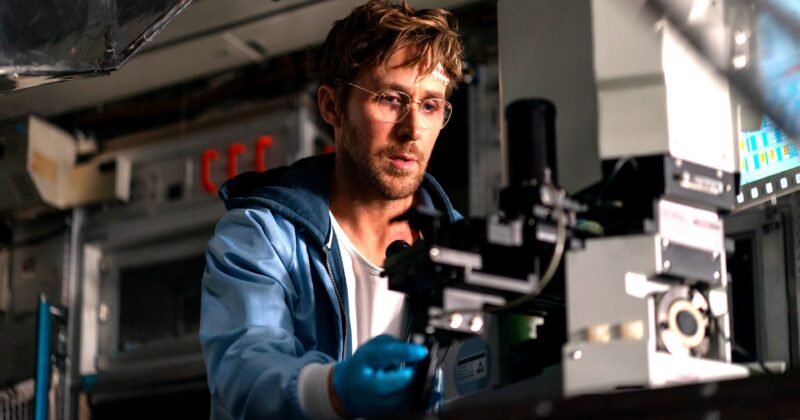
Project Hail Mary: How Ryan Gosling and the Team Brought Andy Weir’s Sci-Fi Vision to the Big Screen

The Art of Adaptation: Staying True While Evolving Sci-Fi
Project Hail Mary has quickly become a phenomenon, not only drawing massive crowds to theaters but also captivating both critics and audiences with its intricate blend of scientific realism, suspense, and emotional depth. Starring Ryan Gosling as Ryland Grace, the film adapts Andy Weir’s acclaimed novel, focusing on a former molecular biologist who finds himself alone—light-years from Earth—with only his wits, scientific acumen, and a mysterious alien companion to aid humanity’s survival.
What Makes This Adaptation Stand Out?
Though the film remains largely faithful to Weir’s original narrative, several creative decisions shape the cinematic experience for a broader audience. One of the most significant changes involves the planet Erid and the Eridian species—home to Ryland’s enigmatic alien ally, Rocky. While the novel explores these in greater detail through Ryland’s internal monologue, the film restricts this information to moments of genuine dialogue. As Oscar-nominated writer Drew Goddard describes it, this shift prioritizes authenticity in character interaction over expositional clarity. The adaptation process focused on what Ryland would realistically communicate to Rocky, maintaining a natural, lived-in feeling that ultimately enhances immersion.
Ryan Gosling: More Than a Sci-Fi Icon
Ryan Gosling was Andy Weir’s top pick to portray Ryland Grace, and the choice pays off in unexpected ways. Gosling brings relatability to the character: he’s not a traditional hero or trained astronaut, and that vulnerability is front and center. Unlike his iconic roles in Blade Runner 2049 or La La Land, where minimalism and subtlety define his performance, Gosling’s Grace is constantly communicating—sometimes awkward, always authentic. This nuance, paired with Weir’s characteristic humor, keeps the audience invested even during the movie’s loneliest moments on board the Hail Mary.
The production’s practical challenges also added to the film’s unique tone. Rocky, the alien, is realized through sophisticated puppetry led by performer James Ortiz and a backstage team known as ‘The Rocketeers.’ This practical approach offered surprising opportunities for improvisation and humor, deepening on-screen chemistry between Grace and Rocky in ways CGI rarely accomplishes.
The Tone: Balancing Science, Humor, and Humanity
Humor is a hallmark of Andy Weir’s work, and the team behind Project Hail Mary—including directors Phil Lord and Chris Miller—ensure that even the most complex scientific ideas are accessible and engaging. Drawing on their experience from hits like 22 Jump Street, they amplify emotional stakes and punctuate high-tension scenes with wit, never sacrificing authenticity for spectacle. This careful balance is evident in sequences such as the much-anticipated encounter with Adrian, which echoes the edge-of-your-seat intensity of cinematic milestones like Interstellar, but is filtered through the film’s unique narrative voice.
A Testament to Collaboration and Vision
Screenwriter Drew Goddard, renowned for his work on both The Martian and now Project Hail Mary, emphasizes the collaborative trust and mutual respect between himself and Andy Weir. While adapting a book as ambitious and scientifically dense as Project Hail Mary posed unique challenges, the creative team’s shared passion for the source material shines through. The film’s extraordinary box office performance and critical reception are a testament not only to Weir’s storytelling but also to the insightful, innovative adaptation process that brings his worlds to life for new audiences around the globe.