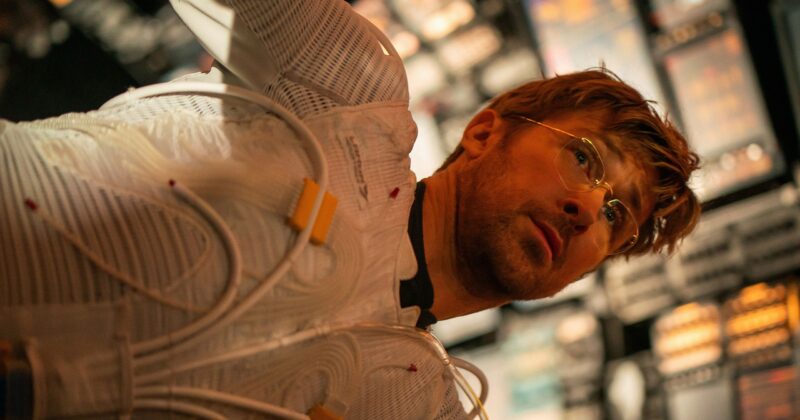
Project Hail Mary: Ryland Grace’s Unexpected Odyssey
Few science fiction stories manage to blend heart, high-stakes science, and the wonder of first contact with such deftness as Project Hail Mary. In the film, we follow Ryland Grace, played with subtle vulnerability by Ryan Gosling, as he wakes up alone aboard a spaceship, gripped by amnesia and tasked with a desperate mission: save Earth from extinction. This is not just a survival story in empty space — it’s an adventure deeply rooted in human anxiety, fallibility, and redemption.
Grace Was Never Meant to Be Earth’s Last Hope
One of the most gripping revelations is how Grace boards the Hail Mary mission at all. Throughout much of the film, lingering memory loss clouds everything he does. When the truth returns, it’s devastating: Grace never volunteered. Originally valued for his expertise on the astrophage threat — a microorganism draining Earth’s Sun — he was thrust into the role of astronaut only after tragedy struck. The actual mission specialists perish in a pre-launch accident, and humanity’s last chance rests on Grace’s unprepared shoulders. Rather than rise to the occasion willingly, he tries to run, ultimately sedated and launched against his will.
This realization reframes the entire arc of the character. Grace is not a typical hero — he’s a reluctant one, grappling with his own cowardice and unsure if he deserves the hope now pinned on him. As his memories return, so too does the weight of his predicament, making every decision more human and tinged with regret and hope in equal measure.
The True Antagonist: Sacrifice, Not Malice
What sets Project Hail Mary apart from standard sci-fi fare is its moral landscape. There are no classic villains. The astrophage, as destructive as it is, acts simply to survive, not to conquer. The alien race Grace encounters — the Eridanians, represented by the earnest Rocky — are partners, not foes. Even Eva Stratt, the project’s director who forces Grace into the mission, is rendered with emotional complexity; she chooses the fate of one for the chance to save billions, driven as much by grief as by duty.
The film’s ethical tension revolves around impossible choices. Is it just to sacrifice one for all? Would anyone choose differently in Stratt’s place? This nuance is rarely seen in Hollywood blockbusters, making the film a standout both for its storytelling and its grasp of real-world dilemmas.
Grace and Rocky: An Unforgettable Interstellar Friendship
At the heart of the story is the unlikely alliance between Grace and Rocky, the last survivor of another planet’s desperate scientific effort. Their bond builds across language, biology, and culture barriers, blossoming into a partnership that sees both repeatedly risk their lives for each other. When Grace discovers a flaw in their plan that could doom Rocky’s world, he chooses solidarity over self-preservation — opting to go back and save the Eridanians despite the risk to his own life.
This choice is the crux of Grace’s arc: in the face of fear, he finds courage. The mutual salvation between the two civilizations, sparked by empathy and scientific rigor, underscores the film’s powerful message that progress comes not from individual brilliance, but from connection and shared risk.
An Open Future Amid Starfields
The film closes with Grace having survived and integrated into Eridanian society, serving now as a teacher and friend. The alien civilization offers him passage home as thanks, but Grace is left pondering where he truly belongs. On one side, Earth — changed by crisis and possibly unrecognizable; on the other, a new beginning among those he once called strangers.
It’s a bold narrative choice, leaving viewers with ambiguity instead of easy closure. The evolution from hesitant, isolated scientist to interplanetary ambassador carries enormous emotional resonance, and the franchise potential is tantalizing — whether or not the story continues in a formal sequel.
The Heart of Modern Sci-Fi Storytelling
Project Hail Mary stands as a touchstone in contemporary science fiction, merging rigorous speculative concepts with honest emotional stakes. It doesn’t just champion the triumph of technology or scientific discovery; it celebrates the messy, uncertain, and ultimately transformative journey of a single human heart propelled to the edge of the stars.