The Science Debate Around Project Hail Mary
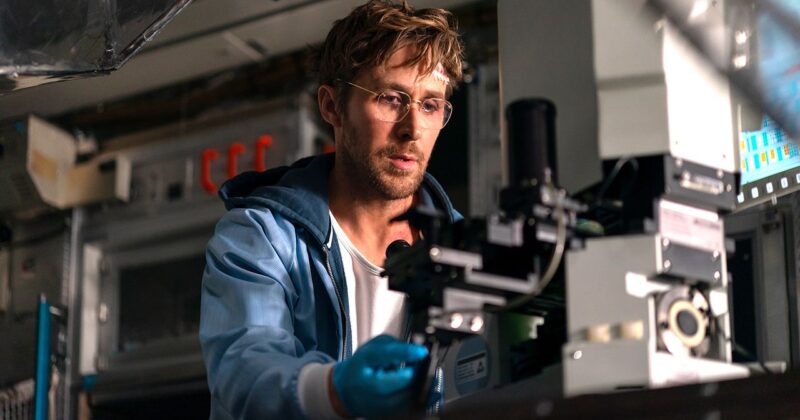
‘Project Hail Mary’ has blasted into theaters as one of the most talked-about science fiction releases of the year, mixing hard science with Hollywood spectacle. Naturally, with Ryan Gosling leading as a stranded astronaut and a script powered by the meticulous mind of Andy Weir, fans and critics alike have wondered: how accurate is the science this time around?
Did Neil deGrasse Tyson Approve?
Few voices carry as much weight in the world of cinematic science as Neil deGrasse Tyson. Known for his sharp critiques—remember his infamous takedown of asteroid blockbusters for their scientific errors?—Tyson’s approval is a badge of honor for any sci-fi film aiming for authenticity. This time, although Tyson did not serve as an official consultant, directors Phil Lord and Chris Miller revealed that he attended the film’s premiere and after-party. The tension was palpable until Miller announced, with clear relief, ‘We passed the Neil deGrasse Tyson test.’ According to Tyson, the astrophysics at play are theoretically sound—a rare feat in major studio films.
Why Science Geeks Can Relax
Past films like ‘Armageddon’ have drawn Tyson’s ire. In particular, he’s questioned the logic of nuking an asteroid, pointing out that realistically, a gentle nudge—just a centimeter per second—would save the world with far less drama, all thanks to the laws of motion in frictionless space. In ‘Project Hail Mary,’ the filmmakers have made an effort to embrace plausible solutions, echoing what real scientists would recommend in a crisis, which is why the movie has piqued the interest of those who value scientific rigor along with high-stakes storytelling.
The Andy Weir Factor: Science First
Ryan Gosling, inhabiting the role of Ryland Grace, can’t help but share a uniquely nerdy anecdote about Andy Weir, author of the source novel ‘The Martian’. Weir, it turns out, got his start in hard science fiction because, while watching ‘Titanic,’ he found himself distracted by the wrong star constellations above the doomed ship. This obsession with scientific detail is palpable in Weir’s novels—and translates impressively on screen in ‘Project Hail Mary’.
A Cast and Crew Committed to Accuracy
While Tyson’s presence lent a symbolic stamp of legitimacy, the film’s technical backbone was reinforced by the involvement of astrophysicist Brian Cox. Cox, also a distinguished science communicator and author, joined the set to consult directly on the movie’s more challenging concepts, ensuring the theoretical backbone held up to scrutiny even from the toughest skeptics.
Viewers Want the Real Sci-Fi—And Hollywood Is Listening
Today’s audiences are hungry for stories that not only thrill but also respect the frontiers of real science. With a production team unashamedly committed to accuracy, and experts weighing in at every stage, ‘Project Hail Mary’ stands out as a film that values provable plausibility as much as pulse-pounding adventure. The result isn’t just entertainment—it’s a testament to how science fiction can spark curiosity about the universe beyond. For viewers eager to see this blend of bold vision and scientific integrity, Project Hail Mary is now playing in cinemas.