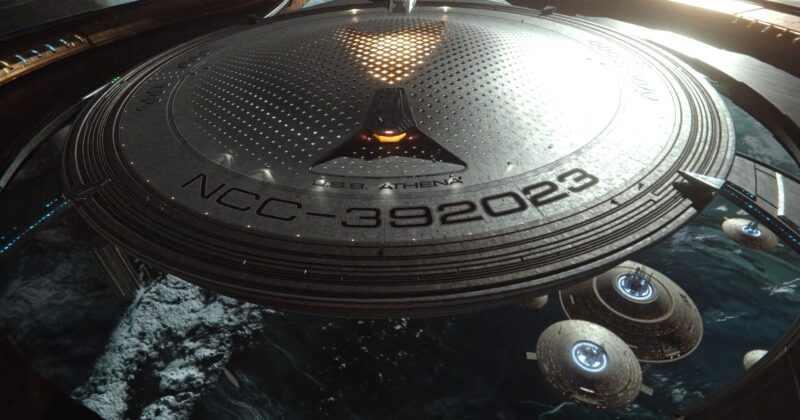
Star Trek Faces a New Uncertain Era After Major Studio Shakeup

The Changing Landscape of Star Trek
Star Trek, a franchise intertwined with the history of science fiction television, has entered another period of uncertainty, triggered by the recent acquisition of Paramount by Skydance Media. Fans who became accustomed to regular new content on Paramount+ now find themselves at a crossroads. Currently, only two series—Star Trek: Strange New Worlds and Star Trek: Starfleet Academy—have unaired episodes in the pipeline. These represent the tail end of a prolific decade that saw Star Trek flourish with new tech, ambitious story arcs, and modernized visuals that took Gene Roddenberry’s vision further into the 21st century.
The Streaming Renaissance and Its Sudden Halt
When Star Trek: Discovery premiered, it marked not just a revival after more than a decade without new series, but also propelled the franchise into the streaming era. Discovery, controversial yet trailblazing, was central to launching CBS All Access, soon to become Paramount+. Other new shows followed: Picard, the irreverent Lower Decks, the animated Prodigy, and the acclaimed Strange New Worlds. For years, fans enjoyed near-continuous weekly adventures in the Star Trek universe—a feat not achieved since the golden age of 1990s Trek. Yet, in a wave of cost-cutting and restructuring sparked by the Skydance takeover, nearly all ongoing productions have now met an abrupt end.
Behind the Curtain: Why the Sudden Shift?
This drastic curtailment is more than just a programming update—it is the end of an era under executive producer Alex Kurtzman and his team at Secret Hideout, whose licensing deal appears set to expire without renewal. As Paramount reacts to financial pressures and ambitious merger plans, dedicated viewers are forced to confront a familiar dread: the return of a Star Trek dark age, with no greenlighted series in sight.
Dates in Limbo, Futures Unclear
With production wrapped on the last planned seasons of Strange New Worlds and Starfleet Academy, and most episodes held back for strategic release, Paramount is effectively placing Star Trek into hibernation. The animated Prodigy was the first casualty, followed by Discovery and Lower Decks, both concluding after their fifth seasons. Now, the end for Strange New Worlds and Starfleet Academy is already certain, making the lack of new announcements all the more troubling for fans hoping for continuity.
The Franchise in a Broader Industry Context
The uncertainty surrounding Star Trek’s future is not occurring in isolation. Paramount, swelling with Skydance Media and potentially eyeing further mergers such as Warner Bros. Discovery, is reevaluating all its major intellectual properties. Despite Star Trek’s status as a consistently profitable titan of science fiction, its place in the new corporate mosaic is unclear. With rivals like Marvel and Star Wars continuing to draw vast audiences and drive technological innovation in storytelling, Paramount is under pressure to find a distinctive path forward for its own universe.
Signs of Life: What Could Come Next?
Industry insiders suggest that the earliest possible Star Trek reboot or spin-off announcement would not come sooner than 2026, potentially at mainstream nerd culture gatherings like San Diego Comic-Con or New York Comic-Con. Even under the rosiest scenario, the complex development and production cycle for modern serialized television means the absolute earliest a new series might premiere is 2028. Whether fans will see a repeat of the 2000s drought—which lasted more than a decade after Star Trek: Enterprise ended—is doubtful, given today’s fiercely competitive streaming environment and Star Trek’s enduring commercial weight.
Legacy, Cast, and the Expanding Universe
Since its original launch, Star Trek’s influence has extended beyond TV and cinema into comics, novels, and digital apps that let fans track stardates or simulate ship command. Alumni like William Shatner, Patrick Stewart, Kate Mulgrew, and Michelle Yeoh have become household names, while new generations continue to join the ranks. The legacy of Star Trek is intimately tied to technology – from real-world device inspirations like the classic communicator (the forerunner of today’s flip phone) to ongoing engagement through official apps, games, and online communities. The fervor surrounding the franchise almost guarantees its eventual return, but, for now, its fate lies in the hands of corporate executives and shifting entertainment trends.