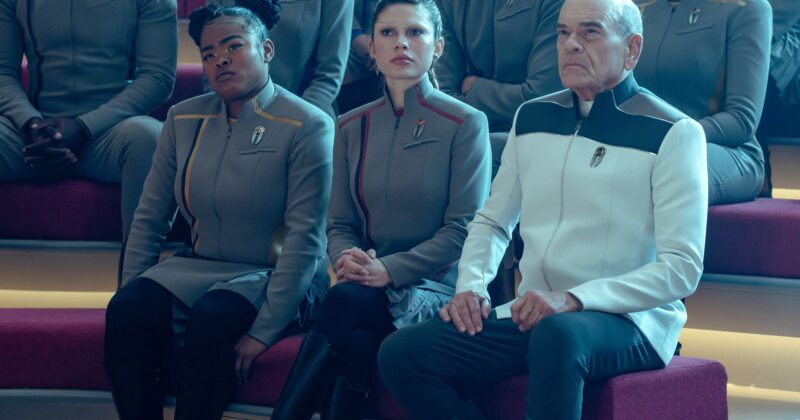
The Unexpected Cancellation of Star Trek: Starfleet Academy
The shutdown of Star Trek: Starfleet Academy after its second season hits harder than the cancellation of yet another franchise spin-off. Designed by Gaia Violo and co-showrunners Alex Kurtzman and Noga Landau, the series was meant to mirror the complete four-year journey any cadet faces, echoing the structured approach of a genuine university experience in the cosmos. Instead, viewers are left hanging with only two years of the cadets’ growth explored—stories cut short, character arcs half-realized, and a Starfleet cohort left in limbo.
A Story Left Unfinished
Kurtzman and Landau’s original vision aimed for audiences to see characters like Caleb Mir, Jay-Den Kraag, Genesis Lythe, and others graduate and step into the greater galaxy as fully fledged Starfleet officers. With the story ending prematurely, fans are denied pivotal milestones like graduation and their first frontier postings. The frustration compounds knowing that the planned second season reportedly leaves the narrative on a cliffhanger, raising doubts about whether loyal audiences will ever see these threads resolved. As of now, there’s no clear indication that the production will get a chance to wrap things up with an epilogue in the way Star Trek: Discovery managed to.
The Streaming Metrics That Changed the Course
The cancellation wasn’t only about critical response or the show’s polarizing reception online. Despite acclaim from critics and an 87% Fresh rating on Rotten Tomatoes, the series couldn’t break into the Nielsen Top 10 streaming viewership charts during its ten-episode debut season—a metric where other recent Star Trek titles succeeded. In an industry increasingly driven by algorithmic visibility, this spelled disaster for a young-adult-targeted show that was consciously experimenting with format and audience.
What it Says About Star Trek’s Relationship With Young Audiences
The message behind the cancellation is clear: efforts to create a new, young Star Trek fanbase have faltered. Both Star Trek: Prodigy and Starfleet Academy were designed to win over younger audiences, both ending after two seasons despite creative quality and international recognition. The move feels like a signal from Paramount+: patience is wearing thin for experiments that don’t immediately perform. It’s a make-or-break era for one of pop culture’s longest-running sci-fi franchises, which has typically thrived on generational fandom but now risks aging out if it fails to resonate with new viewers.
The Social Media War and Review Bombing
Another layer of complexity comes from the online backlash, where segments of the internet, including coordinated review bombing and targeted harassment, buoyed a vocal minority determined to frame the series as a failure. Detractors exploited differences in vision and cast diversity as fodder for anti-inclusive rhetoric. The studio’s decision arguably hands these critics a hollow victory, further emboldening campaigns against future innovative entries. It’s a particular loss for Star Trek, often hailed for its progressive ethos dating back to Gene Roddenberry’s original vision of an inclusive, optimistic future.
The End of an Era—and an Uncertain Future
The rapid expansion of Star Trek content, beginning with Discovery and continuing through multiple spin-offs and a made-for-streaming film, is now drawing to a close with a wave of cancellations. As things stand, no further Star Trek television series are in active production or have received an official greenlight. With the impending endings of both Starfleet Academy and Strange New Worlds, the consistent Star Trek television output of the last decade grinds to a stop.
Industry insiders speculate that the next phase for the franchise may pivot toward cinematic reinvention. Current development for a new feature film, reportedly not tied to existing continuity or legacy characters, suggests a clean slate approach. This could pull Star Trek in a fresh direction, untethered from its dense 60-year mythology—potentially enticing for newcomers, though likely polarizing for dedicated fans who have grown attached to the intricate canon.
As projects deeply rooted in the established universe seem less likely to be selected, the question now is whether Star Trek embraces bold reinvention or finds a new way to carry its traditions forward. For now, all eyes remain on how the universe will choose to boldly go from here.