Starfleet Academy: The Enduring Legacy of Star Trek’s Courtroom Dramas Reimagined

The Lasting Appeal of Star Trek Courtroom Episodes
Across the decades, Star Trek has delivered some of television’s most gripping and intellectually charged courtroom dramas. This time-honored tradition, reaching back to classic episodes like ‘The Menagerie’ and ‘Court Martial,’ continues to evolve—never more so than in the latest season finale of Star Trek: Starfleet Academy. This show, helmed by directors such as Olatunde Osunsanmi and a writing team led by Alex Kurtzman and Kirsten Beyer, isn’t afraid to push the franchise’s legacy into bold, contemporary territory.
A High-Stakes Courtroom, Star Trek Style
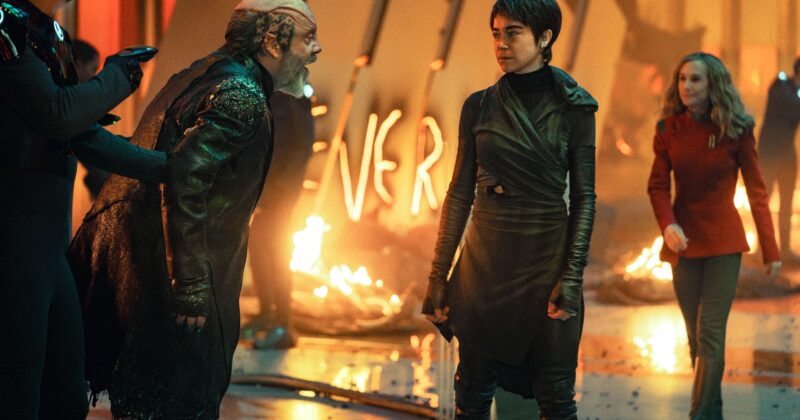
Season one’s final episode, ‘Rubincon,’ puts Captain Nahla Ake (Holly Hunter) and the United Federation of Planets on a collision course with danger and moral reckoning. Nus Braka (Paul Giamatti) unveils a plan that threatens the very foundation of the Federation using Omega-47—an unfathomably destructive substance—creating a minefield that could trap the galaxy for eons. The stakes couldn’t be higher: billions of lives hang in the balance and warp travel, Star Trek’s very symbol of progress, is at risk.
But Braka doesn’t just want to win a war; he wants retribution. He orchestrates a show trial, using Anisha Mir (Tatiana Maslany) as judge and jury, seeking personal and political vengeance for past wounds. This intertwines personal pain and political spectacle—a hallmark of the finest Star Trek courtroom episodes.
Why Star Trek Loves the Courtroom
A core Star Trek motif, the trial episode, reliably provides fertile ground for exploring ethical dilemmas and contemporary social questions. Since its original run, almost every major Trek series has delivered a memorable trial—from the Kafkaesque in ‘The Measure of a Man’ (The Next Generation), to the political intrigue of ‘Judgment’ (Enterprise), to recent entries like ‘Ad Astra Per Aspera’ (Strange New Worlds). These episodes spotlight characters at their most vulnerable and critical moments.
In Starfleet Academy, Captain Ake is forced to answer not just for actions taken during her command, but for haunting events that changed the lives of Anisha and her son Caleb. The trial’s outcome—where the truth reverses public narrative and justice finally finds its mark—echoes the franchise’s faith in reason and due process, even under duress.
Modernizing A Timeless Trope
This latest incarnation modernizes the traditional formula. The show trial is not just a chamber piece but is broadcast across the galaxy, echoing the relentless spin of contemporary cable news with ticker tapes and chyrons warping facts for political gain. False headlines proclaim Nus Braka a hero and Federation leaders as villains in a pointed meta-commentary on information manipulation in today’s hyperconnected age. The vandalized Sato Atrium aboard USS Athena serves as a visual metaphor for the degradation of Federation ideals in the distorted court of public (and galactic) opinion.
Bringing Starfleet to Today’s Screens
Compelling performances stand out, especially with renowned actors like Holly Hunter, Paul Giamatti, and Tatiana Maslany elevating the stakes. This blend of powerhouse acting and deft storytelling cements Starfleet Academy as the latest reminder of why Star Trek’s trial episodes endure: they hold a mirror to the world’s most pressing debates, offering both reflection and hope.
Where Captain Ake’s trial lands among the pantheon of Star Trek courtroom dramas remains a lively topic for fans. What’s clear is that the tradition—layering big philosophical questions with emotional payoff—remains alive. With storytelling that acknowledges both past legacy and present anxieties, Starfleet Academy continues boldly into the future.