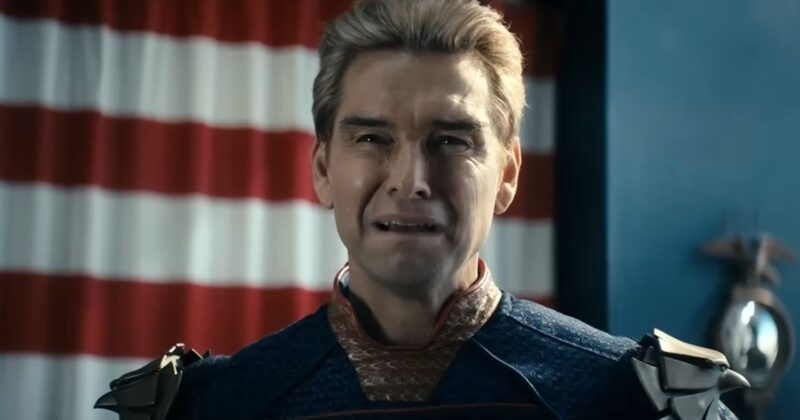
The Boys Shocks Fans Again: Soldier Boy and Homelander’s Most Controversial Comic Story Finally Lands on TV

The Boys Season 5 Pushes Boundaries With Soldier Boy Comic Arc
The anticipation for the fifth and final season of The Boys is at an all-time high, and the most recent trailer has already set the internet abuzz. Not only does it tease apocalyptic stakes for Billy Butcher and the rest of the team, but it also slyly references one of the most notorious—and divisive—scenes from the original comics. The inclusion of Soldier Boy’s unpredictable storyline stands out as a bold move even for a show famous for shredding taboos.
A Major Comic Callback in Soldier Boy and Homelander’s Dynamic
If you caught the mid-point of the newly released season 5 trailer, you probably did a double take. Homelander casually visits the cryogenic chamber containing Soldier Boy, releasing him with a chilling familiarity. Moments later, the trailer drops a jaw-dropping Easter egg: a disoriented Soldier Boy appears, perched on the edge of Homelander’s bed, wearing nothing but an oversized shirt, asking if they’re about to do ‘an incest thing’. Homelander’s sharp denial—‘it’s not sexual’—is loaded with subtext if you know the comics.
For those unfamiliar, in Garth Ennis’ comics, Soldier Boy is forced by Homelander to ‘audition’ for the infamous Herogasm event—a grotesque, power-play-laden ordeal that is as disturbing as it is unforgettable. Fans long speculated this storyline would never make it to the screen, especially after the reveal that Soldier Boy is actually Homelander’s biological father in the TV universe. Yet, the trailer’s provocative setup suggests the showrunners may be threading the needle between TV adaptation and comic canon—fusing inherited trauma and twisted power dynamics in a new, uncomfortable light.
How The Boys Reinvents Its Most Unhinged Comic Plots
The Boys’ adaptation has become famous for taking the most outrageous pieces of its source material and, instead of shying away, reimagining them to probe themes of power, legacy and corruption. Here, instead of exploiting shock value for its own sake, the potential relationship between Homelander and Soldier Boy gets a psychological depth that was often missing in the original comics. What was once a simple (and controversial) power trip is now tangled up in layers of Oedipal dysfunction and generational trauma.
This approach isn’t new for The Boys, but it’s never been more pronounced. Soldier Boy, as portrayed by Jensen Ackles, has evolved far beyond his comic counterpart. In the comics, he was underwritten and mostly served as a punchline. By contrast, the TV series gives him not only a darker backstory but a genuinely compelling arc, punctuated by Ackles’ fearless performance. His uneasy relationship with Homelander, infused with both resentment and strange camaraderie, provides a serious upgrade in terms of narrative tension and emotional complexity.
Prime Video’s Mastery: Transforming Gratuity Into Drama
What sets the streaming adaptation apart is its willingness to inject nuance into even the most grotesque scenarios. Much of the comic’s edge came from its relentless and almost nihilistic lampooning of superhero culture—a style that sometimes sacrificed meaningful critique for shock. In contrast, the TV show, while still willing to go further than most, anchors its most disturbing moments in character work and real-world allegory.
The ongoing dance between Butcher’s escalating revenge and Homelander’s unraveling psyche is brought to a boiling point by the likely return of Soldier Boy. As always, nothing is sacred: fans are braced for incendiary reveals, unflinching performances, and relentless subversion of superhero tropes. If previous seasons or the Gen V spin-off are any indicator, no line is too taboo for the creative team—expect the unexpected, in spectacular fashion.
What to Expect As The Boys Heads Toward Its Grand Finale
The introduction of Soldier Boy’s infamous storyline doesn’t just signal fan service—it’s an opportunity to further explore what happens when absolute power corrupts absolutely. Viewers have witnessed The Boys continually push every imaginable boundary, and with Butcher’s fight now existential, every dynamic feels volatile. The interplay between soldier, father, and literal demigod promises scenes that will be discussed and dissected across fandoms and beyond.
The series isn’t just shocking for the sake of headlines. By finally touching the third rail of its comic history, The Boys steps up to its legacy, ensuring its final chapter remains one of the boldest stories told in the superhero genre on television.