The Man in the High Castle: Prime Video’s Multiverse Masterpiece That Redefines Sci-Fi Storytelling

The Man in the High Castle: Reimagining Multiverse Storytelling
In a digital landscape crowded with multiverse chaos—where superheroes leap across timelines and genre-bending films push parallel realities to the edge—few series have executed the concept with the tact and gravitas of The Man in the High Castle. As one of Prime Video’s most ambitious sci-fi sagas, this four-part epic takes viewers far beyond the typical what-if scenario, using the multiverse not as spectacle but as the gravitational force of its daring narrative.
The Anatomy of an Alternate Reality
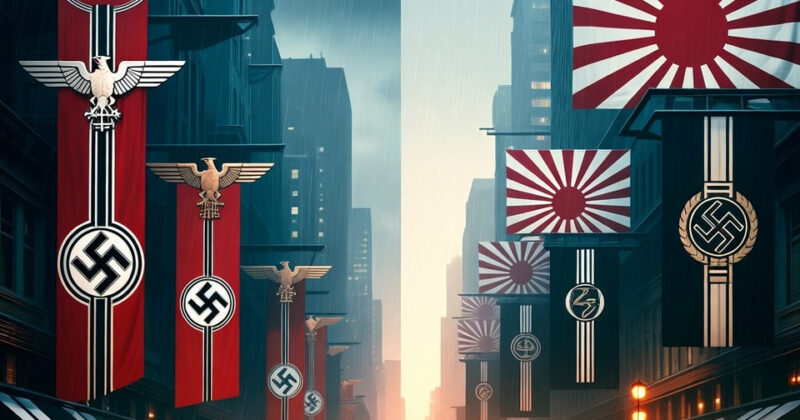
Most audiences initially embraced the show for its immersive alternate history: a world meticulously crafted under the chilling shadow of an Axis victory in World War II. Yet, the series quickly evolves past this premise. The reveal of mysterious films—artefacts depicting timelines where the Allies triumphed—introduces the possibility, and later the destabilizing reality, of parallel universes existing alongside the main timeline.
Where superhero franchises like the MCU wield the multiverse as a playground for endless guest stars and cameos, The Man in the High Castle dials up the stakes. Here, travel between worlds is rare, dangerous, and frequently traumatic. The science is delicate—dependent on both technology and the innate ability of specific characters known as Travelers. This calculated scarcity makes each journey a moment of genuine risk, both psychological and existential.
Parallel Dimensions: Psychological Warfare and Political Drama
The show’s brilliance lies in embedding the multiverse directly within its characters’ arcs. Figures like Juliana Crain confront not only different timelines but alternate versions of themselves, forcing intense introspection over ethics, survival, and truth. Rather than parade infinite realities for novelty, the mechanics of world-hopping fuel the larger political and moral conflicts between the Greater Nazi Reich, the Japanese Pacific States, and the scattered resistance.
The worlds aren’t just alternate backdrops—they are provocative battlegrounds where information, ideology, and identity collide with catastrophic consequences. The personal dilemmas faced by every Traveler, and even those witnessing hints of the multiverse, are inextricably tied to global stakes, giving the narrative weight unseen in most sci-fi television.
From Page to Screen: Expanding Philip K. Dick’s Vision
Philip K. Dick’s original 1962 novel is a literary maze of perception and authenticity. The book flirts with alternate realities through metafiction—particularly via the book-within-the-book The Grasshopper Lies Heavy—but stops short of literal dimension travel. Reality bends in Dick’s universe through philosophical uncertainty, not technology, with ambiguity acting as the engine for existential doubt.
The Prime Video adaptation takes bold steps. By externalizing the multiverse, it crafts a visual and narrative structure ideal for serialized TV. While some purists debate how much is gained or lost, the result is a living, breathing world where dimensional shifts add urgency to every conflict. What the novel teases, the show actualizes—providing a tableau where ideas of destiny, power, and truth are tested in ways both personal and political.
Production Value: Bringing Alternate History to Life
Production on The Man in the High Castle is nothing short of cinematic, blending the grandeur of historical drama with dystopian sci-fi. The architecture, costumes, and propaganda of both the Nazi Reich and Japanese Pacific States immerse viewers in an unsettlingly realistic world. Every hallway, insignia, or resistance safehouse tells its own story, contrasting the banality of evil with moments of rebellious humanity.
This authenticity amplifies the impact when the fabric of reality tears and new worlds bleed through: viewers feel each universe as both plausible and deeply disorienting. The visual language is deliberate—subdued color palettes, framed shots steeped in symbolism, and set design that nods to noir traditions without ever lapsing into cartoonish excess.
Why The Man in the High Castle Deserves More Recognition
Despite its many strengths, the series remains one of Prime Video’s most underrated assets. Perhaps its deliberate pacing and intellectual ambition dissuade casual watchers accustomed to ben-day dot explosions and punchline-based multiverse adventures. Yet, for those willing to engage, the show rewards with layers of thematic depth.
Characters like John Smith anchor the series with arcs that explore complicity, ambition, and the unraveling of ideology under pressure. The psychological realism and nuanced politics of The Man in the High Castle set it apart from the majority of contemporary streaming titles.
A Sci-Fi Epic for Thoughtful Viewers
The Man in the High Castle isn’t simply an alternate history. Its narrative mastery over the multiverse transforms every storyline, weaving individual fates with the fate of entire worlds. While competitors chase spectacle, this series invites viewers to question what reality means—and what the cost of survival should be in a world untethered from certainty. Anyone seeking a sophisticated, immersive, and tension-filled ride through the corridors of possibility will find it here, embedded in a show that confidently redefines the boundaries of sci-fi television.