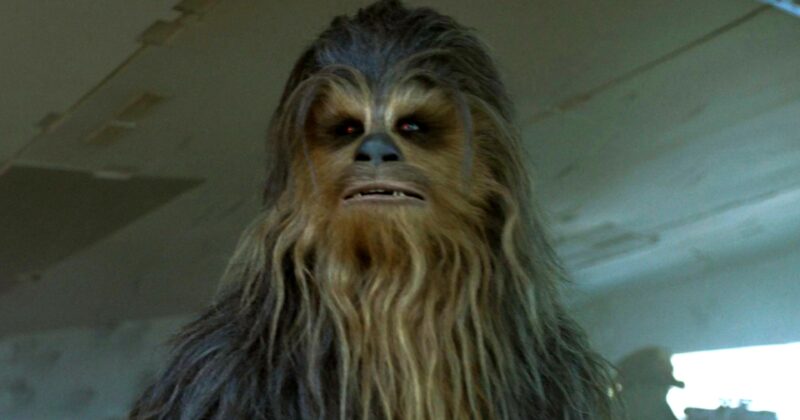
The Mandalorian & Grogu: How Star Wars Revives Chewbacca’s Forgotten Origins for a New Generation

The Vision Behind The Mandalorian & Grogu: Blending Past and Future
The arrival of The Mandalorian & Grogu marks a pivotal moment for the Star Wars cinematic universe, uniting the storytelling depth of the Disney+ series with the grand spectacle of the big screen. Co-written and directed by Jon Favreau, the film continues Din Djarin and Grogu’s journey at a time when the galaxy is still recovering from the fall of the Empire. Pedro Pascal’s Mandalorian, joined by fan-favorite Grogu, is enlisted by a new character played by Sigourney Weaver—a tough New Republic colonel—tasked with halting a rising force that threatens to ignite another galactic war.
Reinventing Legacy: Chewbacca’s Original Design Comes Alive
What’s truly turning heads is the bold decision to revive Chewbacca’s original and long-abandoned concept art. Instead of pulling from easy nostalgia, Favreau and his creative heavyweight colleagues—Dave Filoni, ILM’s John Knoll, and Lucasfilm’s Doug Chiang—dove deep into franchise history. Their collaborative process, described by Favreau as ‘almost voting on what looks right’, borrows techniques from kit bashing to mining inspiration from McQuarrie’s early designs. This is the same creative fountain that led to the birth of Zeb in Star Wars Rebels, itself a reinterpretation of unused Chewbacca artwork.
Zeb, voiced by Steve Blum, made history in animation and more recently as a New Republic pilot in The Mandalorian. His journey from concept drawing to full-fledged hero mirrors the franchise’s willingness to give forgotten ideas new life—an approach now extended to Chewbacca’s original look, providing fans a fascinating glimpse into what might have been if the Wookiee’s design had veered onto a different creative path.
Technological Advances Redefining Star Wars Aesthetics
Favreau points out that the evolution of visual effects and practical artistry has always been at the heart of Star Wars innovation. The interplay between modern technology and old-school methods enables today’s filmmakers to not just replicate the past but to reinterpret it with fresh context. Veteran ILM artists and Star Wars alumni continue to experiment, pushing boundaries to ensure every detail feels both authentic and true to the saga’s roots.
Mining the Franchise’s Rich History for the Next Generation
Star Wars has never shied away from reimagining its legacy characters. The upcoming movie deftly combines these heritage elements with new plotlines and visually ambitious designs. One standout is the reintroduction of Rotta the Hutt, now an adult gladiator, reimagined from his origins as Jabba’s son. Creative teams have seized this moment to tweak and modernize legacy characters, balancing familiarity with the thrill of discovery. This reflects a broader ethos championed by the new Lucasfilm leadership, with Dave Filoni—now Chief Creative Officer—championing a thoughtful, retrospective approach to design.
What This Means for the Future of Star Wars Films
With more Star Wars movies on the way, each helmed by distinct creative voices, the franchise is in a period of exhilarating experimentation. While Shawn Levy and Ryan Gosling’s Starfighter takes cues from classics like Return of the Jedi but promises a wholly unique tone, James Mangold’s upcoming prequel, Dawn of the Jedi, aims for epic storytelling reminiscent of Cecil B. DeMille. The cross-pollination of old concepts and fresh perspectives ensures that each new Star Wars chapter can surprise, delight, and honor fans’ nostalgia—all while forging unexplored paths.
The Mandalorian & Grogu isn’t just another chapter in the saga; it’s a testament to the franchise’s creative resilience and willingness to embrace the imaginative risks that first made Star Wars a cultural phenomenon.