Batman Beyond Gotham: The Rise of New Caped Crusaders
It’s almost mythic how Batman’s presence has transcended Gotham’s dark rooftops to influence entirely new generations of heroes and anti-heroes across comics. His legacy, filled with tactical genius, moral dilemmas, and shadows, has inspired a wave of character designs and backstories that feel both familiar and refreshingly distinct. Since Batman’s inception, and especially in the past two decades, the rise of characters inspired by the Dark Knight speaks volumes about both Batman’s continuing relevance and the creative ambition of today’s writers and illustrators.
Black Noir from The Boys: The Silent Predator
Among the most intriguing modern Batman parallels stands Black Noir from The Boys. In the TV adaptation, he embodies the enigmatic, ruthless vigilante persona—mute, clad in jet-black armor, skilled with gadgets, combat, and dread. But what sets him apart is his tragic silence, contrasting with Batman’s philosophical monologues. While Noir’s origins in the comics take a wildly different (and twisted) turn, the on-screen version feels like a darker Batman, distilled of hope—an embodiment of fear and physical prowess that echoes every fan’s question: what if Batman lost his voice and his faith in humanity?
Ultimate Adventure’s Hawk-Owl: Satirizing the Bat Archetype
Marvel’s Hawk-Owl emerges as a self-aware parody, a look at the Bat legend through a fractured funhouse mirror. Jack Danner is rich and obsessed with crime fighting, but unlike Bruce Wayne, his motives are more neurotic than noble. Rather than avenging a personal loss, Danner’s superhero crusade is a psychological escape, making his character a sharp satire on vigilante obsession. Readers familiar with both Marvel and DC universes will appreciate how Hawk-Owl exposes the cracks in Batman’s relentless pursuit, showing what happens when fantasy and reality fatally blur.
Ghost-Maker: The Rival Who Shares Batman’s Past
Few characters challenge Batman’s methods and ideals quite like Ghost-Maker. Developed for fans hungry for philosophical conflict, this character underwent the same legendary training as Bruce Wayne. However, Ghost-Maker brings a pragmatic, ruthless angle to vigilantism—his philosophy discards the traditional no-kill rule in favor of strict efficiency. The resulting tension between him and the canonical Batman pushes the ever-present debate over justice and moral lines to new heights. For tech and martial arts aficionados, Ghost-Maker’s weaponized intellect and combat style offer a thrilling study in contrasts.
The Batman Who Laughs: The Darkest Timeline
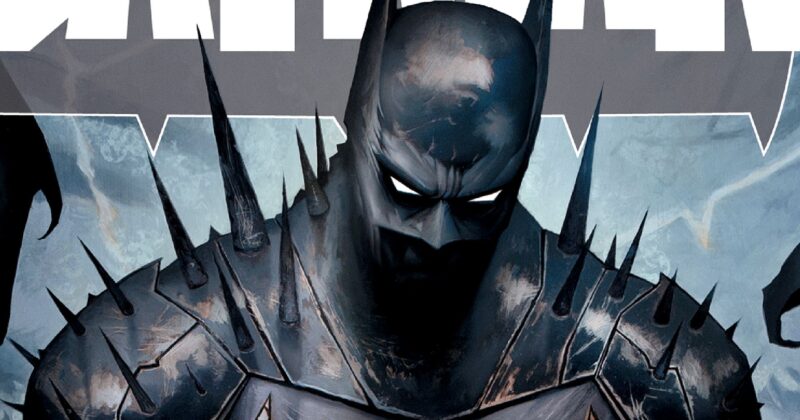
Imagine a universe where Batman’s mind and Joker’s chaos fuse. The Batman Who Laughs is that nightmarish answer, a villain born when Bruce Wayne is contaminated with Joker’s toxin. All of Batman’s cunning—now unhindered by morality—transforms into unchecked malevolence, providing one of the most disturbing antagonist evolutions in any comic. This character’s intricate design, complete with spiked visor and iron smile, has captivated fans who crave storytelling that pushes both characters and readers into uncharted darkness.
Comte de Nuit: The French Tribute
Stepping into Marvel’s cosmopolitan streets, Comte de Nuit—the Night Count—offers a European homage to the Caped Crusader. His tragic origin, high intellect, and reliance on gadgets draw a clear visual and thematic line back to Bruce Wayne’s mythos. Fans of classic masked vigilantes will appreciate the character’s Parisian flair, fighting crime as part of Les Héros de Paris and preserving the spirit of nocturnal justice across continents.
Bat-Man of China: Reinventing the Mask
Taking the cowl to the other side of the globe, Wang Baixi represents the Batman ideal reimagined for a new society. Selected by the Chinese government through the ‘Academy of the Bat’, Baixi’s journey doesn’t begin with trauma, but with talent, intellect, and national pride. His version is less tormented and more pragmatic, even introducing the innovative Robin-bot as a sidekick. This inventive twist speaks to how Batman’s iconography can be customized for different cultural narratives while preserving the tactical core of the original hero.
Nightrunner: Reflecting Contemporary Justice
Bilal Asselah shows how Batman’s legacy adapts to modern society. As the Parisian representative of Batman Incorporated, Bilal brings raw courage and agility to the role, but what truly makes him stand out is his background. Unlike other heirs to the Bat-mantle, his story stems from real-world issues—poverty, cultural identity, and moral conviction. It adds a vérité quality to the superhero myth, connecting the Bat signal not just to power and gadgets, but to meaningful social change.
The Continued Evolution of the Bat Legacy
Each of these characters, whether a loving homage or a critical satire, enriches the ongoing story of what it means to truly be a hero in the shadow of Gotham’s best. As writers, artists, and readers explore the limits of the Bat-craze, they reaffirm that while Batman may never be replaced, his cowl will be continually reinvented, redrawn, and reinterpreted by the ever-dynamic world of comics and beyond.