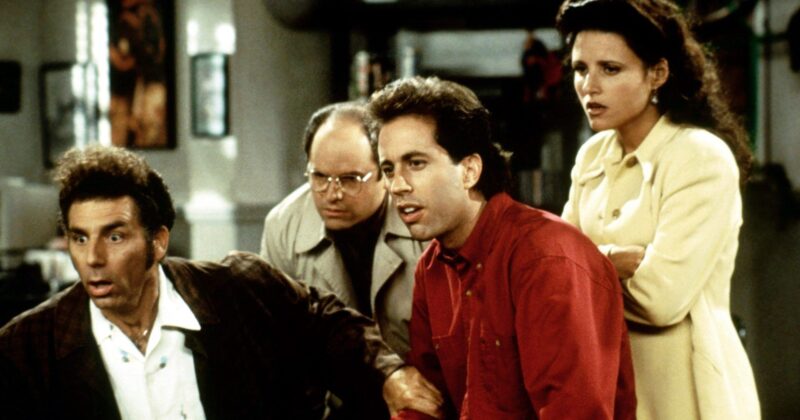
The Iconic Anti-Sitcom Formula Behind Seinfeld’s Lasting Edge
In an era when sitcoms thrived on warmth and friendship, Seinfeld carved out its legendary status with a radically different approach. While contemporaries like Friends, Full House, and The Fresh Prince of Bel-Air leaned heavily on touching moments and character growth, Seinfeld chose to trade hugs for punchlines and sidestep sentimentality in favor of sharp, unapologetic humor.
The «No Hugging, No Learning» Doctrine
At the heart of this creative revolution was creator Larry David’s now-mythical rule for the writers’ room: ‘No hugging, no learning’. Unlike other comedies of its time that routinely paused the laughs for melodramatic resolutions, Seinfeld had a strict ban on sentimental closure. Emotional growth? Not for Jerry, George, Elaine, or Kramer. Instead, the characters schemed and stumbled through each episode, unrepentant and largely unchanged.
This philosophy wasn’t just for show. While sitcoms like Friends were known for their signature will-they-won’t-they scenes and group embraces, Seinfeld subverted expectations. Rather than tying up conflicts with a moral or a group hug, it thrived on comic escalation—often ending with the main quartet in more trouble than before. The payoff came in the form of perfectly timed visual gags and freeze-frame punchlines, like George’s infamous marble rye fishing escapade. Here, closure wasn’t just skipped; it was the punchline itself.
Paving the Way for Darker Sitcom Masterpieces
Seinfeld’s unique stance on emotion-free comedy proved to be a trailblazer, shattering the mold for sitcom storytelling. By championing unsentimental, deeply flawed characters, the show anticipated and inspired future cult classics like Peep Show and It’s Always Sunny in Philadelphia. Both shows follow the formula of centering on groups with questionable morals, never quite learning their lesson—an unmistakable echo of Seinfeld’s approach.
Even within American comedy, Seinfeld’s impact is visible in figures like Elaine Benes, a precursor to leading female antiheroes such as Liz Lemon, Fleabag, and Julia Louis-Dreyfus’ own Selina Meyer in Veep. The character-driven cynicism and relentless pursuit of laughs has since become a template for some of the most critically acclaimed and culturally impactful comedies of the modern era.
Why Hasn’t Everyone Tried to Imitate Seinfeld?
Despite its massive influence and record-breaking viewership, few shows have dared to follow Seinfeld’s lead so directly. Many tried to be the next Friends—from New Girl to How I Met Your Mother—but the Seinfeld formula remains elusive. Notably, the spiritual successor isn’t even a direct clone: Larry David himself doubled down on the anti-sentiment in Curb Your Enthusiasm, blending the Seinfeld sensibility with semi-autobiographical improvisation and a single-camera format that would go on to revolutionize television comedy.
Where Curb pushed boundaries with industry-savvy satire and self-aware narratives, its DNA remains rooted in that original «no hugging, no learning» code.
Seinfeld’s Influence in the Streaming Era
In the age of streaming, Seinfeld’s shadow still looms large. As new generations binge their way through emotionally layered series and comedies with heart, there’s an unmistakable charm to the show’s raw, uncompromising humor. With its focus forever on the joke itself, Seinfeld endures as the prototype for dark, observational sitcoms—proof that sometimes, what you don’t say or learn is just as important as what you do.