The Complex Legacy of The Rings of Power’s Book Deviations
The adaptation of The Lord of the Rings: The Rings of Power for television has been both ambitious and contentious. While major film and TV adaptations inevitably take creative liberties, some choices have left Tolkien fans debating the direction of the series and the integrity of Middle-earth’s lore.
Condensing Centuries into Mere Weeks
One of the show’s most jarring decisions was its drastic timeline compression. Tolkien’s Second Age spans more than three millennia, with critical events like the forging of the Rings and the rise of Sauron unfolding over centuries. In the series, however, these sweeping events are squeezed into a matter of weeks. Visually, Middle-earth is more expansive than ever, yet the hurried narrative undercuts the majesty and gravitas of this epic era, making the political intrigue and personal journeys feel unnaturally rushed.
The Galadriel-Sauron-Elrond Triangle
Few storylines have stirred as much debate as the complicated dynamic between Galadriel, Sauron (disguised as Halbrand), and Elrond. The palpable tension between Galadriel and Sauron introduces a near-romantic edge never present in Tolkien’s works. When a kiss between Galadriel and Elrond surfaces—regardless of its tactical intent—it confuses viewers familiar with the canonical relationship, where Elrond is actually Galadriel’s son-in-law. These dramatic flourishes, while designed to build tension, risk undermining well-established character histories.
The Fate of Celeborn
Another perplexing departure is the apparent death of Celeborn, Galadriel’s husband. In the series, Galadriel is depicted as believing Celeborn fell in battle—an invention unsupported by the source material, which always portrayed them as a steadfast pair leading Lothlorien. The series’ silence on Celebrian, their daughter, and Celeborn’s ultimate fate creates additional gaps. It also ignores the fundamental elven concept of immortality and the passage of souls to Valinor, something Galadriel herself would be acutely aware of.
Tom Bombadil’s Unexpected Arrival in Rhûn
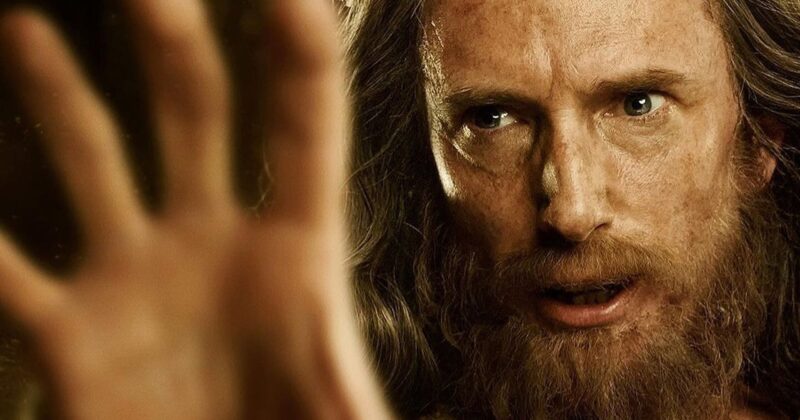
The enigmatic Tom Bombadil was omitted from Peter Jackson’s films, leading to decades of fan speculation. In a twist, The Rings of Power introduces Bombadil not in his canonical home of the Withywindle, but in the remote lands of Rhûn. Even more audacious is his sudden involvement with the Istari—wizards such as Gandalf—a role for which there is no precedent in Tolkien’s texts. Bombadil’s main characteristic has always been his neutrality and refusal to intervene in the power struggles of Middle-earth, a contrast now blurred by the show’s reinterpretation.
Gandalf’s Premature Arrival
The mysterious Stranger, later revealed as Gandalf, arrives in Middle-earth far earlier than established lore. Traditionally, Gandalf—one of the Maia sent by the Valar—does not appear until after Sauron’s downfall, stepping into the Third Age as a guide for elves, men, and hobbits. While his early inclusion caters to fans, it disrupts the careful chronology of Middle-earth and limits the potential for a future dedicated Gandalf origin story, a narrative many would have preferred explored on its own terms.
The Mythology of Mithril
Mithril, the legendary luminous metal, always played a crucial role in the fall of Khazad-dûm. The series remains faithful to the dwarves’ reckless quest for the precious ore, a hunger that awakens the Balrog. However, it also introduces newly invented lore about mithril’s mystical properties and ties to elven preservation, additions that were never hinted at in Tolkien’s meticulously crafted world-building.
More Than Just Artistic License
Adaptations must inevitably bridge the gap between written legend and visual spectacle, but The Rings of Power’s most divisive changes are not just about creative flair—they redefine core motifs and relationships that have enchanted readers for generations.
The implication is clear: as the series continues, each fresh chapter will not only be measured against its epic visuals and performances, but also the intricate—and sometimes controversial—choices that shape its retelling of Middle-earth’s Second Age.