The Evolution—and Overcrowding—of Robin
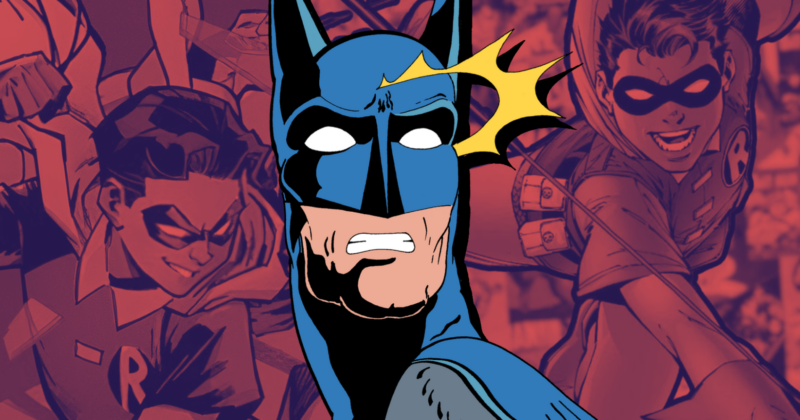
The Batman franchise has always thrived on reinvention. From the gothic gravitas of Tim Burton to the noir stylings of recent comics, Gotham’s hero is constantly remade to suit changing times. Yet amidst this endless creativity, one glaring issue keeps surfacing: the legacy of Robin. What began as an inspired foil to Batman’s darkness has become a knot of overlapping timelines, character arcs, and unresolved continuity quirks that even the most loyal readers struggle to untangle.
The One-Time Simplicity of Robin
Robin was initially conceived as a counterweight to Bruce Wayne, a dash of hope and optimism to pierce Gotham’s perpetual shadow. Dick Grayson, the first and most iconic Robin, naturally progressed into Nightwing, symbolizing a cycle of growth both for Batman and his protege. But the arrival of successors like Jason Todd and Tim Drake soon layered the timeline, squeezing major transformations into a suspiciously short span. Suddenly, Bruce Wayne seemed less like a mentor and more like someone burning through sidekicks at breakneck speed.
This isn’t merely a numbers issue—it’s about narrative credibility. How does Gotham’s timeline accommodate so many Robins, each with distinct, fully-developed arcs and a shared mentor who ages at a snail’s pace? DC’s attempts to patch things together with reboots and timeline shifts have typically only compressed histories, not clarified them. The result: a franchise so rich with legacy it starts to feel weighed down by its own mythos.
Damian Wayne: The Symptom and the Signal
When Damian Wayne was introduced, he was anything but formulaic. The biological son of Bruce Wayne and raised by the League of Assassins, Damian’s debut brought new dynamics of family, morality, and legacy into play. As the latest Robin, Damian’s arc was less about youthful optimism and more about reconciling a violent past with a new sense of purpose. Yet, despite starting as a disruptor, Damian’s tenure as Robin has become a showcase for the franchise’s biggest challenge: stagnation.
Unlike Dick, Jason, or Tim, Damian has yet to definitively leave the mantle behind. Each previous Robin found their unique identity—from Nightwing to Red Hood—and became entangled with new corners of the DC universe. Damian’s continued presence, however, blocks the path for younger heroes and robs the title of its once hard-earned significance. If Robin is meant to represent evolution, what does it say about the Bat-Family that the Boy Wonder’s journey keeps looping back on itself?
Experimentation and Its Limits
DC hasn’t shied away from experimenting with the sidekick role. Enter Duke Thomas, a character designed to modernize the concept with ties to the ‘We Are Robin’ movement—an attempt to reimagine Gotham’s legacy as a broader network of young vigilantes. Duke would eventually carve out his own persona as The Signal, but even this shift felt like a sidestep: the original Robin issue remained untouched.
Elsewhere, characters like Carrie Kelley from alternate universes have demonstrated fan appetite for Robin reinventions, but their existence outside of main continuity does little to address the core overcrowding problem. If anything, they remind audiences of how much flexibility the concept truly has—so long as you’re willing to bend, or break, the rules established by the primary canon.
Potential Paths Forward—Reset or Reinvention?
With no easy answer in sight, the Batman franchise sits at a crossroads. One possible solution: fully commit to legacy by letting the Robins truly move on. Imagine a Gotham where Damian Wayne steps up into a new heroic identity, or where Tim Drake receives a definitive, satisfying endpoint that clears the stage for a fresh protégé. Alternatively, the neglected arc of characters like Stephanie Brown could be dusted off and given pride of place, diversifying the Robin story while honoring its overlooked chapters.
Some fans have long argued for another radical fix: integrate beloved alternates like Carrie Kelley into mainline continuity. Doing so could offer a jolt of creative energy without erasing established history. Of course, there’s always the nuclear option—trim the number of Robins, streamline the mythology, and rediscover what made the Robin mantle poignant to begin with. But such a move would force DC to confront difficult questions about which stories to preserve and which to leave behind.
The Weight of Legacy in a Modern Franchise
Every new Robin introduced is meant to push the mythos forward, yet the title now resembles an ever-spinning carousel. The emotional punch that once accompanied the transfer of the mask has been blunted by cyclical storytelling and an expanding cast with overlapping claims to the same identity. The truth is, the problem isn’t any one character—it’s the system that keeps recycling what should be a story about growth into a tale about repetition.
The Batman universe has proven its elasticity for decades. But as sidekick mythology strains under its own history, it’s clear the franchise faces a choice: risk reinvention, or let the weight of too many Robins tug one of comics’ greatest stories into a perpetual loop.