How Star Trek’s Alien Races Shaped the Landscape of Science Fiction
Since its television debut, Star Trek has not only envisioned starships journeying through the cosmos but also ignited the imagination of generations with its pioneering alien races. The franchise’s deep dive into interstellar diplomacy, conflict, and cultural philosophy has left an indelible mark far beyond its fanbase—embedding words, gestures, and archetypes into the DNA of pop culture.
Romulans: The Art of Intrigue
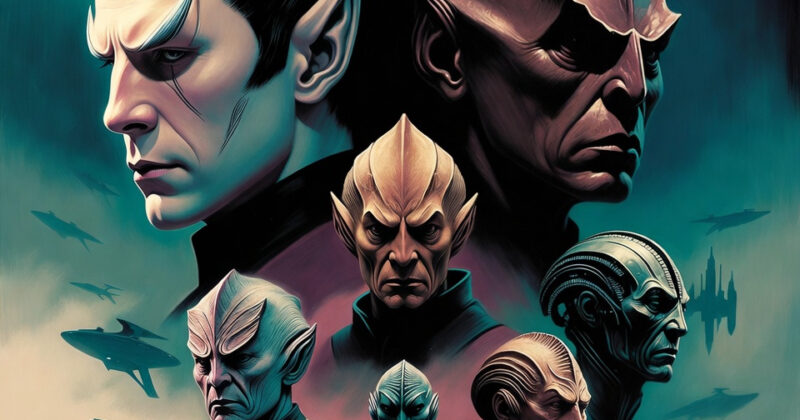
Introduced early in the saga, the Romulans immediately struck audiences with their pointed ears and angular brows, visually echoing Spock’s Vulcan heritage but with an undercurrent of scheming intent. Conceived as an allegory for Earthbound issues of division and prejudice, the Romulans evolved into one of the most enigmatic and formidable opponents of the United Federation of Planets. Their storyline weaves through iconic narratives, from the cold, chess-like standoffs of space to uneasy alliances against greater threats—a pattern that continues to resonate in the franchise’s latest chapters.
Cardassians: Shades of Gray
Despite lacking mainstream recognition like Vulcans or Borg, dedicated viewers know the Cardassians as some of Star Trek’s most complex and morally ambiguous species. From Gul Madred’s chilling psychological battles with Captain Picard to Garak’s elegantly crafted intrigue and subtextual representation of identity, Cardassians reflect the darker possibilities inherent in power and militarism. Their role in the occupation of Bajor explored themes of oppression and resistance with a level of gravitas unusual for serialized TV during its era. Remarkably, their political journey led—from oppressors to Federation leaders—reinforcing how Star Trek thrives on nuanced evolution rather than simple allegory.
Borg: The Collective Nightmare
Borg are perhaps the ultimate science fiction metaphor for dehumanization and technological horror. Their chilling mantra, ‘resistance is futile’, and their relentless drive to assimilate life forms into their Collective position them as more than mere villains; they are existential threats to individuality. Unlike the many alien races that ultimately find common ground with humanity, the Borg stand apart as a force utterly incompatible with the Federation’s ideals, making every encounter with them a test of what it means to be sentient and free. Their influence has inspired everything from Doctor Who‘s Cybermen to philosophical debates about identity in a digital age.
Klingons: Warriors Reforged
If any race epitomizes transformation within Star Trek, it is the Klingons. Initially conceived as antagonistic analogues to real-world Cold War tensions, the species would go on to be reimagined in the films and The Next Generation as a warrior culture steeped in honor and ritual. Their distinct ridged makeup and guttural language became cultural hallmarks, while characters like Worf, torn between Federation ideals and Klingon traditions, exemplified the franchise’s sophisticated exploration of dual identity and loyalty. Klingon lore is now on par with the great fictional mythologies—full of operatic sagas, disquieting betrayals, and unforgettable battles.
Vulcans: Beyond Logic
No Star Trek species is more universally recognized than the Vulcans. From the iconic greeting (‘Live long and prosper’) to Spock’s unwavering rationality, Vulcans have moved beyond fiction’s confines, symbolizing a philosophy of balance between emotion and logic. Star Trek’s writers have used Vulcans repeatedly to hold a mirror to humanity’s many contradictions and aspirations. Spock’s lasting legacy—be it in TV, movies, or even meme culture—remains a testament to character-driven storytelling and the power of science fiction to reflect real-world movements toward peace, understanding, and curiosity.
Lasting Influence Across Pop Culture
The visual language of Star Trek aliens, their social structures, and the ethical debates they provoked continue to be referenced and reimagined across countless media—whether you spot a Vulcan salute at a tech conference or Klingon writing tattooed on an arm at Comic-Con. In the ever-widening universe of apps, games, and visual entertainment, Star Trek’s creations fuel endless inspiration, challenging audiences to see past mere special effects toward science fiction’s highest calling: understanding ourselves through the other.