The Star Trek Crossover That Could Have Redefined Sci-Fi TV Forever

An Ambitious Vision: Enterprise Meets TOS and DS9
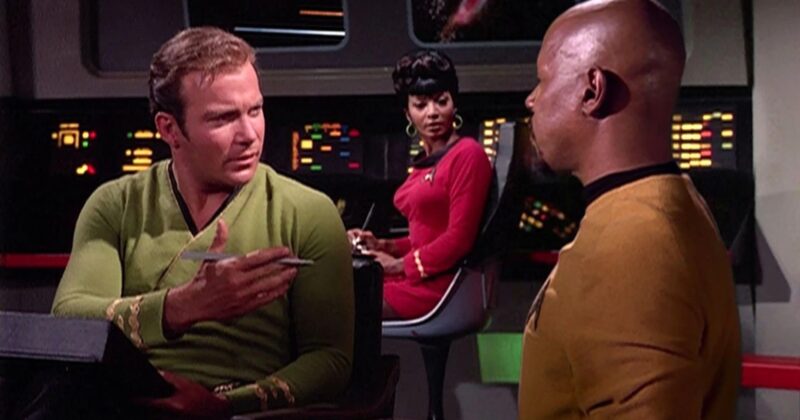
Imagine a Star Trek event where the most iconic crews collide: Captain Jonathan Archer’s NX-01, Captain James T. Kirk’s classic USS Enterprise, and Captain Benjamin Sisko’s Deep Space Nine team. This scenario nearly became reality thanks to a bold pitch from seasoned Star Trek writers Judith and Garfield Reeves-Stevens during the creative sessions for the would-be seventh season of Star Trek: Enterprise. With time travel at the heart of the narrative, the pitch was designed to elevate the beloved Temporal Cold War arc and bring together three generations of Starfleet legend in a single, boundary-defying storyline.
The Lost Crossover Opportunity
Fans will remember how Star Trek: Deep Space Nine dazzled the community with ‘Trials and Tribble-ations’, a milestone episode that seamlessly inserted Sisko’s crew into the original series’ tribble-laden space station K-7. It captured the essence of crossover magic—nostalgia, innovation, and witty scriptwriting—while preserving franchise continuity. Yet, the Reeves-Stevens duo’s proposed episode for Enterprise would have gone even further, orchestrating a grand temporal convergence at K-7, where all three crews intersect against a backdrop of tribbles and shadowy time-travel intrigue.
The Temporal Cold War: Star Trek’s Most Intricate Saga
The Temporal Cold War stands as one of the franchise’s most complex narratives, weaving together secret agendas and temporal agents manipulating events across centuries. While the arc was prematurely dropped, discussions among showrunners indicated plans to revisit and deepen this storyline, potentially even tying it directly to the mysterious ‘Future Guy’—with showrunner Brannon Braga hinting at an identity shocker involving Archer himself. The crossover pitch was poised to be the definitive payoff: Archer’s Enterprise, journeying a hundred years forward, overlapping with Kirk and Sisko just as their own timelines converge on K-7.
Casting, Continuity, and the Anatomy of an Epic Event
Pulling off such a crossover would not only challenge narrative structure—it would have demanded casting coordination on a scale rarely seen in television. Picture Scott Bakula, William Shatner, and Avery Brooks each reprising their roles, bridging generational fandoms while honoring Star Trek’s unbroken timeline. Maintaining canonical integrity would necessitate that Archer’s crew operate in the shadows, careful to avoid detection by Kirk and Sisko. Yet, the inherent drama and fan service of a Captain’s summit would be irresistible—a moment offering not just spectacle, but nuanced exploration of Starfleet’s legacy and temporal politics.
Star Trek’s All-Star Crews Onboard Space Station K-7
Past, present, and future would have collided aboard K-7, with the tribbles serving as both comic relief and a thread of continuity across series. Such layering is rare even in today’s multi-verse obsessed streaming landscape. It’s a storytelling approach reminiscent of the most successful crossovers in pop culture, such as the DC and Marvel events, but steeped in Star Trek’s tradition of using speculative fiction as a mirror for big ideas.
Why This Lost Episode Still Resonates Today
The legacy of this unmade crossover lives on in passionate fan discussions and ambitious fan-fiction, underscoring the appetite for interconnected, universe-spanning narratives in science fiction television. Star Trek: Enterprise ended its run too soon for this vision to materialize, leaving fans to speculate and imagine the cascading effects such an encounter would have had not just on the timeline—but on the perception of what was possible in serialized sci-fi storytelling. It serves as a reminder: some of the greatest episodes are the ones that never made it to air, but inspire new generations to dream of what’s next for Starfleet—and for the future of the franchise.