The Strangest Details Hidden in Classic Pixar Movies: Easter Eggs, References & Unrealized Projects

The Strangest Details Hidden in Classic Pixar Movies
Pixar Animation Studios are synonymous with groundbreaking animation, heartfelt narratives, and intricate world-building that appeals to both kids and adults. Behind their iconic films lies a tapestry of subtle references, in-jokes, and visual gags that reward observant viewers and eagle-eyed fans. Here’s a look at some of the most bizarre and fascinating details lurking in the backgrounds of beloved Pixar classics.
The Luxo Ball: Pixar’s Rolling Signature
Arguably the most iconic Pixar Easter egg, the Luxo Ball is a yellow ball with a red star and blue stripe that somehow bounces into nearly every studio animation. First introduced in a 1986 short—Pixar’s very first animation—this ball isn’t just a nostalgic nod; it’s a mark of Pixar’s evolution. You’ll find it everywhere from Toy Story (where it sits amidst Andy’s toys) to Monsters, Inc. (hidden discreetly during Boo’s playtime) and even Finding Nemo. The Luxo Ball is so embedded in Pixar’s DNA that its appearances now feel like a signature: if you’re watching a Pixar film, the challenge is seeing how many times you can spot it.
Pizza Planet: More Than Just a Toy Story Landmark
Pizza Planet isn’t just a plot device in Toy Story—it’s an inter-film voyager. The delivery van, memorable for its yellow body and rocket on top, careens through scenes across the Pixar universe. Fans spotted the van in Cars, Inside Out, and even as a wooden model in Brave—despite the medieval, vehicle-less setting. This wooden cameo is a tongue-in-cheek reference only animators could dream up, winking at persistent fans who love the interconnected nature of the Pixar universe. And if you look closely, other cameos in Brave—like a sign resembling Sully from Monsters, Inc.—suggest a vast web of shared worlds.
Finding Nemo Gets Its Own Game in Inside Out
Inside Out is packed with meta-references, but some are nearly invisible. Scan the shelves of Imagination Land and you’ll spot a board game called ‘Find Me.’ This subtle Easter egg is a direct homage to Finding Nemo. Just below it, note the mysteriously titled ‘Dinosaur World.’ Astute viewers have linked this to The Good Dinosaur, which premiered only months after Inside Out. Pixar’s tradition of foreshadowing future projects or even nodding at unannounced ones keeps fans on their toes.
Pixar’s Real-World Maps in Inside Out
Another layer of realism appears in Inside Out during Riley’s tense first day at school. The classroom world map isn’t your ordinary teaching aid. Look closely, and you’ll see that some regions are labeled to correspond with the settings of classic animated films—Bambi, Cars, and Dumbo in the U.S., with Australia marked for Finding Nemo and a nod to Scotland for Brave. Such details serve as hidden love letters to Disney and Pixar’s own story-rich landscapes and reward attentive fans with a deeper sense of interconnected lore.
Toy Story 3’s Mysterious Nod to ‘Newt’
One of the rarest Pixar references isn’t to a released movie but to one that was ultimately never made. As Andy preps for college in Toy Story 3, look at the back of his bedroom door—a sticker features a lizard and the phrase ‘Newt Xing.’ This wink was likely for the ill-fated film ‘Newt,’ a project scheduled but quietly canceled before release. Moments like this offer a bittersweet recognition of projects that never saw the light of day, but linger as part of Pixar’s alternate timeline.
The Ubiquitous A113 Code
If you’ve watched enough Pixar or Disney movies, you’ve probably glimpsed the code A113—sometimes on a license plate, sometimes on a door or background sign. This alphanumeric signature refers to a classroom number at the California Institute of the Arts where many Pixar and Disney animators cut their teeth. The code’s omnipresence is a rite of passage for animation aficionados and serves as a secret handshake within the industry. Even outside Pixar, Lilo & Stitch and other films carry the tradition, with Pixar placing A113 everywhere from vehicle serial numbers to boxes in A Bug’s Life.
Horror in Toy Story: The Shining’s Surreal Influence
The cheerfully animated world of Toy Story hides unnerving tributes to Stanley Kubrick’s The Shining. Sid’s house is infamous for its chaotic layout and that carpet—it’s nearly identical in pattern to the Overlook Hotel’s haunted carpet, though recolored. In Toy Story 3, the number ‘237’ (the Overlook’s secretive room) recurs everywhere from computer usernames to security camera labels—a haunting throughline for one of cinema’s most terrifying settings brought subtly into Pixar’s family-friendly universe.
Buy N Large: The WALL-E Connection Spanning Franchises
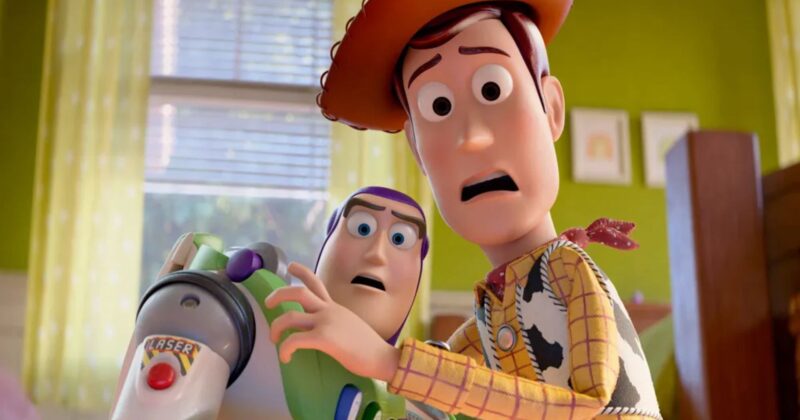
Pixar crafts a bleak dystopia in WALL-E, dominated by the mega-corporation Buy N Large (BNL). But sharp viewers saw that BNL’s logo is already part of the backdrop in previous films, including Toy Story 3, where batteries powering Buzz Lightyear bear the corporate branding. This intertextuality suggests a shared, underlying world where Pixar’s utopias and dystopias might not be as far apart as we think.
This level of detail means that every Pixar movie rewatches reveals something new—whether it’s a secret sticker, an obscure code, or a cleverly disguised nod to horror classics. For both casual viewers and those who treat each film as a scavenger hunt, these Easter eggs are part of the magic that keeps fans coming back—and why Pixar continues to lead the industry in both technical excellence and creative world-building.