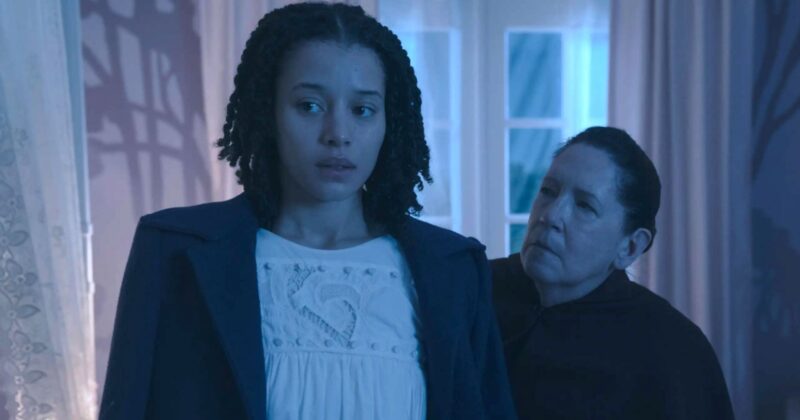
The Testaments: Hulu Expands Gilead’s Dystopia
With the curtain closing on The Handmaid’s Tale, Hulu unveils its highly anticipated spinoff, The Testaments, and the series is already turning heads with an impressive 88% critics score on Rotten Tomatoes just before its official launch. Set in the chilling universe imagined by Margaret Atwood, this new chapter offers a reinvigorated perspective on the enduring themes of resistance, power, and survival within Gilead—a place that still echoes with eerie relevance.
A Fresh Yet Familiar Gilead
Helmed once again by showrunner Bruce Miller, The Testaments crafts its own identity while paying homage to its predecessor. Picking up several years after the events of The Handmaid’s Tale, the series centers on two teenagers, Agnes (played with raw vulnerability by Chase Infiniti) and Daisy (brilliantly portrayed by Lucy Halliday). The narrative thrust comes from their experiences at Aunt Lydia’s elite preparatory school—a setting that magnifies the regime’s indoctrination efforts while exposing cracks of rebellion and friendship among Gilead’s next generation.
Cast, Characters, and Performances
The casting choices bring both heritage and freshness, with Emmy winner Ann Dowd reprising her chilling role as Aunt Lydia. Newcomers like Rowan Blanchard, Eva Foote, and Kira Guloien infuse the series with contemporary resonance, while the ensemble’s chemistry elevates the often stark and oppressive atmosphere. Particular praise has been directed toward Infiniti and Halliday, whose performances ground the show’s emotional intensity and highlight the personal costs of resistance within Gilead.
Critical Reception: Praise and Debate
Initial reactions from critics signal that The Testaments deftly balances continuation and reinvention. Some commend the show for bringing ‘fresh blood’ to the narrative—expanding the revolution’s scope instead of rehashing the harrowing cycles of violence and control. The deeply human portrayal of young women fighting to claim their autonomy gives the dystopian world a visceral urgency, making the old horrors feel shockingly new again.
However, opinions diverge on the series’ distinctiveness. While some view it as a compelling evolution, others worry it risks being perceived as a mere extension of the original, potentially stalling under its own legend. Yet, even those who voice caution acknowledge the addiction and timeliness the spinoff injects—especially with global conversations swirling around women’s rights, autonomy, and collective resistance.
The Handmaid’s Tale vs. The Testaments: Ratings at a Glance
For fans tracking critical and audience response, it’s worth comparing the Rotten Tomatoes scores throughout The Handmaid’s Tale’s run: Season 1 landed at 94%, with subsequent seasons fluctuating between 69% and 90% from critics, and audiences ranging from 24% to 90%. The Testaments opens firmly in the upper tier, establishing high expectations for both new and returning viewers.
- Season 1: 94% Critics / 90% Audience
- Season 2: 90% Critics / 83% Audience
- Season 3: 82% Critics / 58% Audience
- Season 4: 69% Critics / 41% Audience
- Season 5: 80% Critics / 24% Audience
- Season 6: 87% Critics / 43% Audience
- The Testaments (Season 1): 88% Critics / Audience score pending
Release Details and Structure
The series launches with its first three episodes dropping together, followed by weekly releases every Wednesday. Spanning ten episodes, viewers can immerse themselves in an extended narrative arc that intertwines personal journeys with the larger political transformation underway in Gilead.
Why This Spinoff Matters
With its mix of established and emerging talent, sociopolitical resonance, and daring narrative choices, The Testaments promises to capture a broad audience—from diehard fans of Atwood’s novels to newcomers curious about complex sci-fi drama. Critics agree: while shadows of the original linger, this spinoff injects meaningful urgency and contemporary perspective, ensuring Gilead’s story remains as vital and unsettling as ever.