Behind the Scenes: When Improvisation Becomes Cinematic Magic
Project Hail Mary has firmly established itself within the science fiction landscape, propelled not just by its stellar performances and intergalactic stakes, but also by its subtle, grounded moments on Earth. Few expected that one of the movie’s most emotionally resonant scenes would emerge not from months of scripting, but from a spontaneous decision made the night before filming.
The Origin of an Iconic Moment: The Karaoke Scene
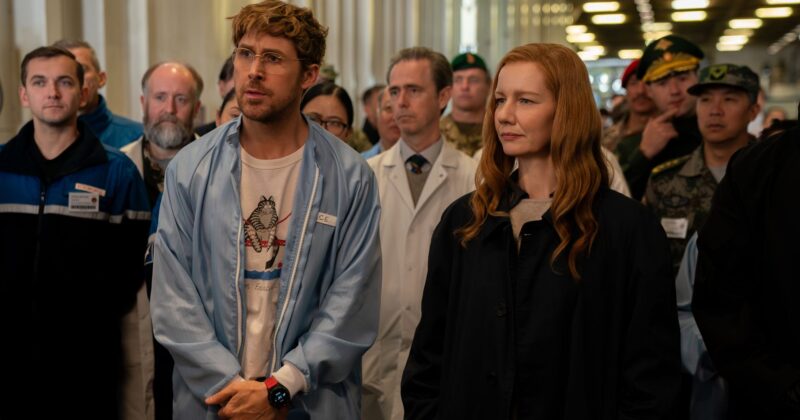
One of the film’s standout scenes unfolds not in the vacuum of space, but at a farewell gathering for the scientists about to embark on a dangerous cosmic mission. Here, the character Eva Stratt—usually portrayed as the unyielding government operative—stands before the room and surprises everyone with a deeply emotional karaoke performance of Harry Styles’ ‘Sign of the Times.’ The song, with its themes of savoring life while on the edge of catastrophe, becomes an ideal choice, intertwining with the existential uncertainty facing the cast. What makes this moment even more remarkable is that it was neither composed during pre-production nor tightly storyboarded. It emerged, almost out of nowhere, through actor Sandra Hüller’s initiative and vulnerability.
Sandra Hüller: Transforming Eva Stratt in One Night
Sandra Hüller wasn’t even originally meant to appear in this sequence. The script envisioned a more traditional sendoff for the astronauts doomed to leave Earth forever, but Ryan Gosling, leading as Ryland Grace, suggested Stratt’s involvement at the eleventh hour. Hüller, who openly admits to her apprehension about singing on screen, scoured for a song overnight before landing on Styles’ anthem. Aided by swift work behind the scenes to secure the music rights, production captured the scene the very next day—improvisation at its most electric.
Why the Karaoke Scene Hits Hard
Science fiction films often risk losing touch with their humanity, especially when the spectacle of space commands the narrative’s attention. In Project Hail Mary, the sparse scenes on Earth become pivotal, preventing the film from drifting into clinical abstraction. Stratt’s karaoke performance reframes her not merely as a bureaucratic architect of the mission, but as a multifaceted individual capable of personal sacrifice and empathy. The song’s lyrics—speaking to perseverance at the end of all things—act as both comfort and challenge, subtly foreshadowing the emotional stakes yet to come.
The impact of this scene carries through the plot’s turning points, coloring later revelations—including the drastic measures Eva takes to launch Grace into space. The audience, now privy to Stratt’s capacity for compassion, finds themselves more invested in her actions and ultimately, in the fate of Earth as depicted in the film. This nuanced display of humanity elevates both Eva and the overall narrative, proving that sometimes the most memorable moments on screen arise from risks taken in the margins of a production schedule.
Project Hail Mary: Charting a Course Between Earth and the Cosmos
This instant-classic karaoke scene anchors the movie’s terrestrial storylines and ensures that even as audiences marvel at the wonders of extraterrestrial survival, they’re equally drawn back to Earth’s very human core. Scenes like this affirm Project Hail Mary’s place among recent science fiction achievements, crafting characters whose decisions resonate far beyond their mission’s surface premise and remind us of the spontaneous brilliance cinema can achieve.