The Allure of Campus Desire, Reimagined
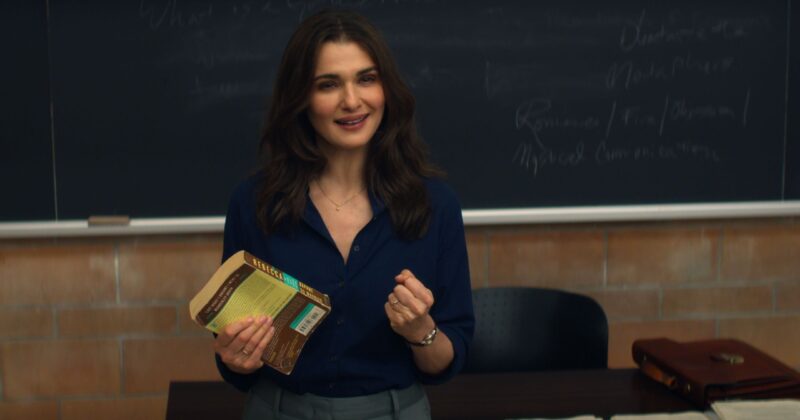
Netflix dives into the world of academia with Vladimir, an eight-episode series starring Rachel Weisz, Leo Woodall, and John Slattery. At a glance, the show boldly promises a swirling blend of intellectual intrigue and erotic tension: Weisz’s character, a seasoned English professor, becomes fixated on her enigmatic new colleague, Vladimir, just as her husband John faces an academic trial for sexual misconduct. The setup echoes the compelling territory covered by contemporary dramas that explore midlife longing and power imbalances, but with a decisive literary twist — it’s based on Julia May Jonas’s acclaimed novel, with the author herself showrunning.
Breaking the Mold—Or Just the Fourth Wall?
From the first frame, Vladimir aims to distinguish itself from the current surge of mature romance on television. Weisz’s character offers wry, fourth wall-breaking narration, signaling a series conscious of its own tropes and pretense. This device should provide insight into her psyche and spice up the narrative, but the show opts for heavy-handed exposition over raw emotional revelation. While similar unreliable narrators (think Fleabag or The Affair) create compelling tension by blurring perception and reality, here the effect is somewhat diminished, as the protagonist tells more than she shows.
Promises of Seduction: Where’s the Heat?
The series carried high expectations, fueled by a suggestive promotional campaign — its poster, a sensually charged image of manicured fingers threading through a book, nodded knowingly toward recent successes like The Idea of You and Babygirl. These projects have redefined age-gap romance by spotlighting the sexual agency of women over 30, a long-overdue corrective in mainstream media. Vladimir seemed poised to join this canon, especially with Leo Woodall’s proven charisma from hits like Bridget Jones: Mad About the Boy and The White Lotus.
Yet, for all its provocative marketing, the show shies away from actual steam. While Rachel Weisz and Leo Woodall each deliver performances with subtle layers, there’s a distinct lack of chemistry — their dynamics fail to ignite beyond academic banter or fleeting glances at faculty mixers. Fantasy sequences and imagined trysts are staged with predictability and little sizzle, especially noticeable in a post-Bridgerton streaming landscape, where viewers now expect more than mere whispers of desire. Instead of feeling subversive, the show’s erotic edge remains largely theoretical, leaving its audience as unfulfilled as its protagonist.
The Academic Scandal: A Stronger, Subtler Thread
The series is at its sharpest when probing the ripple effects of academic misconduct. John Slattery’s John, a silver-tongued professor who dismisses his own problematic behavior as a relic of a ‘different time,’ centers the narrative on institutional accountability. Here, Vladimir smartly flips expectations by telling the story from the perspective of the accused’s wife — not the transgressor. The protagonist moves through faculty politics and personal turmoil, called upon to leverage her own reputation to shield her husband, even as she wrestles with resentment and an aching need for autonomy. The result is an incisive, if sometimes frustrating, portrait of how women are often expected to mediate, excuse, and absorb the fallout of men’s actions, both privately and publicly.
Despite the freshness of this lens, the series hesitates to fully explore its potential. The trial itself never feels urgent; stakes are mostly emotional rather than procedural, and much of the intrigue is swept aside in favor of internal monologue and fleeting flirtations. John’s own indifference to the accusations further saps momentum; it’s hard to root for consequences in a world where the consequences rarely land.
Sexual Agency: Explored or Evaded?
What might have become a powerful narrative — a woman in a long-term, open marriage reclaiming her sexual agency — loses weight as the plot retreats from its most interesting questions. Instead, the protagonist oscillates between half-hearted fantasies and obligatory loyalty, rarely interrogating why she continues to prop up a marriage where her partner fails to meet her halfway, emotionally or ethically. Meanwhile, supporting characters like Vladimir’s wife Cynthia (the magnetic Jessica Henwick) are left largely on the sidelines, denying the show richer dramatic possibilities.
Technical Merits and Missed Connections
Stylistically, the show boasts Netflix’s signature polish, with clever set pieces in lecture halls, smoky faculty lounges, and fever-dream academic parties. Rachel Weisz commands the screen in every scene, anchoring the series with nuance even as the writing leaves much to be desired. The narrative, however, is a slow burn without enough fuel, drifting between half-hearted provocation and workplace drama but never quite capturing the erotic or intellectual charge it seeks.
Viewers seeking a daring, character-driven transformation on par with recent standout TV romance dramas may find themselves wishing for more: more heat, more conflict, and more genuine revelation. Vladimir attempts to dissect the intersection of power, sexuality, and self-deception in academic life — but like a once-promising research paper that never quite meets its own thesis, it ultimately leaves too many questions barely touched.