The Defining Shift: Star Trek Evolves Beyond Its Origins
The ongoing debate among Star Trek aficionados isn’t just about which series reigns supreme, but about the transformative moment when Star Trek: The Next Generation (TNG) stepped beyond the formidable shadow of The Original Series (TOS) to claim its place at the forefront of science fiction. While TNG started with an uneven first season, it soon revolutionized what sci-fi television could be, proposing a more cohesive ensemble, deeper character arcs, and a meticulously crafted balance between episodic and serialized storytelling.
‘Yesterday’s Enterprise’: The Game-Changer
At the heart of this narrative evolution sits ‘Yesterday’s Enterprise’, the episode widely considered the pivot point where TNG didn’t just match the legacy of TOS, but confidently surpassed it. With its alternate timeline premise, the episode thrusts the Enterprise-C into the world of the Enterprise-D through a temporal rift, initiating a cascade of changes that reimagine the Federation as an aggressive power and the flagship as a vessel designed for conflict. Captain Picard finds himself at the center of a profound ethical crisis: restore the timeline by sending Enterprise-C back to certain destruction, or protect this new reality knowing it may be irreparably altered.
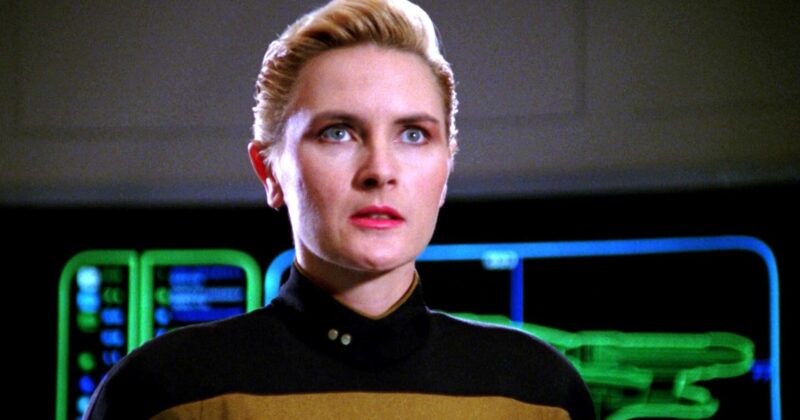
This interplay of high-concept sci-fi and genuine moral inquiry exemplifies why Star Trek endures as more than just spaceship spectacle. The episode leverages its conceit for character drama, notably bringing back Tasha Yar and spotlighting Guinan—whose unique perception of reality serves as the narrative lynchpin.
Masterful Pacing and Temporal Storytelling
Unlike many genre episodes mired in drawn-out setups, ‘Yesterday’s Enterprise’ jumps instantly into its time-twisting stakes. This brisk momentum is reminiscent of TOS classics like ‘The City on the Edge of Forever’, yet here the script pushes the envelope by teasing the wider implications of multiverse theory and timeline disruptions—not just in theoretical terms, but in ways that directly affect core characters and their universe.
Across the Star Trek canon, time travel is a familiar trope, but this episode distinguishes itself by embracing the idea of countless coexisting timelines and the real, personal toll of their collision. The writing is ambitious, rooted not just in speculative science but in exploring the existential cost of restoring order to a fractured reality.
From Great to Legendary: ‘The Best of Both Worlds’
Surpassing TOS with one landmark episode was one thing. Maintaining that elevated standard demanded more. Enter ‘The Best of Both Worlds’—the iconic two-parter that would become a touchstone not just for TNG, but for sci-fi television as a whole. The threat of the Borg and the assimilation of Picard wielded both narrative and emotional stakes at a level Star Trek had rarely reached. The shock of Picard being transformed into Locutus was more than a plot twist; it forced the entire crew—and the audience—to confront loyalty, leadership, and identity on a scale that few pop culture franchises have ever articulated.
The consequences rippled far beyond weekly episodic storytelling, defining what serialized drama could accomplish and influencing everything from subsequent Trek entries to modern sci-fi juggernauts.
TNG as the Franchise’s Creative Standard-Bearer
While TOS is where the phenomenon began, TNG transformed Star Trek into a contemporary powerhouse that would spark ongoing TV reboots and cinematic reimaginings. When the original was revived by a resurgence of space opera fervor, the resulting films expanded the mythos but rarely diverged from the original formula. Only with the advent of TNG—and its willingness to challenge core assumptions, update its ensemble, and embrace innovative storytelling mechanics—did Star Trek become the expansive universe it’s known as today.
Thanks to TNG, the franchise stayed relevant and competitive, ultimately laying the groundwork for the interconnected era of modern Star Trek. Every new series and film, from Deep Space Nine to recent streaming originals, traces its ambition and benchmarks directly back to the heights scaled by Picard and his crew. For many, TNG remains not just a sequel, but the blueprint by which all future explorations are measured.