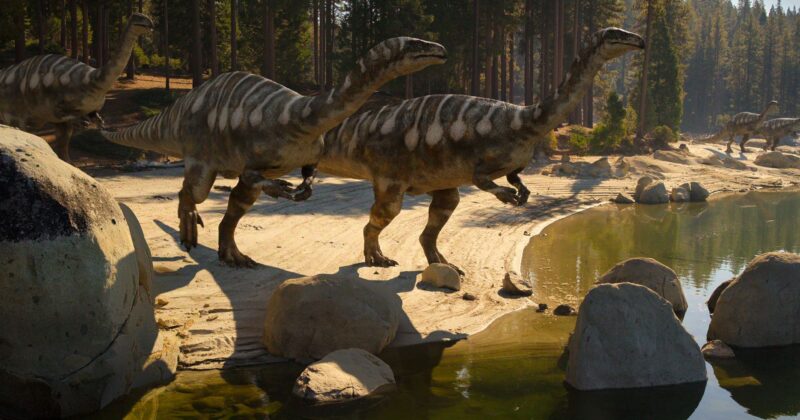
Netflix’s The Dinosaurs: Popular, Spectacular, But Far from Science
Netflix’s The Dinosaurs recently soared to the top of streaming charts, capturing the imagination of millions with its sweeping prehistoric vistas and thunderous creatures. Helmed by the legendary Steven Spielberg and narrated with gravitas by Morgan Freeman, it promises an epic journey through Earth’s distant past. The visuals are a feast—colossal sauropods lumbering past rivers, raptors stalking ancient forests—but beneath the spectacle, the series leans heavily on entertainment value, occasionally prioritizing dramatic storytelling over scientific fidelity.
The show delivers excitement but glosses over accuracy with creative liberties. Modern paleontology, for example, has challenged the classic portrayal of dinosaurs as mere scaly monsters; yet, on Netflix, the reconstructions often stick to familiar tropes, rarely venturing into the scientifically plausible world of feathered dinosaurs or their day-to-day behaviors. The result? A docuseries that appeals to casual viewers and aspiring paleontologists alike, but ultimately leaves serious dino aficionados hungry for something richer and more evidence-driven.
Prehistoric Planet on Apple TV+: The Gold Standard in Dinosaur Documentaries
For viewers eager to move beyond fiction and immerse themselves in the closest thing to a real prehistoric documentary, Apple TV+’s Prehistoric Planet is an unmissable destination. With executive production led by noted wildlife storyteller Jon Favreau and narration by Sir David Attenborough, the docuseries expertly blends state-of-the-art CGI with the latest paleontological research. Each sequence is meticulously crafted, exploring a range of ecosystems—from lush Cretaceous coastlines to volcanic island chains—where feathered and scaly dinosaurs coexist with marine reptiles and early birds.
What separates Prehistoric Planet from the usual dinosaur fare is its grounding in rigorous scientific consulting. Leading paleontologists contributed to each episode, ensuring the reconstructed behaviors and environments align with current research. The series goes beyond just the look of the animals; it visualizes how creatures like Mosasaurus or Velociraptor hunted, nested, and thrived, supported by fossil evidence and modern analogues from the animal kingdom. Supplementary companion videos and a dedicated podcast dive even deeper, making this a rare case where documentary entertainment doesn’t shortchange education.
Bringing Dinosaurs to Life: Visual Fidelity and Real-World Habitats
The impact of Prehistoric Planet owes much to its collaboration with BBC Studios’ acclaimed Natural History Unit, who spent years perfecting every detail of Cretaceous life. The habitats are not generic stone-age landscapes, but painstakingly reconstructed environments based on real locations and fossil data. The visual effects team referenced skeletal reconstructions, compared modern birds and reptiles, and considered even the tiniest behavioral clues preserved in the fossil record.
Unlike Netflix’s stylized approach, Prehistoric Planet’s dinosaurs often have feathers, display colorful mating rituals, and interact with their world in nuanced, relatable ways. The docuseries captures not just the extraordinary but the everyday: a tyrannosaur swimming, a nesting herd guarding its young—scenes rarely granted screen time in fiction-heavy productions. This attention to authentic, sometimes «uneventful,» animal behavior steers the series away from constant action, giving viewers a sense of normal life in prehistory, reminiscent of acclaimed BBC projects like Walking With Dinosaurs but equipped with the visual firepower of the streaming age.
Focused Storytelling: From Cretaceous Drama to Ice Age Giants
While Netflix’s The Dinosaurs attempts a grand sweep from the Triassic to the extinction event, the breakneck pacing often results in a compressed and sometimes superficial overview. In contrast, Prehistoric Planet hones in on the Maastrichtian stage of the Late Cretaceous for its first two seasons, offering a deep-dive into one of Earth’s most dynamic and diverse prehistoric epochs. This tight focus allows for richer stories about specific species, from towering titanosaurs to the cunning Dromaeosaurs and the ever-iconic Tyrannosaurus.
Season 3 takes a leap into the Pleistocene, exploring the Ice Age and spotlighting mammals like mammoths and saber-tooth cats. While these episodes shift the subject away from dinosaurs, they remain rooted in the same dedication to evidence and spellbinding visual storytelling. This broader perspective appeals to anyone curious about the evolutionary threads that connect extinct megafauna to the modern world.
Why Paleontologists Endorse Prehistoric Planet Over Netflix’s Rival
No dinosaur documentary is perfect—science evolves as quickly as researchers make discoveries—but the overwhelming verdict among paleontologists and science communicators is that Prehistoric Planet is currently unmatched for accuracy and respectful speculation. It provides a living snapshot of paleontological consensus and debates from the early 2020s, making it a valuable resource for students, educators, and lifelong dino fans. The docuseries encourages viewers to distinguish spectacle from science and introduces a new generation to the wonders of discovery still unfolding in the fossil beds and laboratories across the globe.