Why Disney’s Original Live-Action Jungle Book Is Unlike Any Other Remake

The Forgotten Pioneer: Disney’s Original Live-Action Jungle Book
When audiences discuss Disney’s era of live-action remakes, they often point to Tim Burton’s Alice in Wonderland as the cultural turning point. Yet, an earlier experiment quietly redefined what it meant to translate animated classics into reality—with The Jungle Book emerging as a true outlier.
Breaking the Disney Remake Formula
Today’s Disney remakes generally follow a blueprint: stick close to the original storyline, use groundbreaking CGI, and remix classic songs. The Jungle Book shattered this mold even before it existed. Rather than a shot-for-shot update, it delivered an adventure-focused narrative targeting a broader, more mature audience. This version of Mowgli, portrayed by Jason Scott Lee, shed much of the cartoonish innocence. The story leaned into action, romance, and intrigue, exploring Mowgli’s life as he forged bonds between the animal kingdom and human society, and fell for the intrepid socialite Kitty, played by Lena Headey.
A Production Without Digital Safety Nets
What truly sets The Jungle Book apart from modern remakes is its complete absence of CGI animals or digital fantasy. Every leap, every chase, every encounter in the wild required real animals and real stunts—no animated shortcuts. Jason Scott Lee performed demanding physical feats alongside tigers, bears, monkeys, and elephants. The result is a raw, tactile atmosphere: you feel the humidity, sense the danger, and see the unpredictability in scenes where human and animal actors coexist.
The use of real animals introduces technical and ethical challenges. Animal trainers outnumbered special effects artists, and the American Humane Society reviewed the script to ensure that danger stayed within bounds. Many potentially hazardous scenes were cut or reimagined, and actors, especially Lee, spent extensive time bonding with their animal co-stars to build trust on set.
How Tech Evolution Changed the DNA of Remakes
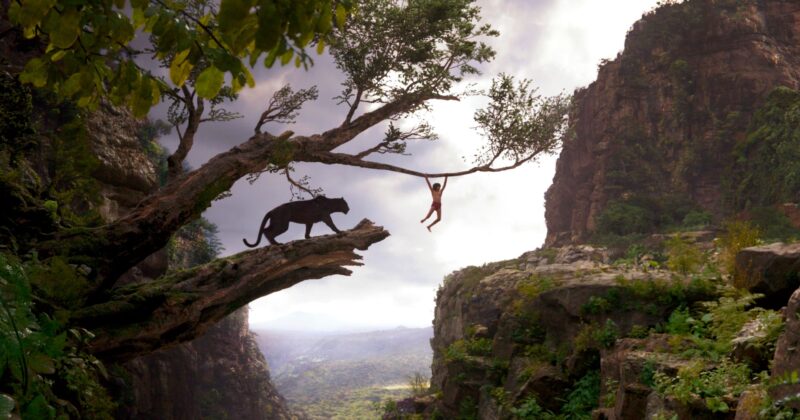
Fast forward to the age of high-budget visual effects: contemporary versions, like the acclaimed 2016 Jungle Book directed by Jon Favreau, feature motion-capture technology and photorealistic CGI animals that articulate the animated personalities of Baloo, Bagheera, and Shere Khan. These remakes can conjure impossible stunts or fantastical environments, but they trade the real, untamed energy of live animal performances for technical wizardry and visual polish.
For cinephiles, this evolution opens debates. Is the soul of an adventure richer when it’s captured through sweat, risk, and improvisation in the jungle, or when the magic is woven from code in front of green screens? Regardless of the answer, The Jungle Book stands as the original blueprint for all Disney remakes, yet remains rare for its physical, unpredictable, and sometimes exhilarating vision of storybook cinema.
Cast and Craft: The Faces Behind the Adventure
Jason Scott Lee wasn’t just a charismatic lead—he took on the daring stunts that brought Mowgli’s jungle-born skills to life. The film’s supporting cast included Lena Headey, who brought depth to Kitty, and Cary Elwes as the archetypal villain, Captain William Boone. The collaborative effort from trainers, animal handlers, and stunt teams provided a foundation for on-screen authenticity few modern remakes attempt.
As technology races forward, the legacy of The Jungle Book remains preserved as a unique cinematic relic—a daring fusion of animal instinct and human ingenuity. For those with an appetite for pure, untamed adventure, seeking out this overlooked entry in Disney’s evolving legacy is an experience that still feels uniquely alive on the screen.