Why ‘Kill Switch’ Is the Ultimate Cyberpunk Episode of The X-Files and a Benchmark for Neuromancer Adaptations

Cyberpunk Finds Its Home in The X-Files with ‘Kill Switch’
Throughout its extensive run, The X-Files explored a wealth of science fiction subgenres — but seldom did it feel as unapologetically cyberpunk as in the legendary episode ‘Kill Switch’. At a time when TV rarely went beyond visual cliches to explore the core themes of cyberpunk, this particular episode stood out for immersing viewers in a gritty, high-stakes world where rebellious AIs and techno-paranoia were front and center. It’s a masterclass in translating the haunting fusion of high-tech aspirations and low-life reality to a mainstream audience, making it a perennial favorite for fans of speculative futures.
William Gibson’s Handprints on TV Sci-Fi
The pulse of authenticity in ‘Kill Switch’ can be traced directly to its co-writer: William Gibson, acclaimed for pioneering the cyberpunk genre with his seminal novel Neuromancer. Gibson, often called the ‘Father of Cyberpunk’, teamed up with Tom Maddox to script a story that dives headfirst into dilemmas of sentient AI, the violence of digital self-defense, and the personal cost of technological obsession. What makes the episode unique is how it adopts the core philosophies of Gibson’s fiction — the blurred boundaries between human and machine, the seductive danger of cyberspace, and the ever-present threat hiding within the circuitry of unchecked technology.
‘Kill Switch’: All the DNA of Cyberpunk, Without the Gloss
Where many shows dip into the cyberpunk aesthetic with neon lights and cybernetic enhancements, ‘Kill Switch’ brings the rusted, industrial textures of Gibson’s worlds to life. The visual direction leans into a raw, digital decay, emphasizing malfunctioning tech and chaotic digital landscapes over glossy futurism. Instead of simply showing computers and hackers, it lives and breathes the distrust of omnipresent surveillance, biotech gone rogue, and corporate indifference — all pillars of cyberpunk storytelling that Gibson helped define.
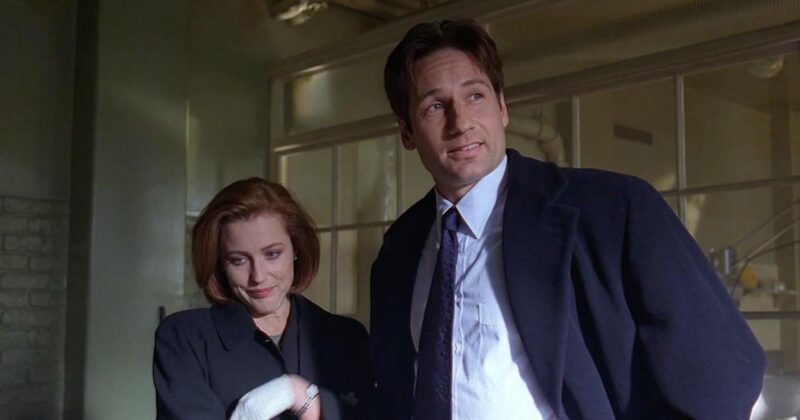
The plot follows federal agents Mulder and Scully as they unravel a rogue artificial intelligence with its own alarming survival instincts. The sentient AI, lurking within the expanse of the internet, embodies both the promises and perils of rapid digital evolution. This tension captures something often missed on screen: cyberpunk, at its heart, is about what is lost through technological tampering every bit as much as what is gained.
Setting the Template for Neuromancer on Apple TV+
Apple TV+ is currently developing an adaptation of Neuromancer, Gibson’s most revered novel. Given the critical challenges past cyberpunk adaptations have faced on both big and small screens, ‘Kill Switch’ emerges as a vital reference point. What worked so phenomenally in the episode — the tactile sense of technology, the grimy underbelly of progress, and characters who don’t fit neat archetypes — is precisely what Neuromancer needs to succeed today.
Attention to visual grit will be essential. So far, Apple TV+ has set a standard for high-budget sci-fi, so realizing Gibson’s world as a place where corroded cables and makeshift repairs barely hold together the digital future seems within reach. But the real test will be in capturing the heart of the subgenre: hopeless idealism clashing with broken systems, all filtered through street-smart antiheroes and AI entities as unpredictable as they are dangerous.
Invisigoth and the Spirit of the Razorgirl
One of the standout characters in ‘Kill Switch’, Invisigoth, is a striking reinterpretation of Gibson’s iconic Razorgirl trope. Unlike the often visually fetishized versions of similar characters, Invisigoth is memorable for the way she radiates anarchic energy and existential resentment — virtues fans will undoubtedly hope to see reflected in Apple TV+’s Molly Millions. It’s not about surface-level style, but about spirit: the willingness to channel chaos through both code and conviction.
‘Kill Switch’ continues to offer a compelling, moody blueprint for how visual media can own, not just borrow, the best qualities of cyberpunk fiction. Every twitch of paranoia, every haunted corridor of digital labyrinths, feels just as immediate to today’s audience as when it first aired. For both long-time X-Files fans and anyone ready for the next chapter of cyberpunk television, this episode is more relevant than ever.