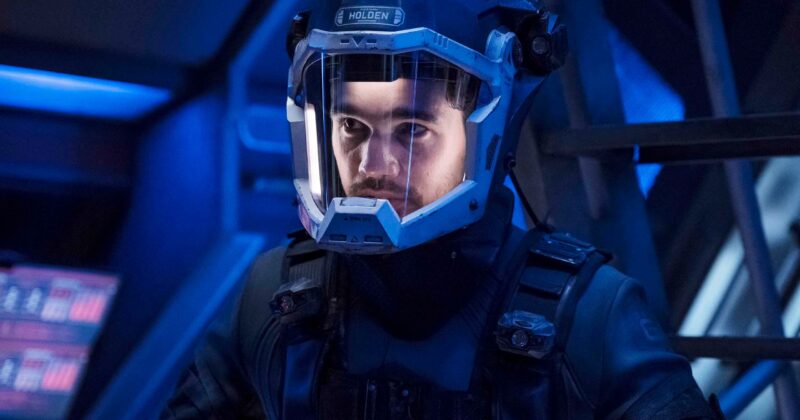
The Expanse: The Space Opera That Raised the Bar for Villains
In the vast landscape of science fiction series, few antagonists have managed to resonate with the audience as profoundly as Marco Inaros from The Expanse. This Prime Video epic has continuously raised the stakes, offering an intricate exploration of humanity’s future across the solar system. Yet, among its many strengths, the portrayal of Inaros stands out as a masterclass in villainy, transforming television’s expectations of what a sci-fi antagonist could and should be.
What Makes Marco Inaros So Unforgettable?
Powerful antagonists anchor the most memorable stories, and Marco Inaros, played with chilling magnetism by Keon Alexander, is no exception. Introduced during a pivotal point in the series, Inaros is more than just a conventional foe — he’s a revolutionary, a manipulator, and, in his own mind, humanity’s liberator.
Inaros emerges when the galaxy teeters on the edge of chaos. As leader of the Free Navy, he’s charismatic enough to gather oppressed Belters under his cause and dangerous enough to command them into unforgivable acts. His weapon isn’t just firepower: it’s the ability to sway, recruit, and radicalize, repainting himself as a hero even while orchestrating mass destruction. This duality is what gives Marco his edge in the pantheon of sci-fi villains. He doesn’t twirl a metaphorical mustache — instead, he wages psychological warfare, twisting truths until followers and adversaries alike question the very nature of right and wrong.
The Art of Narrative Manipulation
Great villains provoke discomfort by reflecting real-world issues back at us. Marco Inaros steps into this role perfectly, presenting grievances that, while rooted in genuine social injustice, spiral into destructive extremism. Sci-fi has always excelled at asking ‘what if?’ about our political systems and prejudices, and through Inaros’s narrative control, viewers are forced to confront the fragility of morality when revolution is at stake.
Every action from Inaros is layered: calculated speeches, strategic alliances, even his moments of apparent vulnerability are crafted to further his agenda. That’s what sets him apart—he is never the cartoonish threat. Instead, he remains believable, sometimes dangerously sympathetic, until his logic justifies the unthinkable. It is this psychological depth that powered the tension of The Expanse‘s concluding seasons, turning each episode into both a space thriller and an ethical think piece.
After Inaros: The Franchise’s Potential for Even Greater Threats
While Inaros’s journey ended spectacularly with the vaporization of his ship, Pella, at the Ring Gate, his exit didn’t signal a tidy resolution for the universe of The Expanse. The show, while expansive, only scratched the surface of its source material, leaving the door wide open for a new regime of villains in possible sequels or adaptations.
Enter Winston Duarte—a character briefly introduced, yet positioned as the mastermind behind the formidable Laconian Empire. In the novels, Duarte’s vision and military ambition threaten far more than individual lives; he aims to reshape colonized space itself. Should future adaptations follow the books, audiences may witness a shift from the psychological warfare of Inaros to the grand, imperial ambitions of Duarte, promising yet another escalation in the science fiction arms race of villainy.
The Anatomy of a Modern Sci-Fi Masterpiece
Part of what distinguishes The Expanse in the crowded sci-fi streaming arena is its refusal to simplify the motives of its characters. Heroes and villains are drawn with complexity, reflecting the messy realities of interplanetary politics. The show’s production values, tightly paced episodes, and willingness to confront mature themes have made it a favorite among both hardcore science fiction aficionados and newcomers to the genre.
With a cast helmed by Steven Strait as Jim Holden and Dominique Tipper as Naomi Nagata, and creative direction from talents like Naren Shankar, Mark Fergus, and Hawk Ostby, The Expanse has managed to capture both spectacle and substance. Whether exploring the tense cold war between the UN, Martians, and Belters or diving deep into cosmic mysteries, the show consistently delivers on its promise of intricate, emotionally-charged storytelling.
Looking Ahead: The Legacy of Marco Inaros and the Future of Sci-Fi Antagonists
As streaming platforms increasingly invest in high-quality science fiction, the bar for villainy is only going up. The success and influence of Marco Inaros will likely continue to shape the types of antagonists that writers and actors aspire to create. From the sociopolitical complexities of The Expanse to the dystopian futures of other genre competitors, audiences expect depth, contradiction, and a real sense of danger from those who challenge humanity’s future.