Why Marvel’s Latest Ultimates Issue Is a Bold Step Towards Experimental Storytelling
Reexamining The Ultimates #23: A Controversial Yet Crucial Chapter
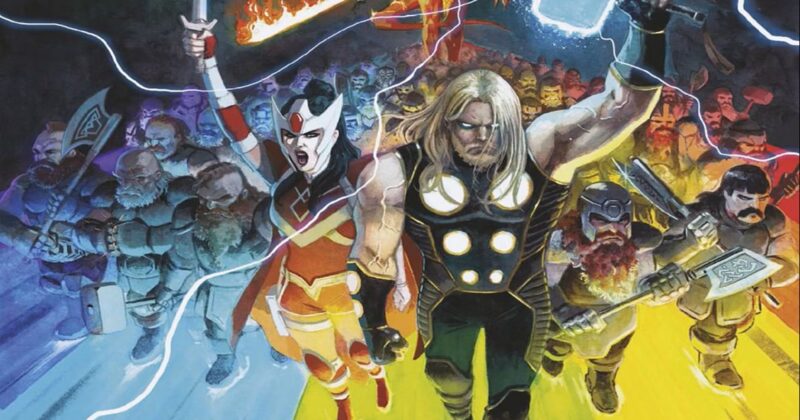
Marvel’s ongoing exploration of its Ultimate Universe has been a rollercoaster of creative highs and narrative challenges, and the recent release of The Ultimates #23 perfectly embodies this duality. Diverging from the main arc centered around the Maker, this issue shifts focus toward Thor and Sif’s epic battle against Loki to reclaim Asgard, culminating in an apocalyptic event that ushers in the legendary Ragnarok. Although this climax offers the kind of high-concept mythology that comic readers crave, its execution has ignited divided reactions.
At its core, the issue tackles the destruction of the old world of gods, a thematic heavy-hitter that blends Norse myths with Marvel lore. Yet, the narrative rhythm falters because Thor and Sif, key founding members of the Ultimates team, had been absent from the spotlight for over a year. This long hiatus makes the storyline feel like the finale of a saga readers never fully witnessed, which ultimately lessens its impact within the broader tapestry of the Ultimate Universe.
Contextual Challenges in The Ultimates’ Final Arc
The real struggle with The Ultimates series as it nears its conclusion lies in its ambitious attempt to juggle numerous threads simultaneously. While earlier installments maintained a sharp focus on the Maker’s machinations and the political allegories embedded therein, the closing arc feels episodic and somewhat fragmented. The Ultimates #23 encapsulates this issue by presenting a story rich with potential yet feeling out of sync with the momentum of previous issues.
This fragmentation is partly a symptom of the series trying to balance dense political commentary alongside over-the-top superhero drama. Both elements matter, yet when mixed unevenly, the story risks losing cohesion, leaving readers with a narrative that feels uneven and occasionally hollow. It’s this very dichotomy that has made the final run one of Marvel’s most polarizing explorations within the Ultimate Universe.
The Artistic Shift: Embracing Surrealism and Poetic Prose
Despite its storytelling shortcomings, The Ultimates #23 excels spectacularly in presentation. The switch from long-time series artist Juan Frigeri to Stipan Morian introduced a fresh, psychedelic visual style that brilliantly captures the chaotic and mythical tone of the Ragnarok storyline. Morian’s artwork evokes a dreamlike intensity reminiscent of his earlier work on image comics like 20th Century Men and Bleeding Hearts, reinforcing the narrative’s surrealism and emotional weight.
Complementing this is Deniz Camp’s evocative writing, which moves towards poetic expression rather than straightforward superhero action. Moments such as Thor’s grief over the loss of Sif, and the reconciliation between Thor and Loki as they accept their fates, elevate the comic beyond standard genre fare. These emotional beats not only deepen character arcs but also pay homage to Jack Kirby’s pioneering depiction of the New Gods, adding layers of reverence and mythological gravitas.
Standalone Strength in a Disjointed Tale
While The Ultimates #23 feels disjointed within the overarching Ultimate Universe narrative, when isolated, it shines as a self-contained masterpiece. Its engagement with myth, combined with experimental art and prose, presents a bold, almost literary take on Thor’s saga. This approach—rich in symbolism and creative risk—is something that could revitalize Marvel’s superhero comics landscape if embraced more widely.
The Call for Marvel to Embrace Experimentation
The mixed reception of The Ultimates #23 underscores a larger issue within Marvel’s current comic publishing ecosystem: the need for more daring innovation. The last decade has often seen Marvel fall back on familiar narrative formulas, leaving fans craving fresh perspectives and styles. The Ultimate Universe initiative promised such renewal, but its rapid closure feels counterintuitive, especially given the creative risks taken in this recent issue.
What makes The Ultimates #23 stand out is precisely its willingness to push conventional boundaries—not just narratively, but visually and thematically. It challenges the superhero comic format by embracing both chaos and poetry, connecting superhero mythos with classical origins in a deeply human way. This blend of experimentation and reverence is a blueprint for how Marvel can reclaim storytelling vitality.
Marvel doesn’t need to replicate this issue exactly, but it must encourage creative teams to take similar leaps of faith. By doing so, future stories will not only captivate longstanding readers who crave complexity but will also invite new audiences into ever-evolving mythic universes.