Scream’s Legendary Opening Moments: A Staple of Modern Horror
Over decades, the Scream franchise has redefined what horror fans expect from an opening scene. From the moment Drew Barrymore picked up the phone in the first film, audiences were hooked—combining slasher terror, dark humor, and the constant threat that anyone might die at any moment. That blend of self-awareness and suspense wasn’t just a formula; it became a brand. Each subsequent entry tried to recapture the lightning-in-a-bottle energy of that first call, ranging from inventive (the Stab movie premiere in the sequel) to forgettable (Scream VI’s catfishing cold open). However, Scream 7 manages to both honor and reinvent the franchise’s most iconic gag with its opening minutes.
Breaking Down Scream 7’s Electrifying First Scene
This time, the curtain rises at the infamous house where the original massacre happened, cleverly reimagined as an Airbnb experience run by meta-horror enthusiasts. The setting functions as more than just a nod to longtime fans; it’s packed with deadly irony. Posters for in-universe slasher films, life-sized Ghostface mannequins, and chalk outlines set the scene for a dose of horror tourism that’s equal parts disturbing and playful.
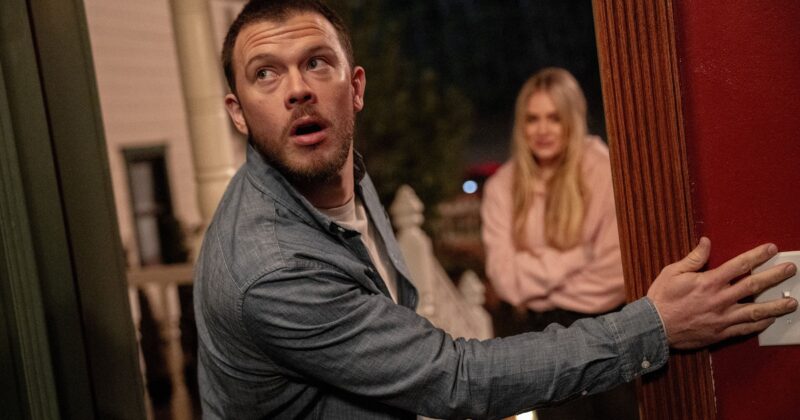
Staying at this ghoulish vacation rental are Scott, a superfan played by Jimmy Tatro, and Madison, portrayed with true scream-queen flair by Michelle Randolph. Their dynamic is instantly believable—Scott can barely contain his joy over living out a twisted fandom fantasy, snapping selfies amid murder memorabilia, while Madison struggles to appreciate the macabre setting. Naturally, it isn’t just make-believe for long. A staged horror trivia call, seemingly one more playful touch, takes a deadly turn as the real Ghostface emerges, culminating in a signature, brutal sequence that leaves the house in flames.
Turning Horror History into Satirical Tourism
The decision to recast Stu’s house as a tourist attraction proves a stroke of genius. It serves as a pointed satire of society’s fixation on true crime and the commodification of tragedy—a phenomenon only amplified in the era of Airbnb and social media. Ghostface isn’t just preying on random victims; the new movie lampoons the very idea that anyone would want to relive infamous horrors for fun and profit. Turning the Woodsboro murder site into a destination lampoons companies that profit from people’s obsession with grisly lore, mirroring real-world trends of dark tourism and influencer culture.
Jimmy Tatro: Scene-Stealer of the Modern Scream Era
While Madison’s panic grounds the scene in authentic terror, it’s Tatro’s performance that makes the opening soar. Already known for scene-stealing comedic work in films like 22 Jump Street, Theater Camp, and a memorable turn in Modern Family, Tatro brings infectious energy to Scott. He embodies the obsessive fan, toeing the line between comic relief and tragic victim, milking every moment of screen time until the carnage hits. His ability to blend nervous excitement with giddy horror shows just how crucial casting can be to making or breaking a Scream opener.
A Miniature Horror Masterpiece That Seeds the Film’s Central Mystery
Much like the best opening sequences in the franchise, this one stands alone as a compact horror story, but it also cleverly lays groundwork for bigger mysteries. As Scott jokes about whether Stu might have survived his fate in the original film, the film teases audiences with the possibility of retconning a notorious death and reintroducing Ghostface lore. The movie toys with fan speculation, dangling the idea of a returning villain even as sophisticated digital fakery blurs the line between life and myth—a theme with chilling resonance in the current era of deepfakes and viral misinformation.
Scream and the Future of Meta-Horror
By anchoring its latest installment in both franchise callbacks and timely satire, Scream 7 proves that the series’ greatest weapon remains its ability to comment on itself and its culture. From the macabre Airbnb to the brilliant mix of terror and hilarity, the film’s opening sequence is a testament to why Scream still matters in horror—and why audiences continue to be as eager to laugh as to scream.