Why The Next Lord Of The Rings Movie Needs to Break the Franchise’s Ongoing Streak
The New Frontier of Middle-earth: Breaking Free from Nostalgia
It’s a rare feat in cinema for a trilogy to define an entire genre, but Peter Jackson’s The Lord of the Rings adaptations set an almost untouchable standard for fantasy filmmaking. With impeccable casting, iconic practical sets, and Howard Shore’s legendary score, every detail converged to create a timeless fantasy masterpiece. Now, with Warner Bros. returning to Tolkien’s mythos, the stage is set for a new era—but the legacy of Jackson’s trilogy looms large, and each new project must answer to it in ways that go far beyond simple nostalgia.
Every Attempt Since Has Fallen Short of the Original Magic
After the curtain fell on Frodo’s journey, it seemed inevitable that the cinematic door to Middle-earth would swing open again. And it did, as The Hobbit project rolled out with source material just as revered. Yet, the bumpy transition from Guillermo del Toro’s vision, an arguably excessive three-part structure, and polarizing technical choices like 48fps filming and heavy CGI kept these films from recapturing the original’s magic. While not dismissible as failures, none delivered the same visceral wonder of Jackson’s earlier work.
Then came The Rings of Power, Amazon’s streaming epic set in Middle-earth’s distant Second Age. The show invested heavily in visuals and expanded on lore that Tolkien only lightly touched, achieving both moments of striking drama and of controversial creative license. Some character arcs shone—such as the complex interplay between Sauron and Celebrimbor—but others, like the much-criticized love triangle between Galadriel, Sauron, and Elrond, felt out of place, as if fan fiction had been given a blockbuster budget. The series certainly expanded the mythology, but opinions remain sharply divided on whether it honored or diluted Tolkien’s world.
Animation also entered the arena with The War of the Rohirrim. Visually stylish and boasting a strong voice cast, the film nevertheless struggled with the balance between its brief source material and the demands of cinematic storytelling. Its backstory approach, rooted in Tolkien’s sketch-like tales of Rohan, never reached the depth or immersive detail that fans cherished in the original trilogy.
The High Stakes of The Hunt for Gollum
This context puts immense pressure on Andy Serkis’s forthcoming The Lord of the Rings: The Hunt for Gollum. Returning to a familiar point in the saga—nestled near the events of The Fellowship of the Ring—and promising the return of iconic cast members, this film is not merely another spinoff; it is the franchise’s highest-stakes gamble in years. The choice to build around Gollum, a character defined by his intricate duality and technical bravado, means the production stands at the crossroads of digital wizardry and physical spectacle.
Fans expect not just eye-popping visuals but the immersive, tactile feel of classic Middle-earth—an echo of the windswept plains and misty mountains of New Zealand on camera, not just on a render farm. With motion capture technology now more advanced than ever, Serkis and his team must blend the digital and the physical seamlessly. Striking this balance is no mere technicality; it is central to convincing both old devotees and new audiences that Middle-earth’s heart still beats as strong as ever.
Narrative Challenges and Character Depth
Unlike sprawling epics across continents and decades, The Hunt for Gollum draws from a relatively contained portion of Tolkien’s lore. This puts storytelling under a microscope: can a focused narrative on Gollum deliver tension, stakes, and payoff enough for a feature-length adventure? Serkis is betting on Gollum’s complexity—his torment, cunning, and tragic history offer rich territory for drama. However, the film must avoid the traps of micro-storytelling, where small-scale plots get lost under blockbuster expectations.
The stakes here are more existential than ever. After a string of adaptations unable to recapture the early 2000s’ magic, even the most loyal fans are wary. Is this another case of franchise fatigue—Hollywood spinning thin lore into tentpole spectacles? Or can Serkis’s vision cut through cynicism and remind us why these stories meant so much in the first place?
Meet The Cast and Creative Team Ready to Redefine Expectations
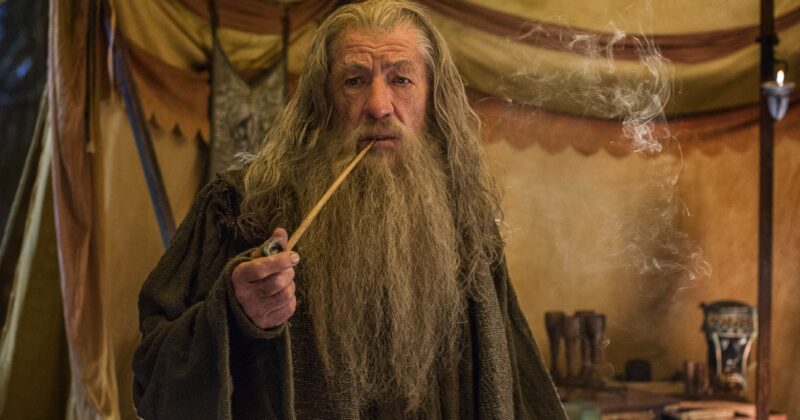
Serkis brings not only his history with Gollum, but a nuanced understanding of performance capture’s evolving frontier. The addition of Ian McKellen as Gandalf plus heavyweights like Kate Winslet and Jamie Dornan signals a return to high-caliber, character-driven storytelling within this legendary universe. Supported by writers with a track record of adapting Tolkien—Philippa Boyens and Fran Walsh—the screenplay is built on firm creative ground. Each contributor understands not just the lore, but the gravitas required to bring it to life in a new era.
As anticipation builds, The Hunt for Gollum isn’t just another return to Middle-earth. It’s the test case for whether the magic of Tolkien’s world, so deftly captured two decades ago, can be rekindled on modern cinema’s grand stage—without losing the heart and soul at its core.