Behind the Masks of War Machine: A Deep Dive Into Netflix’s Sci-Fi Action Phenomenon

The Dark Genesis of Netflix’s War Machine
Netflix‘s latest sci-fi action epic, War Machine, delivers a cinematic gut punch—one rooted in real-world imagery and psychological terror. At first glance, the film immerses viewers in the rigor of elite military training, following a group of candidates facing the brutal final phase of U.S. Army Ranger selection. Yet, director Patrick Hughes derails any sense of predictability, catapulting both the characters and the audience into a far more uncanny and dangerous realm.
The film’s conceptual seeds trace back to one unforgettable moment. Hughes, while filming his debut feature in rural Australia, witnessed a surreal procession: two hundred armed, silent soldiers jogging through the night, each marked with a number and trailed by military trucks. The image, a glimpse into the notoriously grueling Australian SAS selection program, stuck with him. This vision prompted years of research into military endurance tests across the globe, fueling a story less about triumph than survival and personal redemption.
A Nightmare Breeds a Sci-Fi Icon
The plot found its razor edge when Hughes experienced a nightmare—being hunted by an imposing machine through a shadowy forest. That dark dream was the catalyst, crystallizing the idea for War Machine. Upon waking, Hughes had the narrative’s core: a mysterious, relentless threat that would push not just soldiers but the audience to their psychological and physical limits. The premise: how far will you go when the line between reality and something otherworldly blurs?
Alan Ritchson: Embodying Relentless Grit
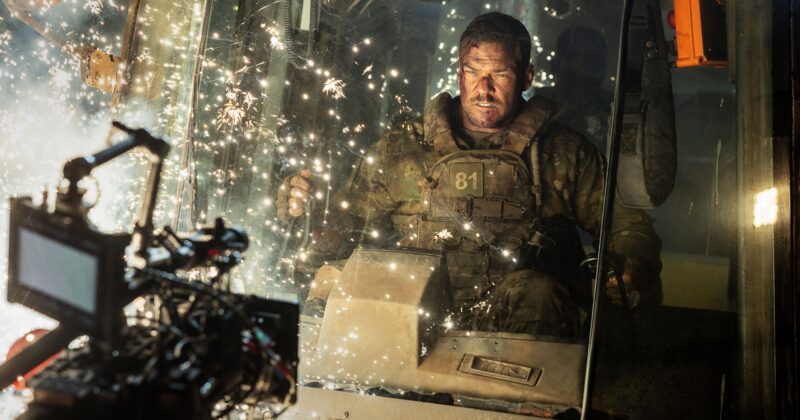
For action star Alan Ritchson, playing the enigmatic protagonist known only as ‘81’ was an experience as punishing as it was transformative. Familiar to fans through rugged roles in series like Reacher, Titans, and features such as The Ministry of Ungentlemanly Warfare, Ritchson discovered new thresholds of endurance on this shoot. Channeling the archetypal ‘Man With No Name’—a modern echo of Clint Eastwood’s silent, steely antiheroes—Ritchson faced challenges designed to test both spirit and body.
The production’s philosophy: make every threat, every obstacle real. Stunt work became a crucible. In one standout sequence, Ritchson plunged into class-five rapids—no CGI, just raw current. His stunt double, Ryan Tarran, demonstrated safety firsthand, his jeans shredded by the water. «When the camera’s in your face, I want the audience to feel exactly what I’m feeling,» Ritchson explained, underscoring the commitment to authenticity. Whether scrambling up mountainsides, flashing across zip lines, or braving military-strength obstacle courses, the cast was exposed to physical extremes that went well beyond staged heroics.
When Suffering Forges Brotherhood
This commitment to realism did more than elevate on-screen intensity—it built real bonds. The concept of ‘brotherhood’ emerges as a thematic backbone, mirrored on and off set. Day one of filming saw the entire ensemble lined atop a cliff, nerves fraying as Hughes orchestrated a massive stunt: a dozen cast members yanked by wire gags and explosions into chaos. For Alex King, making her cinematic debut as character 15, it was a baptism by fire. As Patrick Hughes dryly welcomed her to War Machine, it was clear: this set was no place for the faint of heart.
Each day intensified the kinship among the cast. The relentless physical demands and raw locations dissolved the barriers typical on a traditional film set. Ritchson recalls nights filled with doubt and exhaustion, sharing how the only way forward was leaning on each other for support: ‘There’s tears, there’s blood, and we keep pushing.’ This collective trial by fire fostered a camaraderie as genuine as any formed in the trenches, echoing the emotional truth at the film’s heart.
Practical Effects Over CGI: A Filmmaking Statement
Modern audiences may be used to green screens and digital magic, but War Machine stands apart in its commitment to practical effects and real-world locations. Under Hughes’ direction, each action set piece becomes a character in itself—scenes of actors battered by weather, terrain, and water feel sharply immediate. The result is a movie that throbs with kinetic tension, making the audience sweat and struggle alongside the characters.
Unit photographer Ben King’s production stills, captured during the shoot, reveal more than just cinematic spectacle—they document a cast shaped by challenge, perseverance, and transformation.