Project Hail Mary and the Centrifuge Controversy: A Scientific Blunder Shakes Up Sci-Fi

The Centrifuge Scene That Launched a Thousand Tweets
When Project Hail Mary landed in cinemas, it instantly grabbed the attention of both science-fiction enthusiasts and the global research community. The film, starring Ryan Gosling as the stranded Dr. Ryland Grace, delivers a gripping story of survival, science, and sacrifice against the backdrop of a dying sun. But tucked within its high-octane narrative, a seemingly brief lab scene has proven to be its most viral talking point—a moment where real-world scientific procedure is dramatically, and unexpectedly, ignored.
The Misbalanced Centrifuge That Sparked Outrage
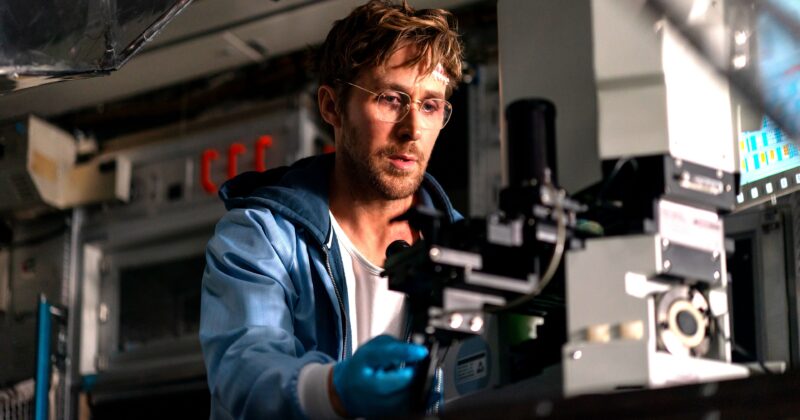
One would expect meticulous attention to detail in a movie about saving humanity through science, especially when the protagonist is a molecular biology PhD and former science teacher. Yet, as Dr. Grace sets about his research on a spaceship lightyears from home, he commits a mistake familiar to any lab technician: operating a centrifuge with two test tubes, carelessly placed side by side rather than perfectly balanced across the rotor. For the average viewer, the mishap might pass unnoticed, but for professionals immersed in daily experiments, the gaffe is glaringly obvious and nearly comical.
This misstep set social platforms ablaze. Scientists around the world shared their exasperation and disbelief. Memes and reaction GIFs circulated on Reddit and X, with posts titled things like ‘The 1 Project Hail Mary Scene triggering a Biologist’. STEM influencers responded with quick explainer videos, some using makeup containers to demonstrate how proper counterbalancing is crucial to avoid catastrophic results in any centrifuge run. The consensus: a centrifuge spinning unbalanced tubes isn’t just unlikely, it’s potentially disastrous in real life, risking broken equipment or even personal injury.
Why This Lab Error Resonates With Experts
To appreciate the depth of this error, it’s worth remembering just how fundamental centrifugation is in any scientific setting. Balancing tubes in a centrifuge isn’t only a practice, it is a basic requirement that’s taught within a researcher’s very first week. The film’s oversight isn’t about nitpicking fictional technology—it’s about preserving the integrity and accuracy of science on screen. Sci-fi, when executed well, inspires generations to explore STEM fields; when it stumbles, the missed details become learning moments for global audiences.
Some viewers tried to rationalize the scene. Could it be that Dr. Grace’s memory loss—central to both story and character—explains his error? Or maybe, in this fictional future, advanced self-balancing centrifuges have replaced conventional models. Both are plausible within genre logic, but the film never hints at such tech, leaving most professionals unconvinced. Given that he still uses familiar laboratory tools like spectrometers, pipettes (with their correct tips, no less), and classic test tubes, the scene feels more like a script oversight than a deliberate sci-fi twist.
From Social Buzz to Science Literacy
The reaction to this centrifuge snafu transcends technical nitpicking—it’s a testament to how invested modern viewers are in the authenticity of their on-screen science. It’s not just about accuracy for the sake of realism. These moments provide rare opportunities to discuss real lab techniques and scientific responsibilities with a wider audience, prompting explanations and demonstrations from professionals who typically work far from the limelight. Some science communicators even used the viral moment to break down how centrifuges work, creating a wave of teachable content across Instagram, Bluesky, and beyond.
The echoes of this small but significant detail showcase the powerful impact film can have on public understanding of science. As Project Hail Mary continues to capture imaginations in theaters, its centrifuge controversy remains a vivid reminder: in modern storytelling, accuracy isn’t just an add-on, it drives conversation, inspires new learners, and keeps the boundary between fiction and reality stimulatingly thin.