The Most Iconic and Powerful Swords in Movies and TV Shows

The Enduring Legend of Swords in Visual Storytelling
Since time immemorial, swords have symbolized much more than just weapons; they are vessels of power, honor, and identity across cultures and stories. From ancient epics to modern cinematic universes, blades have embodied their wielders’ spirit, reflecting complex themes of heroism, destiny, and moral struggle. Their designs, uses, and mythologies elevate them beyond mere props, making swords central to many iconic stories in both movies and TV shows.
Heimdall’s Bifrost Sword in the Marvel Cinematic Universe
Within the vast landscape of the MCU, Heimdall’s sword stands out as a remarkably subtle yet powerful artifact. Known as Hofund in Norse mythology, this sword is far more than a combat weapon—it serves as the key to activating the Bifrost, the cosmic bridge enabling travel between realms. Unlike artifacts such as Thor’s Mjölnir, which test worthiness and possess a near-sentient loyalty, Heimdall’s blade is utilitarian yet formidable. Its most striking representation comes in Thor: Ragnarok, where Heimdall deliberately removes it to prevent Hela from abusing the Bifrost. This tactical choice underlines the sword’s significance as both a lethal weapon and a cosmic control device, showcasing its multi-dimensional role beyond mere steel.
Michonne’s Katana in The Walking Dead
Michonne’s katana emerged as one of the hardest-hitting symbols of survival and control in a post-apocalyptic world overwhelmed by chaos. Unlike other survivors who favor guns, her choice of a katana evokes a disciplined, almost samurai-like mastery—one that speaks to precision and deadly efficiency. Its sleek, sharp profile carries the weight of her resilience and solitude across the show’s arc. The katana becomes more than a weapon; it encapsulates her fierce independence and exceptional combat skills, making it an unforgettable signature element of her character.
King Leonidas’ Sword in 300
In Zack Snyder’s 300, Leonidas’ sword serves as an emblem of Spartan rigor and combat discipline. The weapon itself is purpose-built: short, efficient, and designed for the harsh realities of close-quarter warfare. Within the film’s highly stylized and slow-motion combat scenes, the sword acts as a physical extension of Leonidas’ ferocity and will, delivering devastating blows with lethal precision. This blade is rooted in grounded realism rather than fantasy, yet it feels legendary due to the epic narrative of sacrifice and defiance embodied by its owner.
Geralt’s Steel Sword from The Witcher
Geralt of Rivia’s dual-sword setup in The Witcher has become iconic for its practical and symbolic depth. While his silver sword is reserved specifically for monsters, his steel sword is the primary tool against human adversaries. This distinction elevates the steel sword’s narrative weight; it’s the blade that deals with morally ambiguous and often brutal encounters within the human realm. The series showcases expertly choreographed fights that highlight the sword’s versatility and deadly efficiency, reinforcing Geralt’s identity as a pragmatic, battle-hardened figure caught between two worlds.
The Atlantean Sword in Conan the Barbarian
The Atlantean Sword carried by Arnold Schwarzenegger’s Conan resonates with mythic power and ancient legacy. Discovered in a crypt, this blade feels less like an ordinary weapon and more like a destined force intertwined with Conan himself. Its distinctive design—a broad, menacing blade with an intricately crafted hilt—sets it apart from typical fantasy swords. It encapsulates raw physicality over magic, embodying Conan’s unstoppable might in a world where strength is survival. This sword’s presence roots the narrative in primal heroism and legend.
Green Destiny from Crouching Tiger, Hidden Dragon
The Green Destiny transcends mere physicality to become an icon of martial excellence and emotional resonance in Crouching Tiger, Hidden Dragon. Famously razor-sharp and perfectly balanced, it symbolizes the pinnacle of wuxia swordsmanship. The sword’s theft ignites the story, reflecting conflicting desires for power, mastery, and destiny. Its graceful movements during battle scenes are cinematic masterpieces, with the blade embodying characters’ inner turmoil, restraint, and longing. The Green Destiny is not just an instrument of combat but a narrative catalyst intrinsically tied to identity and fate.
The Sword of Gryffindor in Harry Potter
The Sword of Gryffindor is steeped in rich wizarding lore, crafted by goblins and linked directly to Godric Gryffindor’s legacy. Rather than having a fixed owner, it appears to those who display true bravery and courage, often manifesting through the Sorting Hat. This sword is imbued with unique magic, able to absorb properties such as basilisk venom, which makes it powerful enough to destroy dark objects like Horcruxes. Its most memorable moment arrives when Neville Longbottom wields it to slay Nagini, cementing its role as a symbol of courage and defiance against darkness.
Longclaw in Game of Thrones
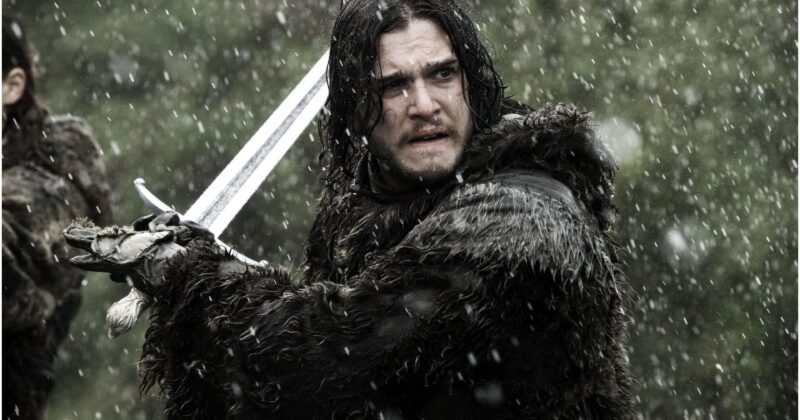
Among the many revered weapons in Game of Thrones, Longclaw stands out both visually and narratively. Valyrian steel—a rare and nearly indestructible metal—is essential in battling supernatural threats like the White Walkers, and Longclaw becomes Jon Snow’s defining weapon after being gifted by Jeor Mormont. Its hilt alteration from a bear to a direwolf cements Jon’s personal connection to the sword and his House Stark identity. Longclaw accompanies Jon through critical turning points and battles, balancing symbolic gravitas with brutal functionality.
Excalibur: The Legendary Sword of Arthurian Myth
No discussion of powerful swords would be complete without Excalibur, a symbol synonymous with rightful sovereignty, power, and destiny. The legendary blade embodies the divine right of kingship bestowed upon Arthur and represents themes of legitimacy and heroism that have transcended centuries. In cinematic and TV adaptations, Excalibur carries mystical energy and dramatic significance, often depicted as an embodiment of the ideals that define a true leader.