Nightwing Challenges Batman’s Emotional Approach: Is Empathy Batman’s Greatest Weakness?

The Complex Emotional Divide Between Batman and Nightwing
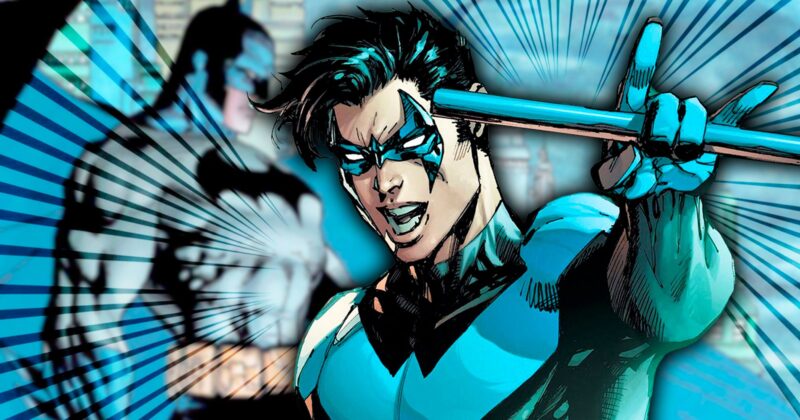
In a powerful confrontation featured in Nightwing #137, the dynamic between Batman and his first protégé, Dick Grayson, takes center stage—offering a rare, nuanced examination of Batman’s emotional landscape. The exchange shifts the typical focus away from crime-fighting tactics and dives deep into the question of empathy, a trait often overshadowed by Gotham’s grim vigilante ethos.
This discussion exposes a fundamental philosophical schism where Nightwing accuses Batman of emotional detachment being his greatest vulnerability. Meanwhile, Batman counters by framing Nightwing’s openness as a potential weakness in their perilous line of work. It’s a profound clash rooted in years of shared trauma, mentorship, and the intense pressures of their crusade against crime.
Origins of the Conflict: Mentor and Protégé Perspectives
Having grown up as the first Robin, Dick Grayson has a unique vantage point on Bruce Wayne’s methods and mentality. His formative years under Batman’s wing made him acutely aware of Bruce’s stoic handling of pain and loss. Nightwing argues that Batman’s tendency to emotionally isolate himself creates blind spots—especially when subtle emotional cues demand sensitivity.
Conversely, Batman holds firm that Nightwing’s emotional expressiveness can jeopardize critical decision-making in high-stakes scenarios. For Bruce, disconnecting from personal feelings is not a flaw—it’s a survival tactic that enables him to act decisively without hesitation, keeping Gotham safe.
Does Batman Lack Empathy?
Calling Batman unempathetic oversimplifies a character renowned for his detective skills and psychological insight. Bruce Wayne excels at understanding criminal behavior, anticipating motives, and reconstructing emotional states to predict outcomes. This analytical empathy, while different from overt emotional connection, remains key to his role as Gotham’s Dark Knight.
Nightwing’s critique doesn’t dispute Batman’s intellectual empathy but challenges his emotional engagement, or the lack thereof. Batman’s habit of keeping people emotionally distant sometimes results in strained relationships within the Bat-Family and complicates teamwork. This detachment can hinder trust-building with allies, victims, and even adversaries whose motivations aren’t purely rational.
Nightwing’s Emotional Intelligence as a Strategic Edge
Nightwing approaches heroism from a contrasting angle. His empathetic leadership style builds bridges — whether with Blüdhaven’s citizens or his fellow heroes — fostering trust and cooperation. This ability to emotionally connect enhances his flexibility, allowing him to de-escalate tensions and inspire loyalty beyond the intimidation tactics Gotham’s criminals fear.
The differences between Batman and Nightwing highlight contrasting methods of leadership. Where Batman prioritizes control and precision, Nightwing emphasizes interpersonal relationships and adaptability.
Two Complementary Models of Heroism
The debate holds complexity because both approaches have their merits and pitfalls. Batman’s emotional restraint underpins his relentless discipline, enabling him to endure Gotham’s horrors without succumbing to trauma. His compartmentalization is essential to maintaining focus on mission-critical objectives.
Nightwing’s open emotionality allows for organic connections and more collaborative problem-solving, essential in a world where alliances often mean the difference between life and death. His empathy equips him to handle the chaos of crime-fighting with a nuanced understanding that transcends pure logic.
Ultimately, this narrative moment isn’t about declaring a winner but about recognizing the spectrum of what heroism can be. Batman and Nightwing embody two viable, sometimes conflicting, yet complementary ways to confront darkness.
Redefining Strength in Gotham’s Vigilantes
Whether you side with Batman’s stoic detachment or Nightwing’s emotional insight depends on how you value strength. The Dark Knight’s approach excels in efficiency and control, often critical for single-handedly tackling Gotham’s most dangerous foes. Meanwhile, Nightwing’s empathetic style is arguably more sustainable in fostering lasting alliances and resilient communities.
This ongoing debate enriches the Bat-Family dynamic and deepens our understanding of these characters as multi-dimensional figures shaped by trauma, loss, and differing philosophies.
Batman’s genius is not just in his physical prowess or detective skills, but in his layered emotional complexity—often masked by his stoicism. Nightwing’s willingness to confront this side of Bruce Wayne shines a light on the evolving nature of heroism, where empathy may be just as crucial as strength.