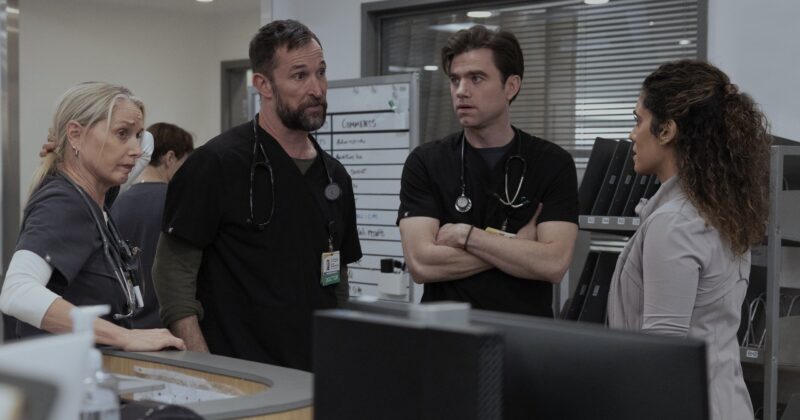
The Most Important Presence Missing from The Pitt
Hospital dramas thrive on crisis and chaos, but The Pitt has raised the stakes by focusing on an invisible yet pivotal character: the trauma counselor. While every member of the Pittsburgh Trauma Medical Center team is essential, this season has been defined by characters spiraling from one crisis to another—with no one in their corner to help process the fallout. Mental health support, it turns out, is the catalyst this story is missing.
A Staff on the Brink: Surviving Without Support
The emotional toll on the PTMC crew isn’t subtle. Recent episodes have spotlighted characters like Robby, whose motorcycle symbolism hints at dangerous passivity and suicidal ideation. Santos struggles with self-harm; Dana, shaken after physically harming a patient, broke down in isolation; and Langdon battles to re-enter a fractured workplace post-rehab. Meanwhile, Mohan can barely balance scolding colleagues and personal family crises. Even McKay’s grief over Roxie’s death lingers like a shadow over every shift. This interwoven tapestry of trauma is pulled tightly by the glaring absence of appropriate mental health intervention.
The show post-cyberattack lifts the veil on underlying, untreated structural problems from last season’s mass shooting to pandemic residue. The staff’s collective burnout and emotional fraying have become a narrative engine, but the person most equipped to help remains a ghost—never even granted screen time.
Who Is the Trauma Counselor?
Speculation centers around Dr. Jefferson, the resident psychiatrist. But his role is underserved, rarely extending beyond medical consultation and certainly never addressing the systemic needs of his colleagues. The trauma counselor’s absence is less of a plot hole and more of a pointed commentary on the dangerous expectation that frontline healthcare workers just ‘get over’ trauma.
Joy Kwon: An Unlikely Guide to Mental Health
Amidst the disorder, Joy Kwon (Irene Choi) stands out—not for her clinical expertise, but for her self-preserving boundaries. In a recent episode, Joy bluntly refused Langdon’s guilt trip to stay past her shift. In an environment that glorifies self-sacrifice, Joy’s insistence on leaving on time isn’t cold-hearted—the opposite, in fact. It’s a radical act of self-care in a field notorious for burnout. Her actions expose how entrenched the culture of overwork has become at PTMC, and how rare it is to see a character unapologetically prioritize their own mental well-being.
This subtle heroism draws a line between burnout and resilience. Consider Whitaker, the next most stable staffer, whose questionable relationship with a deceased patient’s widow underscores how work-life imbalance disrupts not only professional boundaries but personal ones.
Systemic Issues and Series Insight
The Pitt’s willingness to piece apart its characters’ emotional lives heightens its realism and relevance in a post-pandemic media landscape. By omitting the trauma counselor—and highlighting its impact—the show crafts a meta-narrative about what hospital dramas typically ignore. Langdon’s open shame tactics directed at Joy for not working overtime illustrate an old-guard mentality, clashing with a growing understanding that setting boundaries isn’t just healthy—it’s necessary for survival in emergency settings.
For viewers drawn to shows like Grey’s Anatomy or The Good Doctor but longing for more complex mental health storytelling, The Pitt offers a fresh, sometimes uncomfortable glimpse at what happens when healthcare providers are left to flounder without internal support. The underlying message isn’t just a call for structural reform within the fictional PTMC—it’s a statement on the real-world gaps in healthcare, made more urgent and relatable for modern audiences.